Chinese Humanoids Hit Japan Airports
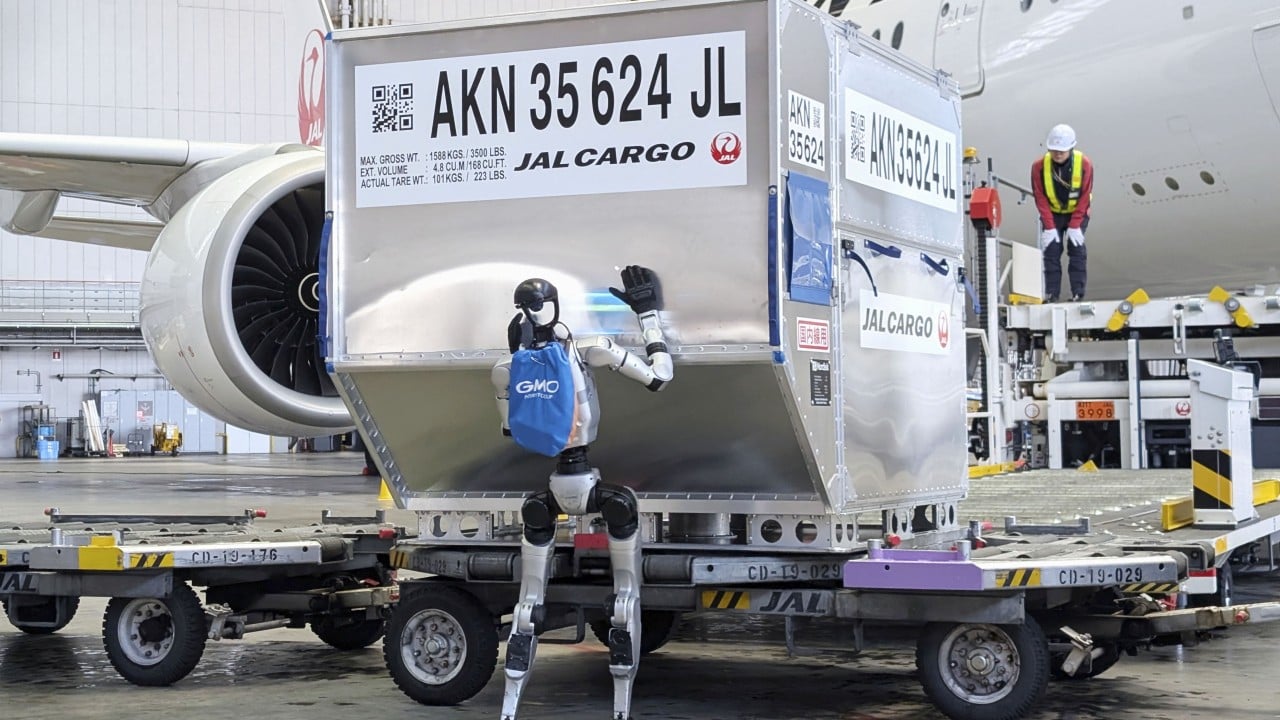
Chinese humanoids deploy in Japan airports—embodied AI scales in real logistics amid shortages
30-Second TL;DR
What Changed
Japan Airlines launches two-year robot trial at Haneda Airport
Why It Matters
This trial could boost humanoid robot use in logistics, challenging Western dominance and opening markets for embodied AI. AI practitioners may see opportunities in scaling robot deployments for labor-scarce sectors globally.
What To Do Next
Download Unitree or UBTech SDKs to prototype airport logistics robot integrations.
Key Points
- •Japan Airlines launches two-year robot trial at Haneda Airport
- •Unitree and UBTech models handle baggage and cargo
- •Partnership with GMO AI & Robotics for ground operations
- •Driven by Japan's acute labor shortages
- •Marks growing traction of Chinese robotics in Japan
Deep Insight
AI-generated analysis for this event — not the original article.
Enhanced Key Takeaways
- •The trial utilizes Unitree's G1 and H1 models alongside UBTech's Walker S series, specifically configured with custom end-effectors for standardized airport cargo containers (ULDs).
- •This collaboration marks the first time Chinese-manufactured humanoid robots have been integrated into critical infrastructure operations within a Japanese international airport, bypassing previous regulatory hurdles regarding data security and operational safety.
- •GMO AI & Robotics is providing a proprietary 'Robot-as-a-Service' (RaaS) middleware layer that enables real-time synchronization between the robots and Japan Airlines' existing baggage management system (BMS).
Competitor Analysis
- Unitree/UBTech (JAL Trial)
- Logistics/Baggage Handling
- Boston Dynamics (Atlas)
- R&D/Industrial Automation
- Tesla (Optimus)
- Manufacturing/General Purpose
- Unitree/UBTech (JAL Trial)
- Active Airport Trial
- Boston Dynamics (Atlas)
- Pilot/R&D
- Tesla (Optimus)
- Internal Factory Testing
- Unitree/UBTech (JAL Trial)
- RaaS (Subscription)
- Boston Dynamics (Atlas)
- Capital Expenditure/Custom
- Tesla (Optimus)
- Not Publicly Available
- Unitree/UBTech (JAL Trial)
- High payload-to-weight ratio
- Boston Dynamics (Atlas)
- Dynamic mobility/Balance
- Tesla (Optimus)
- Mass production scalability
| Feature | Unitree/UBTech (JAL Trial) | Boston Dynamics (Atlas) | Tesla (Optimus) |
|---|---|---|---|
| Primary Focus | Logistics/Baggage Handling | R&D/Industrial Automation | Manufacturing/General Purpose |
| Deployment Status | Active Airport Trial | Pilot/R&D | Internal Factory Testing |
| Pricing Model | RaaS (Subscription) | Capital Expenditure/Custom | Not Publicly Available |
| Key Benchmark | High payload-to-weight ratio | Dynamic mobility/Balance | Mass production scalability |
Technical Deep Dive
- Unitree G1/H1 Integration: Utilizes advanced force-torque sensors in the wrists to handle baggage weight variations up to 20kg without damaging fragile items.
- UBTech Walker S: Employs U-SLAM (Simultaneous Localization and Mapping) for navigating dynamic airport environments, integrated with JAL's digital twin infrastructure.
- Middleware: GMO AI & Robotics utilizes a 5G-private network to ensure low-latency communication between the robots and the central control hub, minimizing collision risks in high-traffic areas.
- Safety Protocols: Implementation of ISO 10218-1/2 standards for collaborative robots, including redundant emergency stop systems and vision-based obstacle detection.
Future ImplicationsAI analysis grounded in cited sources
Timeline
- 2023-08UBTech announces the Walker S series for industrial applications.
- 2024-05Unitree releases the G1 humanoid robot, focusing on cost-effective mass production.
- 2025-11GMO AI & Robotics signs a strategic partnership with JAL to explore automation in ground operations.
- 2026-04Official commencement of the two-year humanoid trial at Haneda Airport.
Weekly AI Recap
Read this week's curated digest of top AI events →
Related Updates

AI-curated news aggregator. All content rights belong to original publishers.
Original source: SCMP Technology ↗
This is a summary, not the original. Read the source, or get the weekly briefing.
The weekly digest
One email a week. Unsubscribe anytime.