Chinese Giants Ease OpenClaw Access Amid Lobster Fever
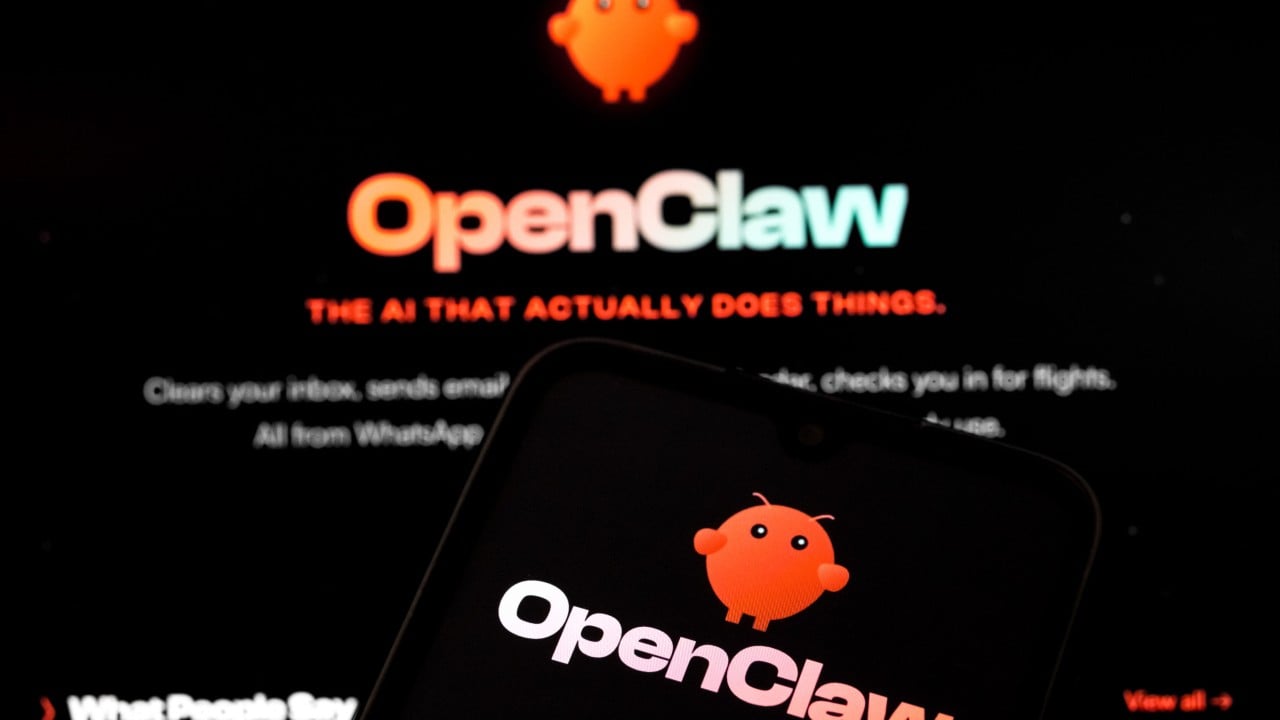
💡China's tech giants slashing barriers to OpenClaw fuels AI agent boom
⚡ 30-Second TL;DR
What Changed
Tencent launches QClaw AI assistant on OpenClaw with WeChat integration.
Why It Matters
This move by Chinese tech giants democratizes AI agent tools, accelerating adoption in China's massive WeChat ecosystem. It could spur rapid development of localized AI applications and intensify competition in open-source AI agents.
What To Do Next
Download QClaw from Tencent and test WeChat integration for building AI agents.
Key Points
- •Tencent launches QClaw AI assistant on OpenClaw with WeChat integration.
- •Alibaba and ByteDance provide inexpensive access to OpenClaw.
- •Driven by 'lobster fever' boosting OpenClaw popularity in China.
- •Quick 3-minute PC install enables remote device control.
🧠 Deep Insight
Background and context from public sources — not the original article. 5 sources cited.
🔑 Enhanced Key Takeaways
- •Chinese cloud providers (Tencent Cloud, Alibaba Cloud, Baidu Cloud, and Volcano Engine) rapidly deployed one-click OpenClaw integration within weeks of its March 2026 arrival, contrasting sharply with ByteDance's Doubao Phone Assistant being blocked by WeChat and Taobao in December 2025 due to security concerns.[2]
- •OpenClaw achieved 247,000 GitHub stars and 47,700 forks as of March 2, 2026, making it the fastest-growing open-source project in GitHub history—surpassing Linux's all-time star count in roughly 100 days, a milestone Linux took over 30 years to reach.[2][4]
- •Nearly half of the 142,000+ publicly visible OpenClaw agents tracked by monitoring platforms originated from China, indicating dominant adoption in the Chinese market despite the framework being created by Austrian engineer Peter Steinberger.[2]
- •The 2026 version of OpenClaw (v2026.2.21 and v2026.3.2) evolved into a production-ready, security-compliant multi-agent collaborative infrastructure with over 200 security and performance upgrades, featuring ACP Dispatch for intelligent task scheduling and native integration with Chinese IM platforms and cloud services.[3]
- •On March 8, 2026, the Shenzhen City Longgang District Artificial Intelligence (Robotics) Bureau released a draft policy for public comment proposing government support measures for OpenClaw development and adoption.[4]
🛠️ Technical Deep Dive
- Architecture: OpenClaw is an open-source, TypeScript-based autonomous AI agent framework that runs locally on personal devices and connects to large language models (Claude, DeepSeek, GPT models) via API calls.[2][3]
- Integration: Operates across messaging platforms including Slack, WhatsApp, Telegram, Feishu (Chinese workplace app), WeChat, and Signal, with configuration data and interaction history stored locally for persistent adaptive behavior.[2][3][4]
- Capabilities: Executes multi-step autonomous tasks including web browsing, code writing and debugging, calendar management, email sending, and full-scenario task automation with multi-modal interaction support.[2][3]
- Multi-Agent System: 2026 update enables ACP Dispatch by default—an intelligent scheduling system that automatically assigns suitable agents for different task types (coding, writing, data analysis) and supports parallel execution of multiple tasks without conflicts.[3]
- Model Compatibility: Adapted to work with DeepSeek and other domestic models; supports both domestic Chinese ecosystems and international frameworks.[3][4]
- Performance: Calls model APIs hundreds of times per day with access to local files and browser operations; features native support for both domestic and international ecosystems.[2][3]
🔮 Future ImplicationsAI analysis grounded in cited sources
⏳ Timeline
📎 Sources (5)
Factual claims are grounded in the sources below. Forward-looking analysis is AI-generated interpretation.
Weekly AI Recap
Read this week's curated digest of top AI events →
👉Related Updates

AI-curated news aggregator. All content rights belong to original publishers.
Original source: SCMP Technology ↗
This is a summary, not the original. Read the source, or get the weekly briefing.
Weekly AI briefing
One email a week. Unsubscribe anytime.