Chinese Gaming Giants Pivot to 3A and Retention
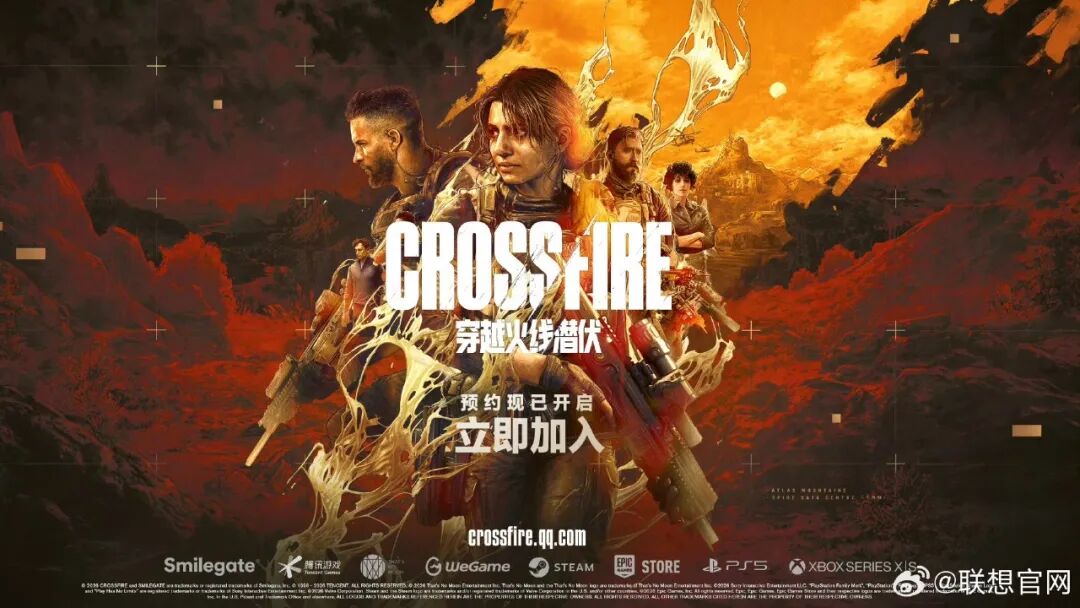
💡Understand how Chinese gaming giants are balancing high-stakes 3A investments with proven mobile revenue models.
⚡ 30-Second TL;DR
What Changed
Tencent is building a distributed 3A production network by leveraging global capital and studio partnerships.
Why It Matters
The shift toward 3A games by Chinese giants signals a move toward high-quality, culturally-rich content, while mid-tier firms' reliance on 'buy-to-play' models may face user fatigue.
What To Do Next
Analyze the 'buy-to-play' vs. 'high-production' ROI models to determine if your product strategy should prioritize rapid iteration or long-term brand building.
Key Points
- •Tencent is building a distributed 3A production network by leveraging global capital and studio partnerships.
- •NetEase is focusing on self-developed original IP like 'Gui Tang' to elevate its brand beyond mobile gaming.
- •Mid-tier firms like 4399 and Baiou utilize standardized 'domestic validation + global scaling' models for predictable revenue.
🧠 Deep Insight
Background and context from public sources — not the original article. 27 sources cited.
🔑 Enhanced Key Takeaways
- •Tencent has transitioned from a passive investor to an active partner, embedding staff and offering strategic guidance to acquired global studios like Techland and Funcom to steer their AAA game development and market strategies.
- •NetEase is aggressively pursuing original AAA PC/console titles for Western markets through new global studios, such as BulletFarm (led by Call of Duty veteran David Vonderhaar) and internal teams like Thunderfire Montreal, with upcoming titles like 'Where Winds Meet,' 'Blood Message,' 'Sea of Remnants,' and 'Ananta' showcasing this ambition.
- •Both Tencent and NetEase are heavily integrating generative AI into their development pipelines, with Tencent launching the Hunyuan 3D engine for AI-generated assets and the GiiNEX Game AI Engine for realistic 3D scene creation, while NetEase claims extensive AI experience to enhance user experience and focus on flagship products.
- •The success of premium single-player titles like 'Black Myth: Wukong' from Game Science in 2024, which sold nearly 30 million copies globally, demonstrates the viability of Chinese studios producing globally competitive AAA games beyond the traditional mobile-first free-to-play model.
- •A more stable regulatory environment in China, marked by increased game approvals in 2025 and 2026, is fostering a renewed confidence in the domestic market and supporting the industry's pivot towards higher-value, globally appealing titles.
🛠️ Technical Deep Dive
- Tencent's Hunyuan 3D Engine: An AI-powered 3D modeling tool capable of generating high-quality 3D assets from multimodal inputs (text, images, sketches), significantly reducing production time from days/weeks to minutes.
- Tencent's GiiNEX Game AI Engine: Incorporates generative AI for creating realistic and diverse 3D city scenes, supporting 2D images, animations, 3D scenes, narratives, and dialogue generation, and utilizes decision-making AI for game-development testing and simulated gameplay.
- Tencent's xMoCap®3A Level Motion Capture Animation Whole Process Pipeline & xFaceBuilder® Digital Role Generation Pipeline: Self-developed systems for high-fidelity 3D character animation and digital human generation, supporting large-scale teamwork and cloud-based asset management.
- Tencent's MotorNerve: TiMi Studio Group's character animation system that combines Motion Matching, Learned Motion Matching, and Motion In Betweening technologies for high-quality, low-consumption locomotion control.
- Tencent's START ENGINE: A native cloud gaming technology solution designed for real-time, high-precision biological and plant rendering, dynamic tree simulation, and GPU-accelerated fluid simulation.
- NetEase's NeoX and Messiah Engines: Internal proprietary game engines, with NeoX supporting both PC and mobile development, and Messiah being a mobile-only engine, enabling systematic development of high-quality mobile games.
- NetEase's AI Integration: NetEase claims extensive experience in deploying AI for game development and operations, leveraging it to enhance user experience and optimize resource allocation for flagship products.
- Unreal Engine 5 Adoption: NetEase's newly established AAA studio, BulletFarm, is developing its ambitious original game using Unreal Engine 5.
🔮 Future ImplicationsAI analysis grounded in cited sources
⏳ Timeline
📎 Sources (27)
Factual claims are grounded in the sources below. Forward-looking analysis is AI-generated interpretation.
- gamesindustry.biz
- businesstimes.com.sg
- matrixbcg.com
- neteasegames.com
- need4games.ro
- youtube.com
- netease.com
- invenglobal.com
- youtube.com
- tencentgames.com
- gamedeveloper.com
- tencent.com
- tencent.com
- prnewswire.com
- mlq.ai
- nikopartners.com
- theworldofchinese.com
- naavik.co
- substack.com
- outlookindia.com
- naavik.co
- kr-asia.com
- wikipedia.org
- gematsu.com
- wikipedia.org
- tencent.com
- superpixel.com
Weekly AI Recap
Read this week's curated digest of top AI events →
👉Related Updates
AI-curated news aggregator. All content rights belong to original publishers.
Original source: 36氪 ↗
This is a summary, not the original. Read the source, or get the weekly briefing.
Weekly AI briefing
One email a week. Unsubscribe anytime.