Chinese Firms Dominate Global Energy Storage Market
💡Understand the supply chain dynamics powering the energy-hungry AI data centers of the future.
⚡ 30-Second TL;DR
What Changed
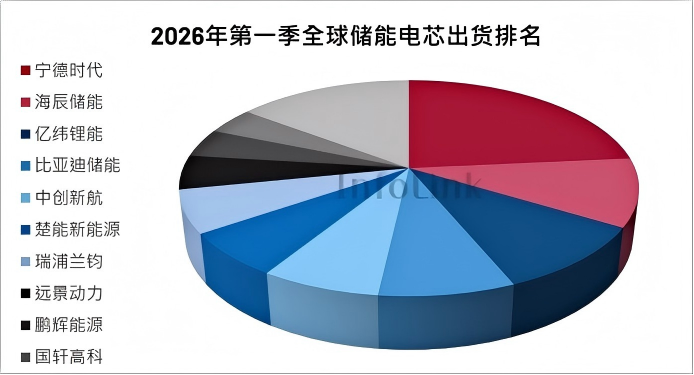
Chinese enterprises are leading the global energy storage supply chain.
Why It Matters
The dominance of Chinese firms in energy storage infrastructure is critical for AI data centers looking to optimize power consumption and sustainability. AI practitioners should monitor how this supply chain control affects the deployment of energy-intensive AI hardware.
What To Do Next
Evaluate energy storage procurement strategies for local AI infrastructure projects to mitigate supply chain risks.
Key Points
- •Chinese enterprises are leading the global energy storage supply chain.
- •Market dominance is driven by cost efficiency and massive production capacity.
- •The competitive landscape has shifted significantly in favor of domestic players.
🧠 Deep Insight
Background and context from public sources — not the original article. 19 sources cited.
🔑 Enhanced Key Takeaways
- •China's "new type" energy storage capacity, predominantly batteries, quadrupled in 2023 to 31.4 GW, exceeding its 2025 target two years ahead of schedule.
- •The country's dominance is underpinned by its extensive control over critical raw materials like lithium, cobalt, and graphite, coupled with advanced gigafactories for manufacturing.
- •Chinese companies are at the forefront of battery technology innovation, heavily investing in research and development for high-efficiency lithium-ion and next-generation solid-state batteries.
- •A key factor in their cost-effectiveness and safety is the widespread adoption of Lithium Iron Phosphate (LFP) battery chemistry, where Chinese firms gained a significant advantage after the patent expiration in 2022.
- •Government initiatives, such as the "14th Five-Year Plan," have strategically prioritized energy storage development through subsidies, incentives, and mandatory storage quotas for new renewable energy projects.
📊 Competitor Analysis▸ Show
| Company/Category | 2025 Global Market Share (Integrators) | 2025 Global Market Share (ESS Battery Shipments) | Key Offerings/Notes |
|---|---|---|---|
| BYD (China) | 13% | Top 7 (Chinese firms combined 83.3%) | Largest energy storage system integrator; significant breakthroughs in large-scale projects; secured 12.5 GWh grid-side project with Saudi Electricity Company. |
| Tesla (USA) | 10% | N/A | Megapack 3 and Megablock systems for utility-scale; strong software ecosystem; dedicated factories in Lathrop, California, and Shanghai. |
| Sungrow Power Supply (China) | 9% | Top 7 (Chinese firms combined 83.3%) | World's most bankable inverter and energy storage brand; PowerTitan liquid-cooled system; 50 GW+ shipments in 2025. |
| CATL (China) | 6% (tied) | #1 (among ESS battery shipments) | Undisputed leader in battery manufacturing; primary technology provider for major integrators; relentless R&D in LFP cells. |
| CRRC Zhuzhou Institute (China) | 6% (tied) | Top 7 (Chinese firms combined 83.3%) | State-owned firm specializing in train infrastructure, now a major BESS integrator. |
| Hithium (China) | 6% (tied) | Top 7 (Chinese firms combined 83.3%) | Key Chinese energy storage battery provider. |
| Huawei (China) | 5% | Top 7 (Chinese firms combined 83.3%) | Diversified technology giant with energy storage solutions. |
| Envision Energy (China) | 5% | Top 7 (Chinese firms combined 83.3%) | Global leader in smart energy technology. |
| Fluence (USA/Germany JV) | 4% (tied) | N/A | Joint venture between Siemens and AES Group. |
| Samsung SDI / LG Energy Solution (South Korea) | N/A | 4% (combined) | Significant players in the global battery market, but with a declining share in ESS batteries compared to Chinese firms. |
🛠️ Technical Deep Dive
- Dominant Battery Chemistry: Lithium Iron Phosphate (LFP) batteries are widely adopted due to their superior safety, longer cycle life, excellent thermal stability, and lower raw material costs compared to other lithium-ion chemistries.
- Key Components of BESS: A typical Battery Energy Storage System (BESS) comprises battery modules, a Battery Management System (BMS), an Energy Storage Management System (ESMS), a Power Conversion System (PCS), and physical hazard protection devices.
- System Features: Chinese energy storage systems often feature excellent deep cycle performance, with service lives up to 10 years and cycle lives exceeding 6,000 cycles at 80% depth of discharge. They also incorporate intelligent BMS protection, robust temperature performance (-20 to 60 ℃), and modular designs for scalability.
- Applications: Systems are designed for diverse applications including grid-scale energy storage, distributed power generation, EV charging facilities, and residential, commercial, and industrial peak shaving.
- Compliance and Standards: Energy storage systems in China are required to comply with national standards such as NB/T 34044-2017 (Technical Specification for Energy Storage Systems) and GB/T 40517-2021 (Safety Requirements for Battery Energy Storage Systems), ensuring efficiency, safety, and environmental performance.
- Innovation Focus: Chinese companies are actively engaged in rapid innovation, exploring new battery chemistries like Lithium Manganese Iron Phosphate (LMFP) and sodium-ion batteries, as well as developing advanced recycling and sustainability processes.
🔮 Future ImplicationsAI analysis grounded in cited sources
⏳ Timeline
📎 Sources (19)
Factual claims are grounded in the sources below. Forward-looking analysis is AI-generated interpretation.
Weekly AI Recap
Read this week's curated digest of top AI events →
👉Related Updates



AI-curated news aggregator. All content rights belong to original publishers.
Original source: 钛媒体 ↗
This is a summary, not the original. Read the source, or get the weekly briefing.
The weekly digest
One email a week. Unsubscribe anytime.