Chinese AI App Panics Hollywood
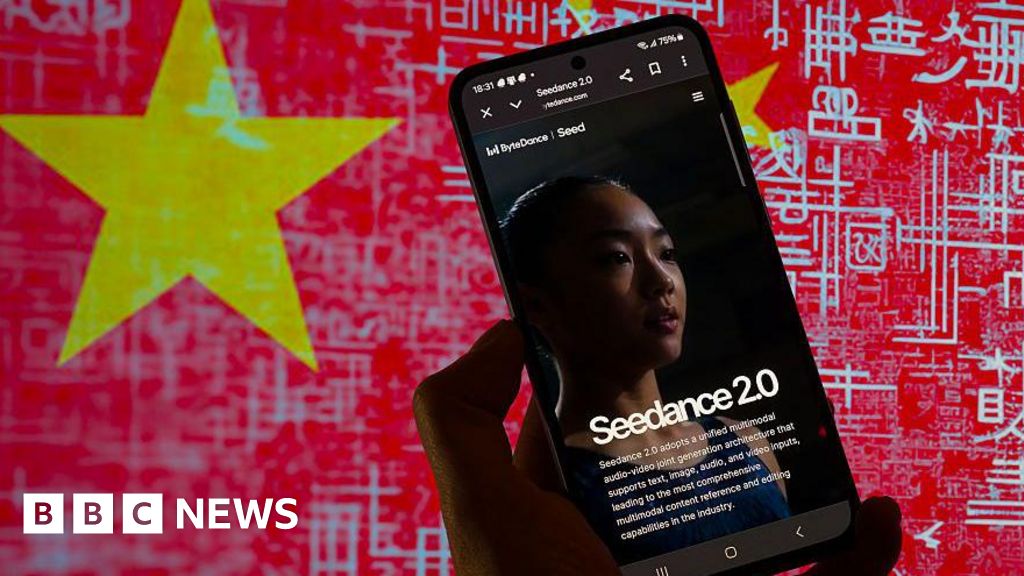
💡Hollywood freaks over Chinese AI cloning Deadpool: critical copyright alert for video gen devs.
⚡ 30-Second TL;DR
What Changed
Chinese AI app creates realistic clips of copyrighted characters like Deadpool
Why It Matters
This underscores escalating legal battles over AI training on copyrighted media, potentially leading to lawsuits and restrictions on video generation tools. AI practitioners may face increased scrutiny on data sourcing.
What To Do Next
Scan your AI video model's training data for Hollywood film clips using tools like HaveIBeenTrained.
Key Points
- •Chinese AI app creates realistic clips of copyrighted characters like Deadpool
- •Hollywood alarmed by potential mass copyright infringement
- •Incident raises IP concerns for AI-generated video content
🧠 Deep Insight
Background and context from public sources — not the original article. 5 sources cited.
🔑 Enhanced Key Takeaways
- •ByteDance's Seedance 2.0, launched in mid-February 2026, generates hyper-realistic AI videos of Hollywood actors and copyrighted characters without authorization, prompting cease-and-desist letters from major studios including Disney, Paramount, Warner Bros., and Netflix[1][3]
- •The Motion Picture Association accused Seedance 2.0 of 'unauthorized use of U.S. copyrighted works on a massive scale,' with videos featuring Tom Cruise, Brad Pitt, and characters from franchises like Harry Potter, Lord of the Rings, and Squid Game accumulating millions of views on social media[1][3]
- •Hollywood studios argue that ByteDance deliberately pre-loaded Seedance 2.0 with copyrighted characters and trained the model on protected material without permission, making the infringement a design choice rather than user-generated misuse[3]
- •SAG-AFTRA and industry unions condemned the platform for unauthorized use of actors' voices and likenesses, stating the infringement 'undercuts the ability of human talent to earn a livelihood' and 'disregards law, ethics, industry standards and basic principles of consent'[4]
- •ByteDance pledged to strengthen safeguards against unauthorized IP use, though the company stated Seedance 2.0 remains available only to Chinese users of its Douyin/JianYing apps, with plans for global rollout via CapCut[2][5]
📊 Competitor Analysis▸ Show
| Aspect | Seedance 2.0 | Google/Meta AI Video Tools | Industry Standard |
|---|---|---|---|
| Copyright Safeguards | Minimal (under criticism) | Licensing deals pursued | Robust IP protection required |
| Geographic Availability | China-only (limited test) | Global rollout planned | Varies by jurisdiction |
| Training Data Transparency | Undisclosed; alleged unauthorized use | Licensing agreements | Industry best practice |
| Regulatory Compliance | Non-compliant with US copyright law | Negotiating compliance | Full adherence expected |
🛠️ Technical Deep Dive
- Seedance 2.0 generates high-quality, cinematic AI videos from simple text prompts with hyper-realistic video and audio synthesis[2]
- The model produces lifelike depictions of real actors and copyrighted characters with sufficient fidelity to accumulate millions of social media views[1]
- Integration with ByteDance's video editing ecosystem: available via JianYing (Douyin in China) and CapCut (global branding)[2]
- Pre-loaded character library allegedly contains copyrighted intellectual property from major studios, enabling users to generate infringing content without additional training[3]
- Specific technical architecture, model size, training methodology, and inference capabilities are not disclosed in available sources
🔮 Future ImplicationsAI analysis grounded in cited sources
The Seedance 2.0 controversy establishes a critical precedent for AI video generation regulation and copyright enforcement. If ByteDance's approach succeeds despite legal challenges, it could incentivize other AI developers to adopt similar strategies, potentially destabilizing the entertainment industry's IP protection framework. Conversely, successful legal action could establish binding standards requiring AI video generators to implement meaningful safeguards—including licensing agreements, consent mechanisms, and technical controls—before deployment. The incident accelerates pressure on regulators and lawmakers to clarify AI copyright liability, particularly regarding training data and pre-loaded content. Industry-wide, studios may shift toward proprietary AI tools with built-in IP protections, licensing requirements for third-party platforms, and enhanced digital rights management. The controversy also highlights the tension between rapid AI innovation and creator protection, potentially influencing how future AI models are trained, deployed, and monetized globally.
⏳ Timeline
📎 Sources (5)
Factual claims are grounded in the sources below. Forward-looking analysis is AI-generated interpretation.
- channelnewsasia.com — Hollywood Accuses Chinese AI Seedance Massive Infringement 5931126
- ia.acs.org.au — China S Seedance AI Video Model Freaks Out Hollywood
- latimes.com — Mid AI Scandal Hollywood Studios Threaten Bytedance with Legal Action
- toronto.citynews.ca — Hollywood Groups Condemn Bytedances AI Video Generator Claiming Copyright Infringement
- TechCrunch — Hollywood Isnt Happy About the New Seedance 2 0 Video Generator
Weekly AI Recap
Read this week's curated digest of top AI events →
👉Related Updates
AI-curated news aggregator. All content rights belong to original publishers.
Original source: BBC Technology ↗
This is a summary, not the original. Read the source, or get the weekly briefing.
Weekly AI briefing
One email a week. Unsubscribe anytime.