Chinese AI Giants Shift to Proprietary Models
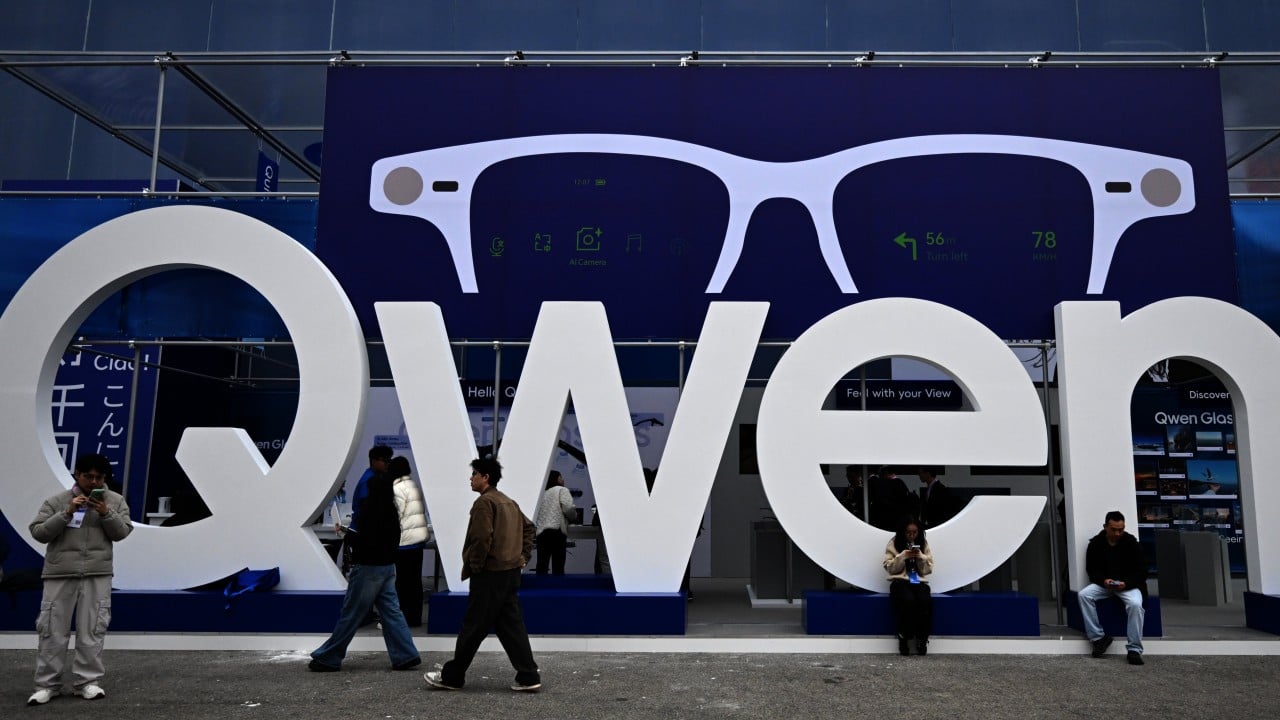
💡China's top AI firms closing models—key shift for access, costs, strategy
⚡ 30-Second TL;DR
What Changed
Alibaba Cloud and Zhipu AI withhold latest models from open-source
Why It Matters
This pivot may fragment China's AI ecosystem, reducing free access to top models and pushing users toward paid services. Global practitioners could face barriers in collaborating with Chinese AI advancements.
What To Do Next
Evaluate Alibaba Cloud's proprietary AI offerings for high-performance inference needs.
Key Points
- •Alibaba Cloud and Zhipu AI withhold latest models from open-source
- •Prioritize revenue via official usage channels
- •Models too large for local hardware hosting
- •Not fully abandoning open-source commitments
🧠 Deep Insight
AI-generated analysis for this event — not the original article.
🔑 Enhanced Key Takeaways
- •The shift toward proprietary models is driven by the need to protect intellectual property against unauthorized fine-tuning and to maintain control over model safety guardrails in compliance with China's strict generative AI regulations.
- •Cloud providers are increasingly bundling proprietary model access with enterprise-grade infrastructure services, creating a 'model-as-a-service' (MaaS) ecosystem that incentivizes long-term platform lock-in.
- •The transition is partly a response to the high inference costs of frontier models, where centralized API-based delivery allows for optimized hardware utilization and load balancing that is impossible in decentralized open-source deployments.
📊 Competitor Analysis▸ Show
| Feature | Alibaba Cloud (Proprietary) | Zhipu AI (Proprietary) | Open-Source Alternatives (e.g., Llama 3/Qwen-Open) |
|---|---|---|---|
| Access Model | API/MaaS Only | API/MaaS Only | Weights/Weights + Code |
| Pricing | Usage-based (Token) | Usage-based (Token) | Free (Self-hosted) |
| Hardware Req. | Cloud-managed | Cloud-managed | High-end GPU (Local) |
| Customization | Limited (Fine-tuning API) | Limited (Fine-tuning API) | Full (Weights access) |
🛠️ Technical Deep Dive
- •Proprietary models are increasingly utilizing Mixture-of-Experts (MoE) architectures with massive parameter counts (exceeding 500B+), making them computationally infeasible for standard enterprise-grade local hardware.
- •Implementation relies on proprietary inference engines optimized for custom NPU/TPU clusters, which provide significant latency advantages over standard PyTorch/TensorFlow implementations used in open-source environments.
- •Security protocols for these models include integrated 'watermarking' at the inference layer to track model output provenance, a feature often stripped or bypassed in open-source model distributions.
🔮 Future ImplicationsAI analysis grounded in cited sources
⏳ Timeline
Weekly AI Recap
Read this week's curated digest of top AI events →
👉Related Updates
AI-curated news aggregator. All content rights belong to original publishers.
Original source: SCMP Technology ↗
This is a summary, not the original. Read the source, or get the weekly briefing.
The weekly digest
One email a week. Unsubscribe anytime.