China's Synthetic Biology Sector Hits 1.1 Trillion Yuan Milestone
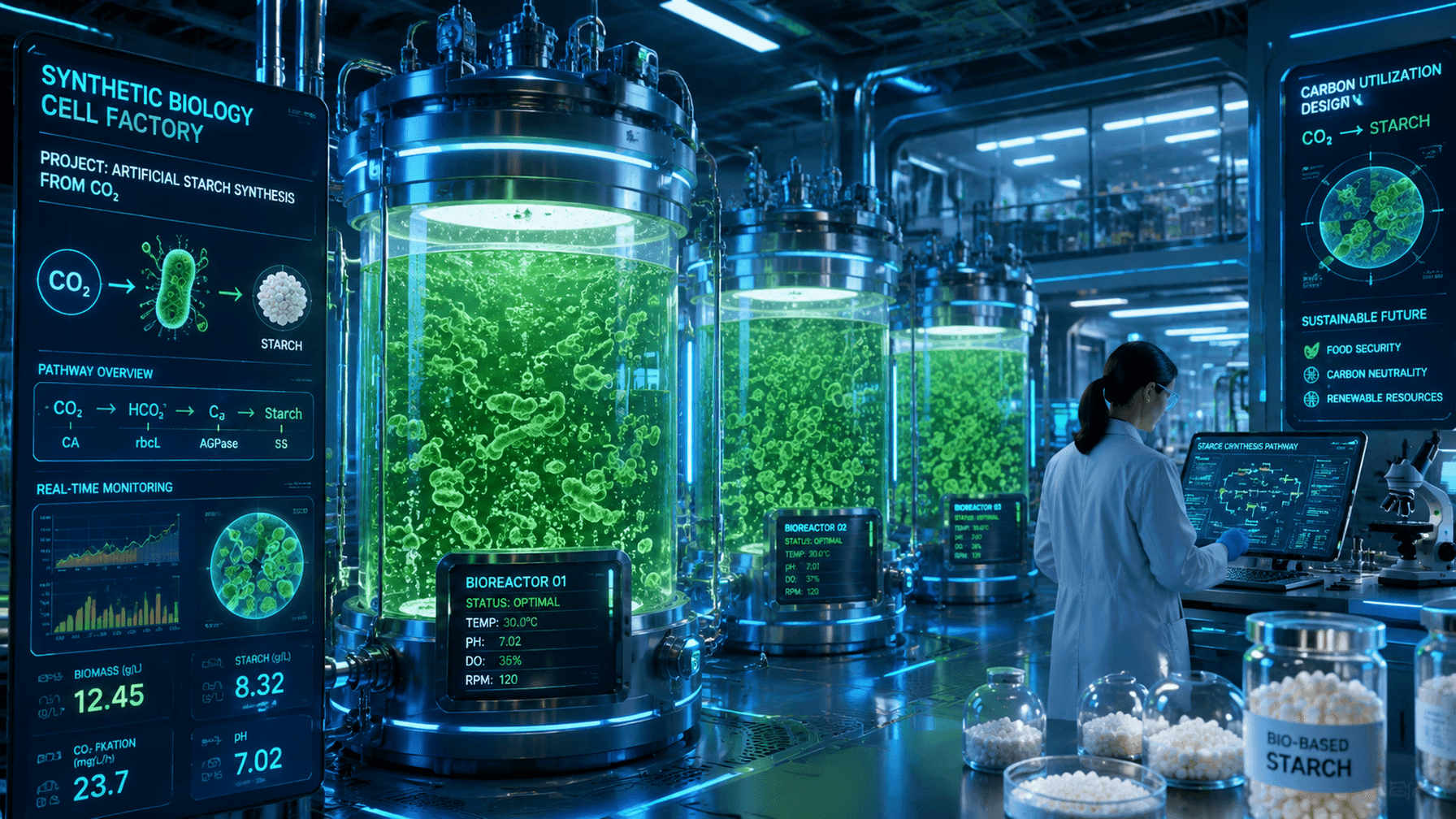
💡Discover how AI-driven synthetic biology is transforming industrial manufacturing and creating new market opportunities.
⚡ 30-Second TL;DR
What Changed
Synthetic biology sector in China has reached a valuation of 1.1 trillion yuan.
Why It Matters
The integration of AI into biological engineering is creating a new frontier for industrial manufacturing, potentially disrupting traditional chemical production chains.
What To Do Next
Explore open-source protein folding and metabolic pathway modeling tools like AlphaFold or Rosetta to understand the intersection of AI and bio-engineering.
Key Points
- •Synthetic biology sector in China has reached a valuation of 1.1 trillion yuan.
- •AI-powered drug discovery is a core pillar of the current biomanufacturing revolution.
- •Cell factories are enabling sustainable production methods like CO2-to-starch synthesis.
🧠 Deep Insight
AI-generated analysis for this event — not the original article.
🔑 Enhanced Key Takeaways
- •The Chinese government has integrated synthetic biology into its '14th Five-Year Plan' as a strategic emerging industry, providing significant state-backed subsidies and R&D funding.
- •Major industrial hubs, particularly in the Yangtze River Delta and the Greater Bay Area, have established specialized synthetic biology industrial parks to accelerate the commercialization of lab-scale research.
- •China's biomanufacturing strategy emphasizes the 'Bio-Economy' transition, aiming to reduce reliance on traditional petrochemical feedstocks by shifting toward renewable biomass and carbon-capture utilization.
- •Leading Chinese tech giants, including Baidu and Tencent, have launched specialized AI-for-Science platforms specifically designed to predict protein structures and optimize metabolic pathways for synthetic organisms.
- •The sector is increasingly focusing on 'platform companies' that provide standardized DNA synthesis, gene editing, and high-throughput screening services to lower the barrier to entry for smaller biotech startups.
🛠️ Technical Deep Dive
- Metabolic Pathway Engineering: Utilization of CRISPR-Cas9 and multiplex automated genome engineering (MAGE) to optimize flux in microbial cell factories.
- AI-Driven Protein Design: Deployment of deep learning models (similar to AlphaFold/ProteinMPNN) to design de novo enzymes with enhanced catalytic efficiency for non-natural chemical synthesis.
- Carbon Fixation Pathways: Implementation of synthetic Calvin-Benson-Bassham (CBB) cycle variants and reductive glycine pathways to improve the efficiency of CO2 conversion into multi-carbon compounds.
- High-Throughput Screening: Integration of microfluidic droplet technology to screen millions of engineered cell variants per hour for desired phenotypic traits.
🔮 Future ImplicationsAI analysis grounded in cited sources
⏳ Timeline
Weekly AI Recap
Read this week's curated digest of top AI events →
👉Related Updates
AI-curated news aggregator. All content rights belong to original publishers.
Original source: Pandaily ↗
This is a summary, not the original. Read the source, or get the weekly briefing.
Weekly AI briefing
One email a week. Unsubscribe anytime.