China's strategic push for domestic photoresist self-sufficiency
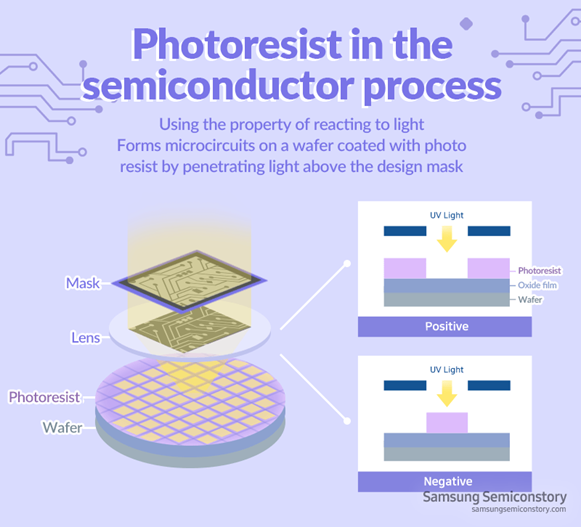
💡Critical analysis of the semiconductor supply chain bottleneck and the geopolitical implications of material sovereignty
⚡ 30-Second TL;DR
What Changed
Photoresist is a critical bottleneck in semiconductor manufacturing with high import dependency.
Why It Matters
Achieving domestic photoresist capability is essential for China's semiconductor sovereignty, as supply chain disruptions could halt advanced chip production.
What To Do Next
Monitor the supply chain stability of critical semiconductor materials if your hardware stack relies on advanced process nodes.
Key Points
- •Photoresist is a critical bottleneck in semiconductor manufacturing with high import dependency.
- •Japanese companies dominate the high-end ArF and EUV photoresist market.
- •China is initiating anti-dumping investigations and fostering local supply chains to ensure material security.
🧠 Deep Insight
Background and context from public sources — not the original article. 20 sources cited.
🔑 Enhanced Key Takeaways
- •China's photoresist market reached an estimated $771 million in 2024, representing 28.2% of global demand, and experienced a 42.25% year-over-year increase, largely driven by strategic substitution efforts.
- •Domestic penetration rates for advanced photoresist types in China remain low, with approximately 20% for g-line and i-line photoresists, under 5% for KrF, and below 1% for ArF, as of late 2024.
- •Several Chinese companies are making notable progress; for instance, Hubei Dinglong's ArF and KrF photoresists have passed customer evaluations and secured initial orders from domestic wafer manufacturers, while Xuzhou B&C Chemical aims for mass production of core KrF and ArF materials for advanced nodes within five years.
- •On January 7, 2026, China's Ministry of Commerce initiated an anti-dumping investigation into dichlorosilane originating from Japan, a critical precursor chemical used in semiconductor and solar cell manufacturing, further escalating bilateral trade tensions.
- •Chinese researchers, led by the Shanghai AI Lab, have developed an AI-powered platform that integrates 'AI decision-making + automated synthesis' to enable the stable production of high-purity, consistent, and efficient KrF photoresist resin.
🛠️ Technical Deep Dive
- ArF Photoresists: These are chemically amplified (CA) photoresists designed for 193 nm exposure wavelengths. Their composition typically includes a resin (the core raw material), a photoacid generator (PAG), a solvent, an alkali, a leveling agent, and other functional additives. ArF resists are categorized into dry resists (using air as the refractive medium for processes above 45 nm) and wet or immersion resists (using water as the refractive medium for 45 nm integrated circuits and below, enabling feature sizes down to 7 nm). The resin structure, often derived from polymethyl methacrylate, is crucial, and its properties are optimized by adjusting monomer structures and enhancing purification and mixing processes.
- EUV Photoresists: These materials are designed for extreme ultraviolet (EUV) lithography at a 13.5 nm wavelength. Current EUV photoresists are primarily chemically amplified resists (CARs) adapted from 193 nm immersion lithography. A significant challenge is the resolution-sensitivity-roughness (RLS) trade-off. Advanced formulations incorporate metal-containing components, such as tin, antimony, or zirconium, to enhance EUV absorption efficiency and improve pattern resolution, aiming for features below 10 nm with minimal defectivity. The development also focuses on improving photon efficiency and establishing domestic testing methods.
- Technical Challenges: High-end photoresist production faces significant hurdles, including achieving ppb-level purity for raw materials (resins/PAGs) and enduring lengthy 2-3 year validation cycles at foundries. The formulation complexity is high, requiring precise adjustment and combination of hundreds or thousands of resins, photoacids, and additives.
- AI in Photoresist R&D: Chinese researchers have introduced an AI-powered platform, built on the 'Intern AI model,' that integrates 'AI decision-making + automated synthesis' into a closed-loop R&D framework. This system has been successfully used to develop KrF photoresist resin with high purity, strong consistency, and improved production efficiency.
🔮 Future ImplicationsAI analysis grounded in cited sources
⏳ Timeline
📎 Sources (20)
Factual claims are grounded in the sources below. Forward-looking analysis is AI-generated interpretation.
Weekly AI Recap
Read this week's curated digest of top AI events →
👉Related Updates


AI-curated news aggregator. All content rights belong to original publishers.
Original source: 虎嗅 ↗
This is a summary, not the original. Read the source, or get the weekly briefing.
The weekly digest
One email a week. Unsubscribe anytime.