China's Push to Master Dextrous Robot Hands
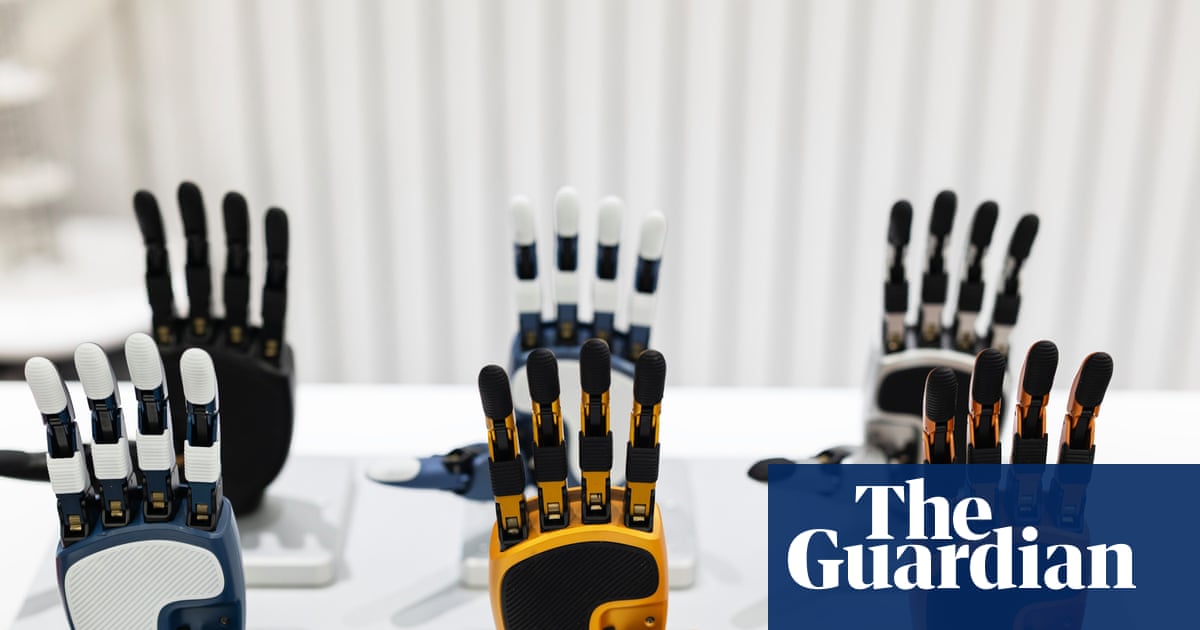
💡Dextrous hands are the final hurdle for humanoid robots; see why China is betting big on this hardware breakthrough.
⚡ 30-Second TL;DR
What Changed
Humanoid robot development is shifting focus toward complex, dextrous manipulation.
Why It Matters
If successful, this breakthrough will significantly expand the utility of humanoid robots in domestic and industrial environments, moving beyond simple locomotion.
What To Do Next
Monitor the latest research papers on 'dexterous manipulation' and 'sim-to-real' reinforcement learning for robotic grippers.
Key Points
- •Humanoid robot development is shifting focus toward complex, dextrous manipulation.
- •Chinese firms are leading the race to solve the neurological and mechanical challenges of replicating human hand movements.
- •The goal is to enable robots to perform fine motor tasks like buttoning shirts or tying shoelaces.
🧠 Deep Insight
AI-generated analysis for this event — not the original article.
🔑 Enhanced Key Takeaways
- •Chinese robotics firms are increasingly adopting 'vision-language-action' (VLA) models to bridge the gap between high-level task planning and low-level motor control in dextrous hands.
- •The integration of tactile sensing arrays, utilizing MEMS (Micro-Electro-Mechanical Systems) technology, is becoming a standard requirement for Chinese-made hands to achieve human-level force feedback.
- •Government-backed initiatives, such as the 'Robot + Application' action plan, are providing significant subsidies to companies focusing on core components like high-torque-density actuators and harmonic drives essential for hand dexterity.
- •There is a strategic shift toward 'sim-to-real' reinforcement learning pipelines, allowing Chinese developers to train dextrous hands in massive virtual environments before deploying to physical hardware.
- •Supply chain localization is a primary driver, with companies like Fourier Intelligence and Unitree Robotics aggressively developing proprietary motor-gearbox units to reduce reliance on imported Japanese components.
📊 Competitor Analysis▸ Show
| Feature | Chinese Dextrous Hands (e.g., Unitree, Fourier) | Western Counterparts (e.g., Tesla Optimus, Sanctuary AI) | Key Difference |
|---|---|---|---|
| Actuation | High-torque, localized motor-gearbox units | Often integrated electromechanical or hydraulic | Cost-efficiency vs. raw power |
| Sensing | Dense tactile/force arrays | Vision-centric with limited tactile | Emphasis on touch-feedback |
| Pricing | Aggressive mass-production targets ($10k-$20k) | Premium/Enterprise pricing models | Market penetration strategy |
| Benchmarks | Rapid iteration, high DOF (Degrees of Freedom) | Focus on general-purpose autonomy | Specialized vs. Generalist |
🛠️ Technical Deep Dive
- Actuator Architecture: Utilization of quasi-direct drive (QDD) actuators to achieve high transparency and back-drivability, essential for safe human-robot interaction.
- Degrees of Freedom (DOF): Most advanced Chinese prototypes now feature 12 to 20+ active DOFs per hand, mimicking the complexity of the human musculoskeletal system.
- Control Loops: Implementation of hierarchical control architectures where high-frequency (1kHz+) loops handle torque control while lower-frequency loops manage trajectory planning.
- Tactile Sensing: Integration of flexible, skin-like pressure sensors using capacitive or piezoresistive materials to detect slip and object geometry in real-time.
🔮 Future ImplicationsAI analysis grounded in cited sources
⏳ Timeline
Weekly AI Recap
Read this week's curated digest of top AI events →
👉Related Updates


AI-curated news aggregator. All content rights belong to original publishers.
Original source: The Guardian Technology ↗
This is a summary, not the original. Read the source, or get the weekly briefing.
Weekly AI briefing
One email a week. Unsubscribe anytime.