China's New Education Plan Prioritizes Tech Self-Reliance
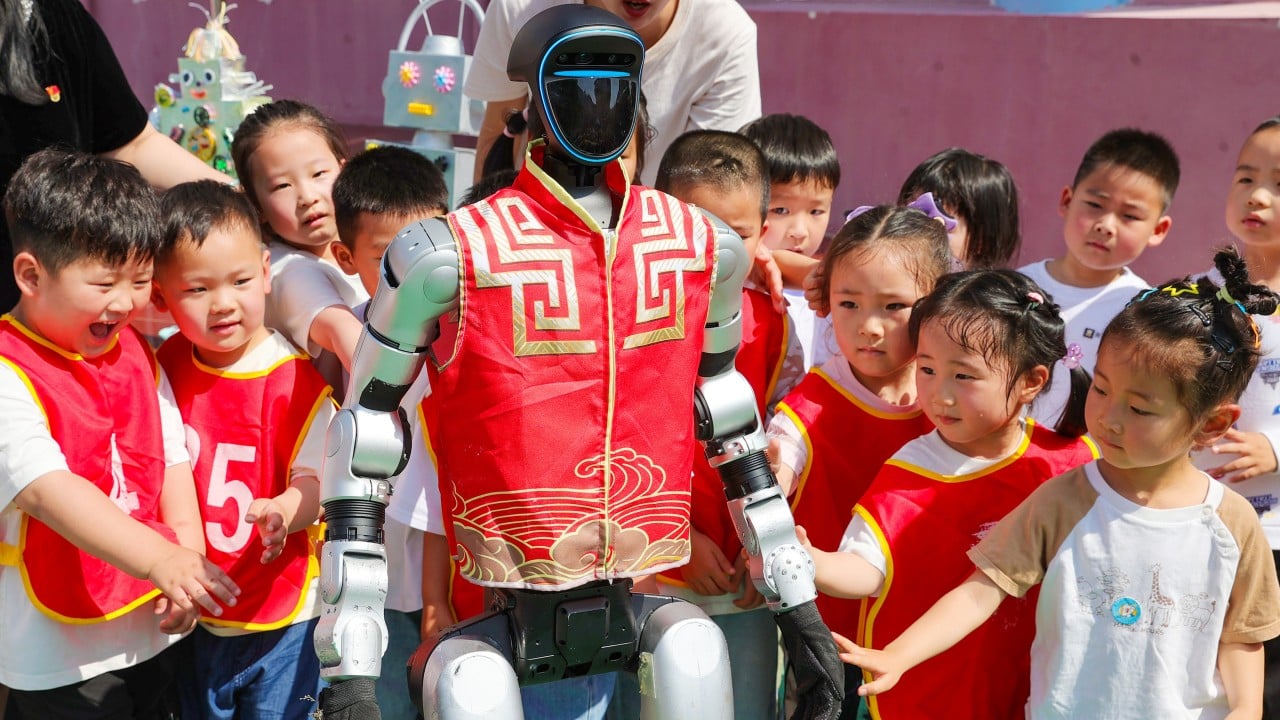
Understand the long-term talent pipeline shifts that will shape China's AI and deep-tech research capabilities.
30-Second TL;DR
What Changed
Focus on national strategy to achieve technological self-reliance
Why It Matters
This policy shift suggests a significant increase in the pipeline of STEM-trained talent in China, which will likely accelerate domestic AI and semiconductor research. Companies operating in the region should prepare for a more specialized local workforce.
What To Do Next
Monitor the upcoming curriculum changes in Chinese universities to identify emerging research hubs for potential AI talent recruitment.
Key Points
- •Focus on national strategy to achieve technological self-reliance
- •Implementation of 15 flagship programs to build an education powerhouse
- •Increased emphasis on vocational training and STEM education
- •Strategic response to a shrinking school-age population
Deep Insight
AI-generated analysis for this event — not the original article.
Enhanced Key Takeaways
- •The plan mandates a 20% increase in university-industry collaborative research centers specifically targeting semiconductor and AI hardware development.
- •New policy directives require top-tier universities to cap enrollment in humanities and social sciences to reallocate funding toward 'hard' science departments.
- •The Ministry of Education has introduced a 'Digital Literacy' certification requirement for all vocational graduates to ensure workforce readiness for automated manufacturing environments.
- •To address the demographic shift, the plan incentivizes the integration of AI-driven personalized learning platforms to maintain educational quality despite a shrinking teaching workforce.
- •The blueprint includes a specific mandate for domestic software adoption in educational infrastructure, phasing out foreign-made operating systems and productivity suites in public schools by 2028.
Technical Deep Dive
- Implementation of a national-scale 'Education Brain' cloud infrastructure utilizing federated learning to aggregate student performance data while maintaining data sovereignty.
- Integration of large-scale educational foundation models (EFMs) designed to provide real-time, adaptive tutoring in STEM subjects, trained on localized curriculum datasets.
- Deployment of high-bandwidth, low-latency campus networks utilizing 6G-ready protocols to support immersive VR/AR vocational training simulations.
- Adoption of blockchain-based credentialing systems to standardize and verify vocational certifications across provincial borders, ensuring national portability of skills.
Future ImplicationsAI analysis grounded in cited sources
Timeline
- 2021-07Introduction of the 'Double Reduction' policy to curb private tutoring and shift focus to public school quality.
- 2022-09Ministry of Education releases the 'New Engineering' initiative to overhaul undergraduate curriculum for emerging technologies.
- 2024-03Government work report emphasizes 'New Quality Productive Forces,' signaling a shift toward high-tech industrial education.
- 2025-01Launch of the National Vocational Education Digitalization Platform to centralize technical training resources.
- 2026-06Official unveiling of the five-year education blueprint for technological self-reliance.
Weekly AI Recap
Read this week's curated digest of top AI events →
Related Updates

AI-curated news aggregator. All content rights belong to original publishers.
Original source: SCMP Technology ↗
This is a summary, not the original. Read the source, or get the weekly briefing.
The weekly digest
One email a week. Unsubscribe anytime.