China's New Transmission Price Policy for Power Grids
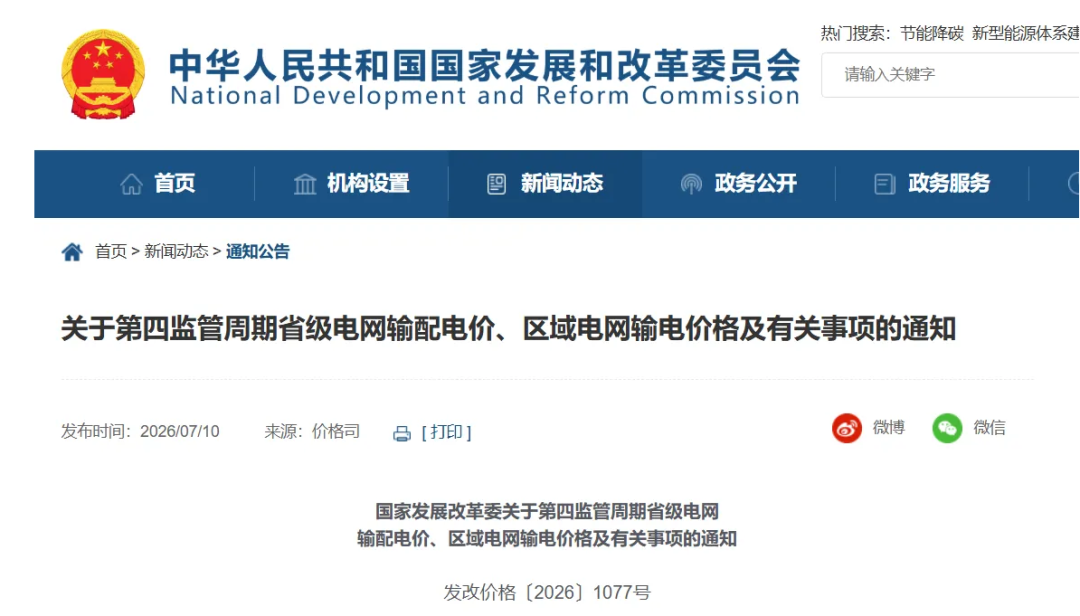
💡Energy costs are a major factor for AI infrastructure; understand how new power pricing affects your data center ROI.
⚡ 30-Second TL;DR
What Changed
New transmission price policy aims to optimize regional energy costs.
Why It Matters
AI infrastructure providers should re-evaluate data center locations based on the new regional electricity pricing to optimize operational expenditure.
What To Do Next
Review your data center energy cost projections if you operate large-scale GPU clusters in Central or Northwest China.
Key Points
- •New transmission price policy aims to optimize regional energy costs.
- •Central China faces price increases while Northwest China sees decreases.
- •This policy shift impacts the operational costs of energy-intensive AI data centers.
🧠 Deep Insight
AI-generated analysis for this event — not the original article.
🔑 Enhanced Key Takeaways
- •The policy marks the transition to a 'capacity-based' pricing mechanism, moving away from the traditional volume-based model to better reflect the fixed costs of grid infrastructure.
- •The NDRC has introduced a 'two-part' tariff structure for large industrial users, separating capacity charges from electricity consumption charges to improve grid utilization efficiency.
- •The regulatory shift includes a new mechanism for cross-provincial power trading, designed to reduce the 'price gap' between power-exporting and power-importing regions.
- •Grid companies are now required to disclose more granular cost data, increasing transparency in how transmission and distribution (T&D) prices are calculated.
- •The policy explicitly incentivizes the integration of renewable energy by offering preferential transmission rates for green power delivered through ultra-high voltage (UHV) lines.
🛠️ Technical Deep Dive
- The pricing model utilizes a 'Cost Plus Reasonable Profit' methodology, where the 'reasonable profit' is calculated based on a fixed return on assets (ROA) rate, typically capped around 6-7% for regulated grid assets.
- Implementation involves the deployment of advanced metering infrastructure (AMI) to support real-time load monitoring, which is essential for the new capacity-based billing system.
- The regulatory framework mandates the separation of grid business accounting from competitive business segments to prevent cross-subsidization.
- Transmission price calculations now incorporate a 'dynamic adjustment factor' that accounts for regional grid investment intensity and historical asset depreciation schedules.
🔮 Future ImplicationsAI analysis grounded in cited sources
⏳ Timeline
Weekly AI Recap
Read this week's curated digest of top AI events →
👉Related Updates



AI-curated news aggregator. All content rights belong to original publishers.
Original source: 钛媒体 ↗
This is a summary, not the original. Read the source, or get the weekly briefing.
The weekly digest
One email a week. Unsubscribe anytime.