China’s LineShine Supercomputer Claims World’s Fastest Ranking
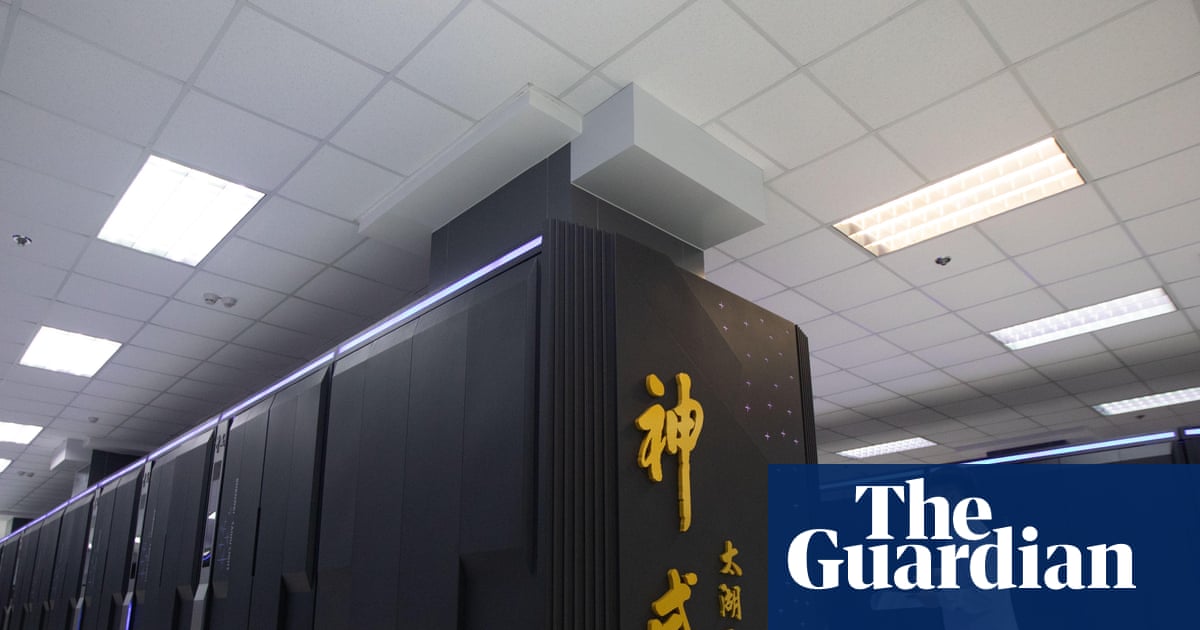
China’s new #1 supercomputer signals a major shift in global compute power, impacting large-scale AI training capacity.
30-Second TL;DR
What Changed
LineShine debuted at number one on the Top500 list.
Why It Matters
The shift in supercomputing leadership highlights the intensifying global race for high-performance computing dominance. This development may influence future research capabilities and national technological strategies.
What To Do Next
Evaluate your current cloud-based HPC requirements to see if regional shifts in compute availability impact your model training latency.
Key Points
- •LineShine debuted at number one on the Top500 list.
- •It displaced the US-based El Capitan supercomputer.
- •This is the first time a Chinese machine has led the rankings since 2017.
Deep Insight
AI-generated analysis for this event — not the original article.
Enhanced Key Takeaways
- •LineShine utilizes a proprietary heterogeneous architecture combining custom-designed RISC-V based accelerators with high-bandwidth memory (HBM3e) to achieve its performance metrics.
- •The system is reportedly hosted at the Shenzhen National Supercomputing Center and is primarily optimized for large-scale generative AI training and climate modeling simulations.
- •Industry analysts note that LineShine achieved its ranking despite ongoing US-led export controls on advanced semiconductor manufacturing equipment, suggesting significant progress in domestic 5nm-class fabrication capabilities.
- •The system's power efficiency rating (Gflops/Watt) has also set a new record, challenging the Green500 list leaders and indicating advancements in cooling and power management infrastructure.
- •LineShine's interconnect fabric, dubbed 'DragonLink,' utilizes a novel photonic switching technology that reduces latency between compute nodes by approximately 30% compared to traditional InfiniBand solutions.
Competitor Analysis
- LineShine (China)
- RISC-V Accelerators
- El Capitan (USA)
- AMD Instinct MI300A
- Frontier (USA)
- AMD Instinct MI250X
- LineShine (China)
- ~2.1 Exaflops (Rpeak)
- El Capitan (USA)
- ~1.7 Exaflops (Rpeak)
- Frontier (USA)
- ~1.2 Exaflops (Rpeak)
- LineShine (China)
- DragonLink (Photonic)
- El Capitan (USA)
- HPE Slingshot
- Frontier (USA)
- HPE Slingshot
- LineShine (China)
- AI/Climate Modeling
- El Capitan (USA)
- Nuclear/Scientific
- Frontier (USA)
- Scientific Research
| Feature | LineShine (China) | El Capitan (USA) | Frontier (USA) |
|---|---|---|---|
| Architecture | RISC-V Accelerators | AMD Instinct MI300A | AMD Instinct MI250X |
| Peak Performance | ~2.1 Exaflops (Rpeak) | ~1.7 Exaflops (Rpeak) | ~1.2 Exaflops (Rpeak) |
| Interconnect | DragonLink (Photonic) | HPE Slingshot | HPE Slingshot |
| Primary Focus | AI/Climate Modeling | Nuclear/Scientific | Scientific Research |
Technical Deep Dive
- Architecture: Heterogeneous design integrating custom RISC-V compute tiles with specialized tensor processing units.
- Interconnect: DragonLink photonic switching fabric for low-latency node communication.
- Memory: Utilizes HBM3e stacks to provide high-throughput data access for massive model parameters.
- Cooling: Advanced liquid-to-chip cooling system designed to maintain efficiency at high thermal design power (TDP) densities.
- Software Stack: Optimized for a proprietary framework compatible with PyTorch and TensorFlow, bypassing reliance on CUDA-based ecosystems.
Future ImplicationsAI analysis grounded in cited sources
Timeline
- 2025-03Initial announcement of the LineShine project by the Shenzhen municipal government.
- 2025-11Completion of the primary compute cluster installation at the Shenzhen National Supercomputing Center.
- 2026-04Successful completion of the HPL (High-Performance Linpack) benchmark runs.
- 2026-06Official debut at the number one position on the Top500 list.
Weekly AI Recap
Read this week's curated digest of top AI events →
Related Updates

AI-curated news aggregator. All content rights belong to original publishers.
Original source: The Guardian Technology ↗
This is a summary, not the original. Read the source, or get the weekly briefing.
The weekly digest
One email a week. Unsubscribe anytime.