🐼Pandaily•Freshcollected in 55m
China's JF-22 Tunnel Simulates Extreme 10 km/s Flight
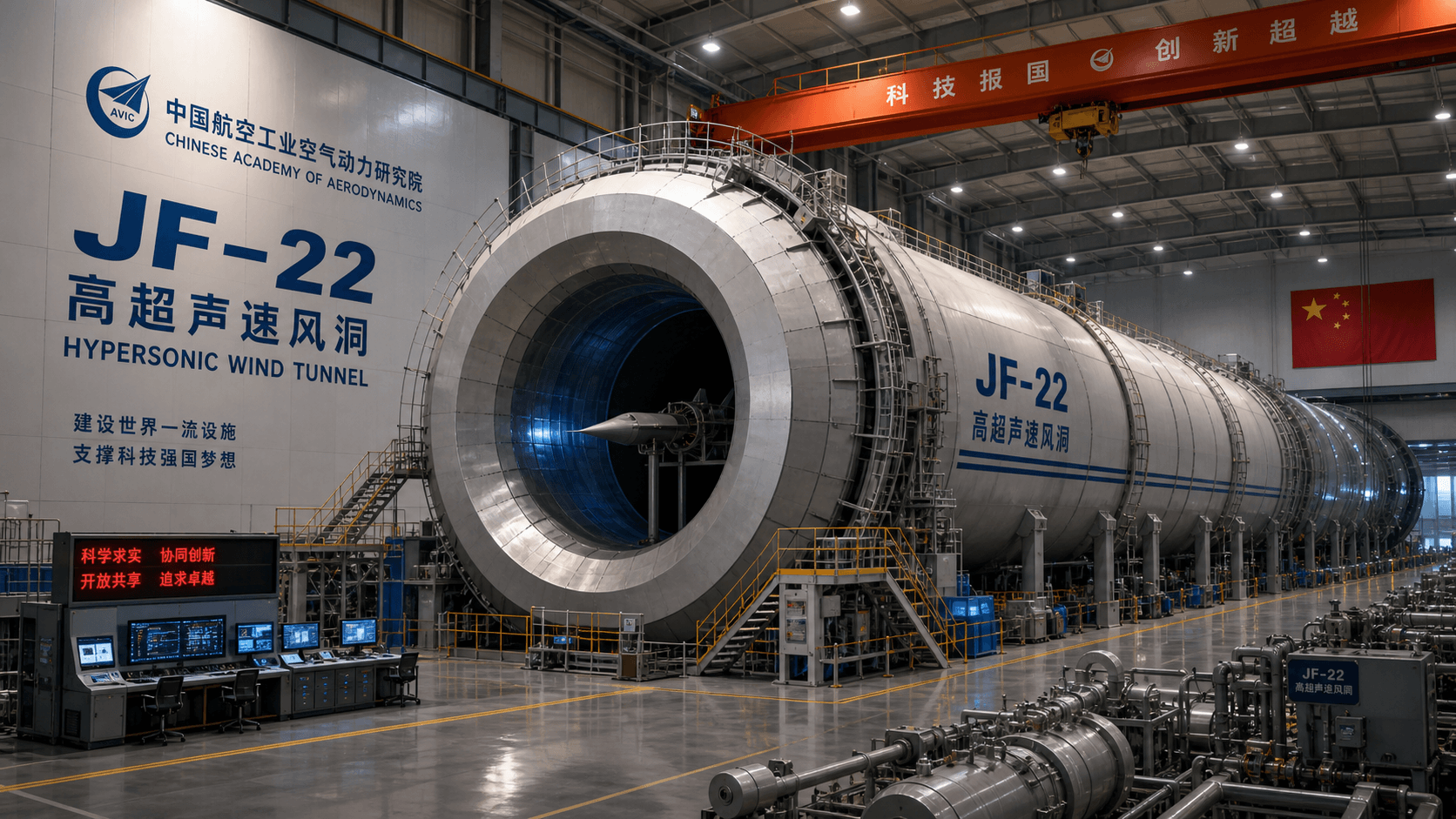
💡Understand the infrastructure enabling the future of hypersonic global travel and aerospace engineering.
⚡ 30-Second TL;DR
What Changed
Simulates extreme flight conditions at 10 km/s
Why It Matters
This facility significantly accelerates the R&D cycle for aerospace engineering, potentially shortening the timeline for commercial hypersonic travel.
What To Do Next
Monitor aerospace simulation research papers for new data on high-temperature material stress testing.
Who should care:Researchers & Academics
Key Points
- •Simulates extreme flight conditions at 10 km/s
- •Reaches gas temperatures up to 20,000K
- •Supports development of next-gen hypersonic aircraft and spaceplanes
- •Enables research for potential 2-hour global travel
🧠 Deep Insight
AI-generated analysis for this event.
🔑 Enhanced Key Takeaways
- •The JF-22 is a reflected shock tunnel developed by the Institute of Mechanics at the Chinese Academy of Sciences (IMCAS), specifically designed to overcome the limitations of its predecessor, the JF-12.
- •The facility utilizes a unique 'large-scale shock tunnel' technology that allows for a test duration of approximately 100 milliseconds, which is significantly longer than traditional shock tunnels of this scale.
- •It is located in Huairou, Beijing, as part of a larger national research infrastructure project aimed at accelerating aerospace engineering breakthroughs.
- •The tunnel's design incorporates a high-pressure combustion driver capable of generating the massive enthalpy required to simulate conditions at Mach 30.
- •Beyond aerospace, the facility is utilized for fundamental research in chemical non-equilibrium flows and plasma physics relevant to hypersonic flight.
📊 Competitor Analysis▸ Show
| Feature | JF-22 (China) | T4 Stalker (Australia) | LENS II (USA) |
|---|---|---|---|
| Max Speed | Mach 30 (10 km/s) | Mach 25+ | Mach 15-20 |
| Test Duration | ~100 ms | ~1-2 ms | ~30 ms |
| Primary Focus | Spaceplane/Hypersonic | Scramjet/Combustion | Hypersonic Aerodynamics |
🛠️ Technical Deep Dive
- Driver Type: High-pressure combustion driver utilizing hydrogen-oxygen mixtures.
- Test Section Diameter: 2.5 meters, allowing for larger scale models compared to previous generations.
- Total Enthalpy: Capable of reaching up to 25 MJ/kg, simulating the extreme energy states of atmospheric re-entry.
- Pressure Range: Operates across a wide range of pressures to simulate altitudes from 40 km to 100 km.
- Instrumentation: Employs high-speed schlieren photography, pressure transducers, and laser-based diagnostic systems to capture transient flow phenomena.
🔮 Future ImplicationsAI analysis grounded in cited sources
China will achieve a functional hypersonic spaceplane prototype by 2030.
The JF-22 provides the necessary ground-testing environment to validate thermal protection systems and propulsion integration required for orbital-capable hypersonic vehicles.
The JF-22 will reduce the cost of hypersonic vehicle development by 40%.
By enabling high-fidelity ground testing, the facility significantly reduces the reliance on expensive and risky flight test failures.
⏳ Timeline
2012-01
JF-12 shock tunnel, the predecessor to JF-22, becomes operational.
2018-03
Construction of the JF-22 facility officially commences in Beijing.
2021-08
JF-22 completes its final assembly and initial system integration tests.
2023-05
The facility passes national acceptance checks and begins formal research operations.
📰
Weekly AI Recap
Read this week's curated digest of top AI events →
👉Related Updates


AI-curated news aggregator. All content rights belong to original publishers.
Original source: Pandaily ↗