China’s Humanoid Boom Faces Deployment Reality Check
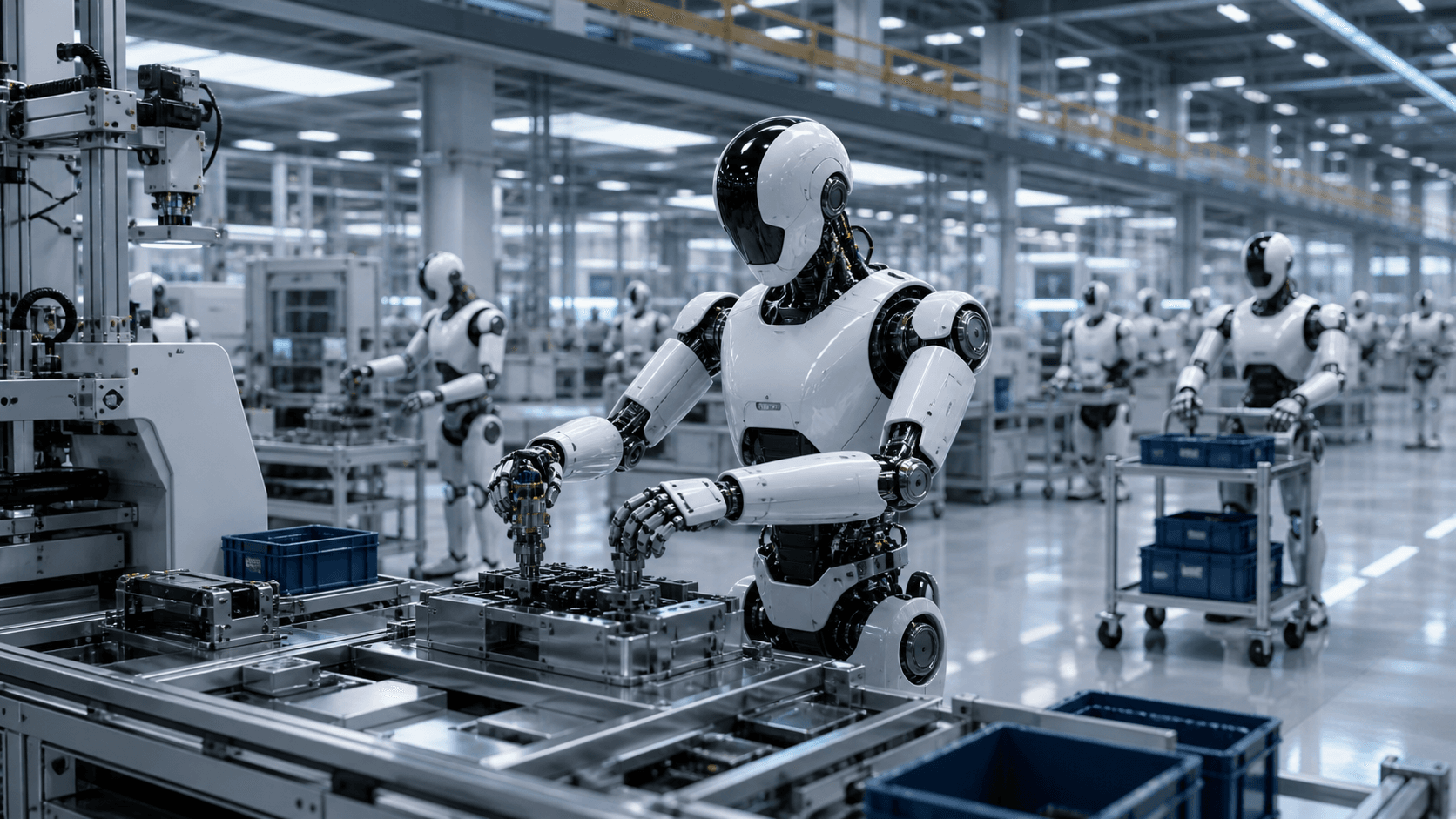
China may build 100,000 humanoids in 2026—but shipment data reveals whether deployment can keep pace.
30-Second TL;DR
What Changed
MIIT forecasts China’s humanoid robot output will exceed 100,000 units in 2026.
Why It Matters
The projected production surge could make embodied AI hardware more accessible to developers and enterprises. However, weak shipment execution and research-heavy demand suggest that buyers should validate reliability, software maturity, and deployment economics rather than relying on production forecasts alone.
What To Do Next
Request current shipment, SDK, and support documentation from AgiBot and Unitree before committing to an embodied-AI pilot.
Key Points
- •MIIT forecasts China’s humanoid robot output will exceed 100,000 units in 2026.
- •AgiBot and Unitree are projected to produce 15,000 and 11,000 units respectively.
- •UBTech shipment slippage raises concerns about execution and delivery capacity.
- •Unitree derives 70% of its revenue from research and education, signaling limited mass-market deployment.
Deep Insight
AI-generated analysis for this event — not the original article.
Enhanced Key Takeaways
- •The Chinese government's 'Robot + Application' action plan explicitly mandates the integration of humanoid robots into manufacturing, hazardous environments, and elderly care sectors to drive domestic GDP growth.
- •Supply chain bottlenecks for high-torque density actuators and harmonic reducers remain the primary technical constraint preventing Chinese manufacturers from scaling beyond pilot programs.
- •AgiBot has recently pivoted toward 'embodied AI' foundation models, attempting to differentiate its hardware by offering a proprietary software stack that integrates with industrial PLCs.
- •Unitree's G1 and H1 models have seen significant price erosion in the domestic market, with entry-level units now retailing below $16,000 to capture market share from international competitors like Tesla's Optimus.
- •Local municipal governments in Beijing and Shanghai have introduced direct subsidies for companies that purchase domestically produced humanoid robots, artificially inflating 2026 production forecasts.
Competitor Analysis
- AgiBot (AgiBot-A1)
- Industrial/Logistics
- Unitree (G1)
- Research/Education
- UBTech (Walker S)
- Automotive/Manufacturing
- Tesla (Optimus Gen 2)
- Mass Market/Industrial
- AgiBot (AgiBot-A1)
- ~$25,000
- Unitree (G1)
- ~$16,000
- UBTech (Walker S)
- ~$100,000+
- Tesla (Optimus Gen 2)
- TBD (Target <$20k)
- AgiBot (AgiBot-A1)
- Industrial Integration
- Unitree (G1)
- Cost/Agility
- UBTech (Walker S)
- Human-Robot Interaction
- Tesla (Optimus Gen 2)
- AI/Compute Scale
| Feature | AgiBot (AgiBot-A1) | Unitree (G1) | UBTech (Walker S) | Tesla (Optimus Gen 2) |
|---|---|---|---|---|
| Target Market | Industrial/Logistics | Research/Education | Automotive/Manufacturing | Mass Market/Industrial |
| Est. Price | ~$25,000 | ~$16,000 | ~$100,000+ | TBD (Target <$20k) |
| Key Strength | Industrial Integration | Cost/Agility | Human-Robot Interaction | AI/Compute Scale |
Technical Deep Dive
- Actuation: Most Chinese humanoid units utilize custom-developed planetary roller screw actuators or high-torque density brushless DC motors to reduce reliance on imported harmonic drives.
- Control Architecture: Transitioning from traditional PID control to Whole-Body Control (WBC) frameworks combined with Reinforcement Learning (RL) for locomotion.
- Sensing: Integration of multi-modal sensor fusion, typically combining 3D LiDAR, depth cameras, and tactile skin sensors for object manipulation.
- Compute: Heavy reliance on NVIDIA Jetson Orin modules for edge processing, though domestic alternatives like Huawei Ascend chips are being integrated to mitigate export control risks.
Future ImplicationsAI analysis grounded in cited sources
Timeline
- 2023-11MIIT releases the 'Guiding Opinions on the Innovation and Development of Humanoid Robots' policy document.
- 2024-02Unitree officially launches the H1 humanoid robot, marking a shift toward commercial-grade hardware.
- 2024-05UBTech signs a strategic partnership with major Chinese automotive OEMs for factory floor testing.
- 2025-01AgiBot secures Series B funding to expand production capacity for its industrial-focused humanoid line.
- 2026-03MIIT announces the 100,000-unit production target for the humanoid robot sector for the 2026 calendar year.
Weekly AI Recap
Read this week's curated digest of top AI events →
Related Updates




AI-curated news aggregator. All content rights belong to original publishers.
Original source: Pandaily ↗
This is a summary, not the original. Read the source, or get the weekly briefing.
The weekly digest
One email a week. Unsubscribe anytime.