China’s GPU Race Moves Beyond Chip Launches
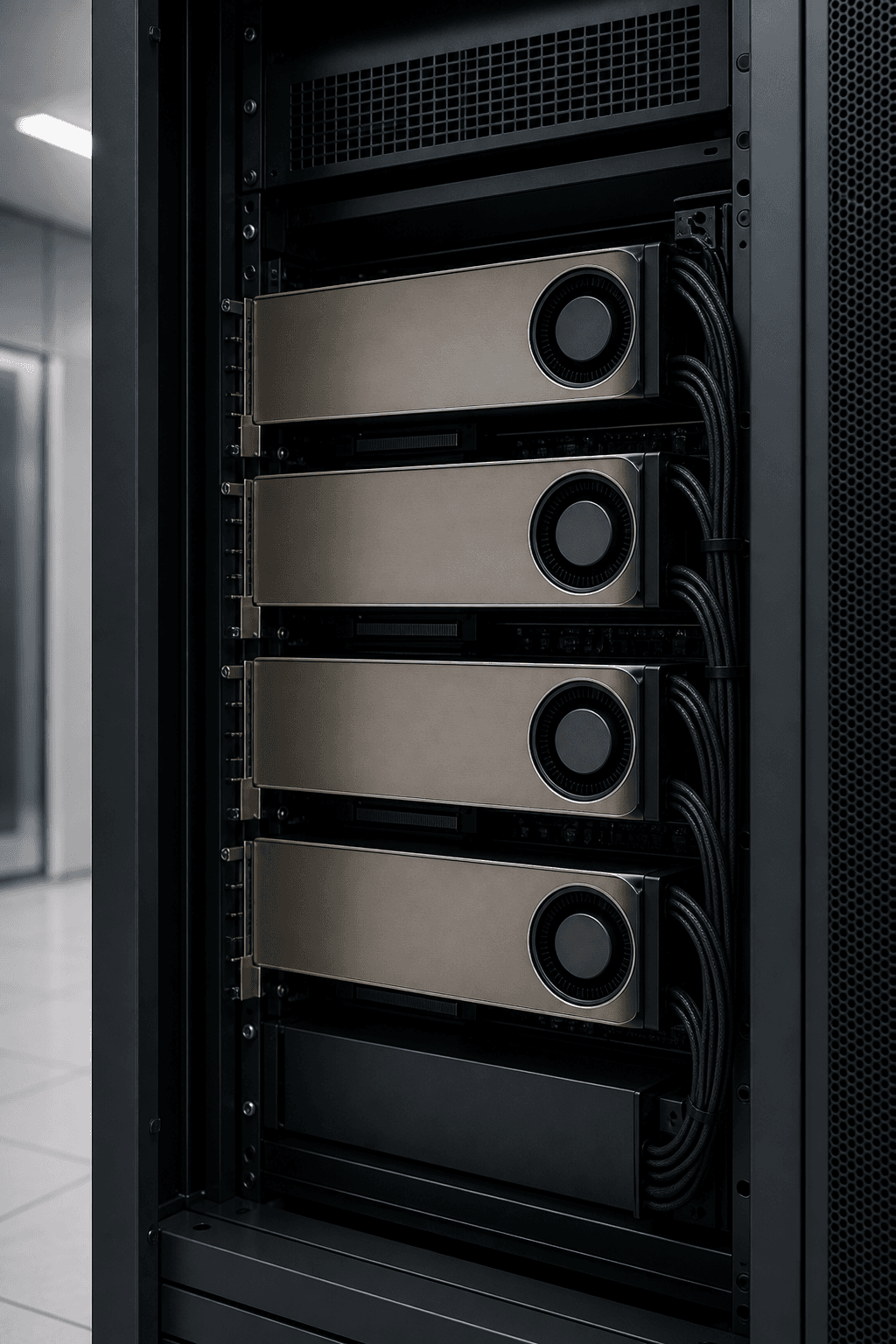
💡China’s GPU makers are competing on deployable ecosystems, not just silicon—key for AI infrastructure planning.
⚡ 30-Second TL;DR
What Changed
Four domestic GPU makers have moved into a post-listing differentiation phase.
Why It Matters
For AI infrastructure buyers, chip specifications alone may become less important than software compatibility, deployment support, and vendor execution. The shift could intensify competition among Chinese GPU suppliers while making ecosystem maturity a key purchasing criterion.
What To Do Next
When evaluating Chinese GPU vendors, run a proof of concept that measures framework compatibility, operator support, inference performance, and deployment support—not just peak TOPS.
Key Points
- •Four domestic GPU makers have moved into a post-listing differentiation phase.
- •Competition is shifting from having a functional chip to closing the commercial loop.
- •Product adoption, software ecosystems, and customer deployment may increasingly determine market position.
🧠 Deep Insight
Background and context from public sources — not the original article. 8 sources cited.
🔑 Enhanced Key Takeaways
- •China's domestic GPU market is bifurcating into two distinct technical strategies: general-purpose GPU (GPGPU) architectures focused on CUDA compatibility versus Domain-Specific Architecture (DSA) models like Enflame's 'Tops Rider'.
- •Nvidia's market share in China is projected to collapse from 40% in 2025 to approximately 8-10% by the end of 2026 due to supply constraints and domestic substitution.
- •Moore Threads has achieved significant developer adoption, reporting an ecosystem of over 800,000 developers utilizing its proprietary MUSA architecture.
- •The industry faces a critical infrastructure bottleneck where power grid capacity, rather than just chip availability, is limiting the deployment of large-scale AI clusters.
- •Domestic AI chip shipments in China are experiencing an 83% year-over-year growth rate in 2026, fueled by state-led incentives to decouple from foreign silicon.
📊 Competitor Analysis▸ Show
| Feature | Moore Threads (MUSA) | Enflame (Tops Rider) | Nvidia (CUDA) |
|---|---|---|---|
| Architecture | GPGPU (CUDA-compatible) | DSA (Proprietary) | GPGPU (Proprietary) |
| Primary Strategy | Developer Ecosystem | Deep Cloud Integration | Market Dominance |
| 2026 Market Position | High-Growth Challenger | Tencent-Anchored | Declining Share |
| Software Stack | MUSA | Tops Rider | CUDA |
🛠️ Technical Deep Dive
- Moore Threads utilizes the MUSA architecture, designed to emulate CUDA functionality to reduce migration friction for developers.
- Enflame employs a Domain-Specific Architecture (DSA) which optimizes for specific AI workloads rather than general-purpose compute.
- Domestic chips are currently constrained by high-end manufacturing yields, leading to a reliance on software-level optimization to match the performance of legacy Nvidia H200 hardware.
🔮 Future ImplicationsAI analysis grounded in cited sources
⏳ Timeline
📎 Sources (8)
Factual claims are grounded in the sources below. Forward-looking analysis is AI-generated interpretation.
Weekly AI Recap
Read this week's curated digest of top AI events →
👉Related Updates


AI-curated news aggregator. All content rights belong to original publishers.
Original source: Pandaily ↗
This is a summary, not the original. Read the source, or get the weekly briefing.
Weekly AI briefing
One email a week. Unsubscribe anytime.