China’s Gen Z Robotics Founders Enter the Fast Lane
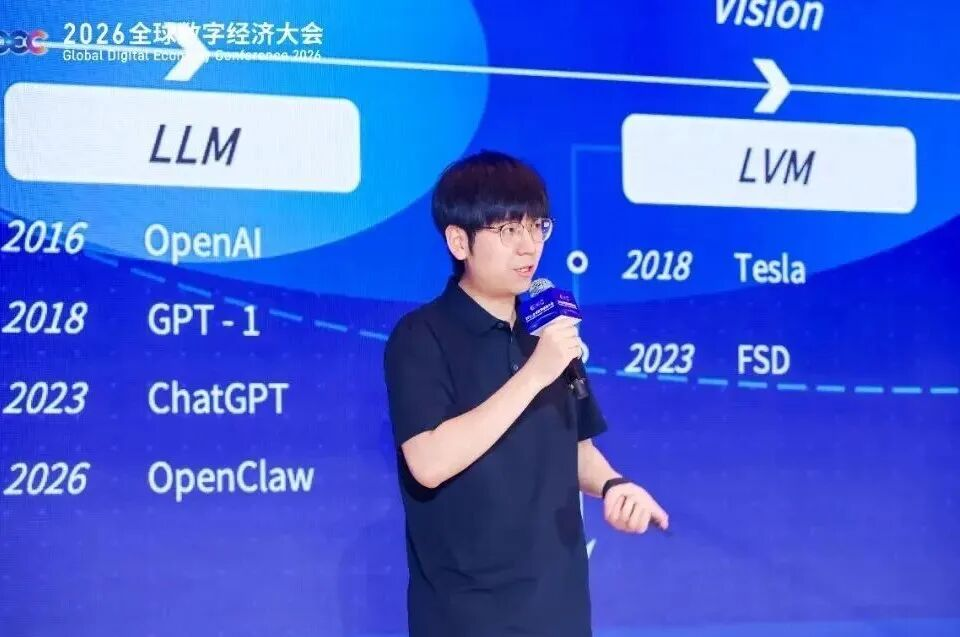
Young founders are raising huge rounds before launch—revealing both the promise and execution risks of embodied AI.
30-Second TL;DR
What Changed
RoboParty completed nearly RMB 500 million in Angel++ and Pre-A financing, with CATL as the sole investor in its latest round.
Why It Matters
The funding momentum shows strong investor appetite for embodied AI and lowers the barrier for technically trained students to start robotics companies. However, the article also emphasizes that scaling production, reliability, supply chains, sales, and after-sales service remain much harder than building a compelling prototype.
What To Do Next
Benchmark your embodied-AI prototype against production constraints by measuring unit cost, sensor durability, deployment uptime, and customer task-completion rates before raising the next round.
Key Points
- •RoboParty completed nearly RMB 500 million in Angel++ and Pre-A financing, with CATL as the sole investor in its latest round.
- •The company reportedly completed six funding rounds in eight months and saw its valuation rise 20-fold.
- •Founder Huang Yi built the 1.2-meter bipedal AlexBot in a university dorm and released its designs to the developer community.
- •Other young founders are targeting household robots, task-specific commercial robots, and neural or myoelectric data interfaces for robot training.
Deep Insight
AI-generated analysis for this event — not the original article.
Enhanced Key Takeaways
- •RoboParty's rapid funding trajectory is part of a broader trend in China where 'Gen Z' founders are leveraging open-source hardware communities to accelerate product-market fit before formal commercialization.
- •The investment from CATL suggests a strategic interest in integrating advanced battery management systems and energy density optimization specifically for embodied AI and humanoid locomotion.
- •Huang Yi's approach to AlexBot emphasizes 'community-driven R&D,' where the release of design files serves as a mechanism for talent acquisition and rapid iterative testing by external developers.
- •The Chinese robotics ecosystem is currently shifting from industrial automation to 'General Purpose Embodied AI,' with significant capital flowing into companies that demonstrate high-frequency motor control and low-latency neural interfaces.
- •Regulatory support in regions like Beijing and Shenzhen has provided these startups with subsidized access to specialized testing facilities, lowering the barrier to entry for university-based spinouts.
Technical Deep Dive
- AlexBot utilizes a bipedal locomotion architecture optimized for 1.2-meter height, focusing on high torque-to-weight ratio actuators.
- The control system integrates myoelectric data interfaces, allowing for human-in-the-loop training to refine movement patterns.
- RP1 is designed with a modular hardware stack, likely utilizing custom-developed motor controllers to reduce dependency on imported high-end components.
- The software stack emphasizes end-to-end imitation learning models, enabling the robot to generalize tasks from limited human demonstration data.
Future ImplicationsAI analysis grounded in cited sources
Timeline
- 2025-12Huang Yi begins development of the AlexBot prototype in a university dormitory.
- 2026-01RoboParty is formally incorporated following initial interest from early-stage investors.
- 2026-05RoboParty secures Angel++ and Pre-A funding rounds led by CATL.
Weekly AI Recap
Read this week's curated digest of top AI events →
AI-curated news aggregator. All content rights belong to original publishers.
Original source: 虎嗅 ↗
This is a summary, not the original. Read the source, or get the weekly briefing.
The weekly digest
One email a week. Unsubscribe anytime.