China's First 100k-Card Domestic AI Cluster Goes Live
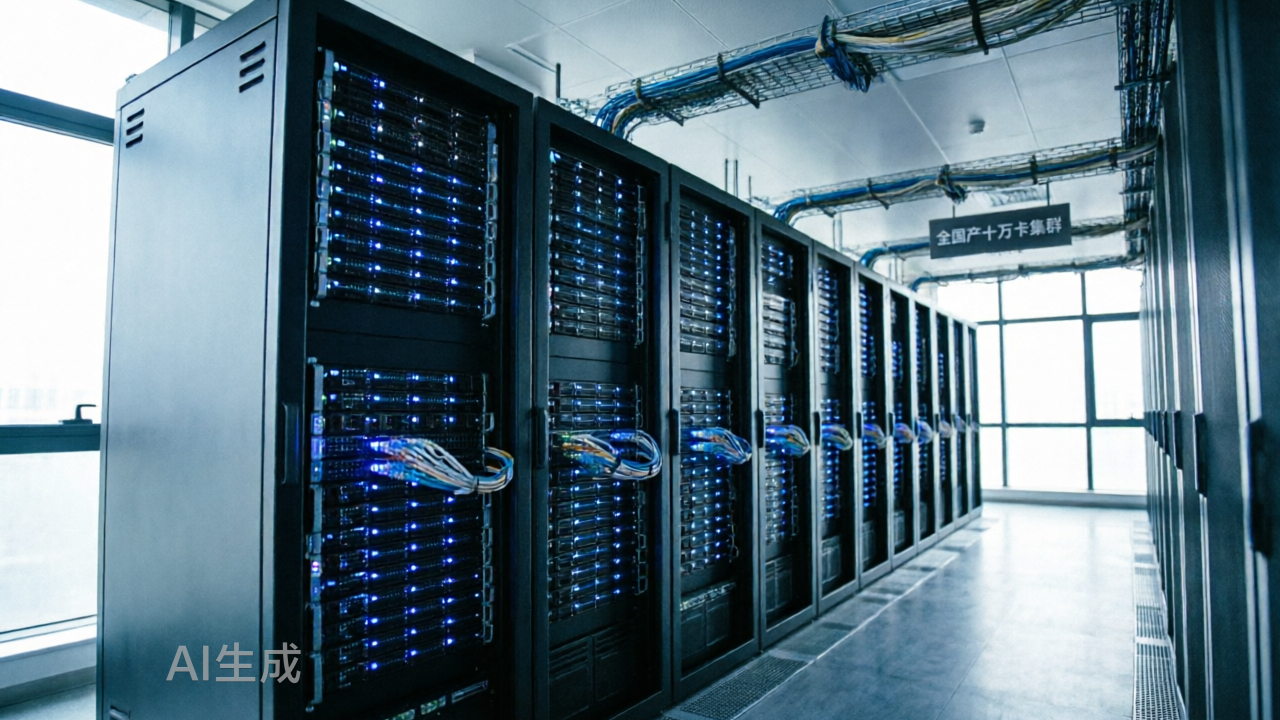
💡Critical infrastructure update: China's first 100k-card domestic cluster changes the landscape for large-scale model tra
⚡ 30-Second TL;DR
What Changed
Deployment of the first 100,000-card domestic computing cluster.
Why It Matters
This infrastructure reduces the risk of hardware supply chain disruptions for domestic AI firms. It provides a viable alternative for training large-scale models without relying on restricted high-end GPUs.
What To Do Next
Evaluate the compatibility of your current training frameworks with domestic hardware stacks to prepare for potential infrastructure migration.
Key Points
- •Deployment of the first 100,000-card domestic computing cluster.
- •Significant milestone for domestic AI infrastructure independence.
- •Shift from engineering achievement to commercial viability and utilization.
🧠 Deep Insight
AI-generated analysis for this event — not the original article.
🔑 Enhanced Key Takeaways
- •The cluster utilizes a high-speed interconnect architecture specifically designed to mitigate the bandwidth limitations typically associated with domestic GPU clusters compared to NVIDIA's NVLink.
- •The project involves a consortium of major Chinese tech firms and state-backed research institutes, signaling a shift toward 'national team' collaborative infrastructure development.
- •Software stack optimization has been a primary focus, with the integration of a unified heterogeneous computing framework to ensure compatibility across different domestic chip architectures.
- •Energy efficiency metrics for this cluster reportedly achieve a 15-20% improvement over previous smaller-scale domestic deployments due to advanced liquid cooling integration.
- •The deployment addresses critical bottlenecks in large-scale model training by implementing a proprietary distributed parallel computing strategy that reduces synchronization overhead.
📊 Competitor Analysis▸ Show
| Feature | China 100k Cluster | NVIDIA Blackwell (B200) Cluster | AMD Instinct MI300X Cluster |
|---|---|---|---|
| Interconnect | Proprietary Domestic Fabric | NVLink 5.0 | Infinity Fabric |
| Ecosystem | Domestic/Custom Stack | CUDA (Industry Standard) | ROCm |
| Availability | Restricted/Domestic | Global/Export Controlled | Global |
🛠️ Technical Deep Dive
- Cluster utilizes a multi-tier hierarchical network topology to manage 100,000 nodes.
- Implementation of a custom RDMA (Remote Direct Memory Access) protocol to optimize inter-node communication latency.
- Deployment of a unified software abstraction layer that allows training frameworks like PyTorch and MindSpore to run natively on domestic silicon.
- Integration of advanced power management systems to handle the high thermal design power (TDP) of the combined 100k-card array.
- Utilization of high-bandwidth memory (HBM) stacks tailored for domestic production processes to support large parameter model training.
🔮 Future ImplicationsAI analysis grounded in cited sources
⏳ Timeline
Weekly AI Recap
Read this week's curated digest of top AI events →
👉Related Updates



AI-curated news aggregator. All content rights belong to original publishers.
Original source: 钛媒体 ↗
This is a summary, not the original. Read the source, or get the weekly briefing.
The weekly digest
One email a week. Unsubscribe anytime.