China's First 6nm Self-Developed GPU Launches
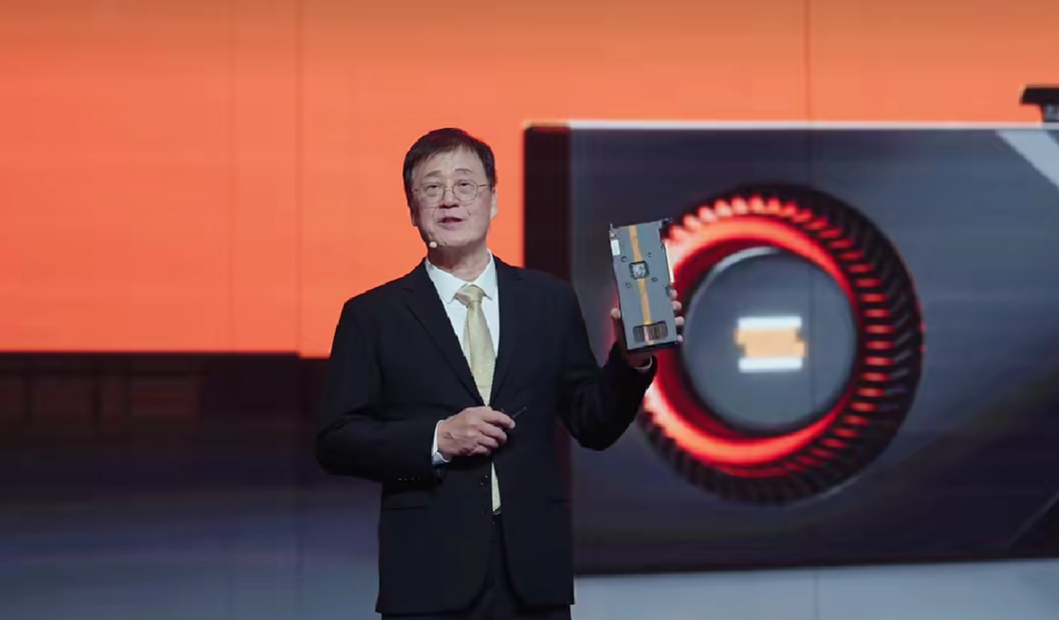
💡China's 6nm GPU rivals RTX 4060—key for affordable AI infra diversification
⚡ 30-Second TL;DR
What Changed
First 6nm process true self-researched GPU from China
Why It Matters
Advances China's domestic semiconductor autonomy, offering Nvidia alternatives for AI training and inference in data centers.
What To Do Next
Benchmark Lisuan eXtreme against RTX 4060 for your next AI model training cluster.
Key Points
- •First 6nm process true self-researched GPU from China
- •Lisuan eXtreme series with TrueGPU TianTu 'render-push integrated' architecture
- •12GB VRAM and performance comparable to RTX 4060
- •Officially launched and on sale at AWE2026
🧠 Deep Insight
Background and context from public sources — not the original article. 6 sources cited.
🔑 Enhanced Key Takeaways
- •Lisuan Technology completed its first batch of order deliveries in late 2025, with customers already receiving and deploying small quantities of the 7G100 series in production environments[5], marking the transition from development to real-world deployment.
- •The 7G100 GPU features advanced architectural innovations including support for up to 48 concurrent task scheduling without pipeline bubbles, an out-of-order triangle engine claiming 50% raster efficiency gains, and NRSS upscaling positioned as a competitor to DLSS/FSR[3].
- •Lisuan achieved full-stack self-development from instruction set to computing core—a capability that major domestic competitors like Cambricon and Moore Threads have not yet accomplished[5], representing a significant technical differentiation in China's GPU ecosystem.
- •Early Geekbench benchmarks revealed a critical performance discrepancy: the 7G100 achieved only GTX 660 Ti-level performance (from 2012) rather than the claimed RTX 4060 parity, with anomalies including a 300MHz clock speed and 256MB VRAM in test configurations[1][5].
📊 Competitor Analysis▸ Show
| Feature | Lisuan 7G106 | NVIDIA RTX 4060 | AMD Radeon RX 7600 |
|---|---|---|---|
| Process Node | TSMC 6nm N6 | TSMC 5nm | TSMC 6nm |
| Memory | 12GB GDDR6 | 8GB GDDR6 | 16GB GDDR6 |
| Memory Bus | 192-bit | 128-bit | 128-bit |
| Peak FP32 | 24 TFLOP/s | ~15 TFLOP/s | ~18 TFLOP/s |
| TDP | ~225W (est.) | 70W | 100W |
| Architecture | TrueGPU Tiantu | Ada | RDNA 3 |
| Target Market | Gaming/AI/Workstations | Gaming/Content Creation | Gaming/Streaming |
| Availability | Mass production 2026 | Mature market | Mature market |
🛠️ Technical Deep Dive
- TrueGPU Tiantu Architecture: Proprietary in-house design covering instruction set, compute core, and software stack from ground up, avoiding licensed IP dependencies
- Compute Configuration: 32 compute units with 192 texture units per the 7G106 variant
- Memory Subsystem: 192-bit memory bus with GDDR6, supporting up to 24GB ECC on workstation variant (7G105)
- Advanced Scheduling: Intelligent multitasking with up to 48 concurrent task scheduling without pipeline bubbles, reducing instruction-level parallelism stalls
- Rasterization Optimization: Out-of-order triangle engine architecture claims 50% efficiency improvement in suitable rendering scenarios
- Virtualization Support: SR-IOV (Single-Root I/O Virtualization) enabling up to 16 virtual GPU instances for cloud/server deployments
- Upscaling Technology: NRSS (proprietary) upscaling algorithm positioned as alternative to DLSS and FSR
- Media Encoding: 8K AV1/HEVC codec support on professional 7G105 variant
- Power Delivery: Single 8-pin PCIe power connector on consumer 7G106, indicating ~225W TDP
🔮 Future ImplicationsAI analysis grounded in cited sources
⏳ Timeline
📎 Sources (6)
Factual claims are grounded in the sources below. Forward-looking analysis is AI-generated interpretation.
- tweaktown.com — Index
- techspot.com — 108122 China First 6nm GPU Boots Up Targets Performance
- notebookcheck.net — Lisuan S 6 Nm Domestic Gpus Rival Rtx 4060 Performance Driving China S Gaming and AI Self Sufficiency.1069607.0
- Tom's Hardware — Chinas First 6nm Domestic GPU with Purported Rtx 4060 Like Performance Has Powered on
- trendforce.com — News Chinas Lisuan to Launch 6nm Gaming GPU on March 12 Targeting Nvidia Rtx
- en.wikipedia.org — Lisuan Tech
Weekly AI Recap
Read this week's curated digest of top AI events →
👉Related Updates
AI-curated news aggregator. All content rights belong to original publishers.
Original source: cnBeta (Full RSS) ↗
This is a summary, not the original. Read the source, or get the weekly briefing.
Weekly AI briefing
One email a week. Unsubscribe anytime.