China’s Fifth Global Logistics Hub Emerges
A new central-China logistics cluster could change how AI hardware and data-center equipment move nationwide.
30-Second TL;DR
What Changed
The plan proposes five global international postal and express-delivery hub clusters, adding the central-China cluster to four previously emphasized regions.
Why It Matters
The cluster could improve delivery resilience and reduce dependence on coastal gateways for AI hardware, data-center equipment, and other technology supply chains. Its success will depend on genuine cross-city coordination rather than duplicated infrastructure and internal competition.
What To Do Next
Map your AI hardware and data-center supply routes through Wuhan, Ezhou, Zhengzhou, and Changsha to identify faster or more resilient fulfillment options.
Key Points
- •The plan proposes five global international postal and express-delivery hub clusters, adding the central-China cluster to four previously emphasized regions.
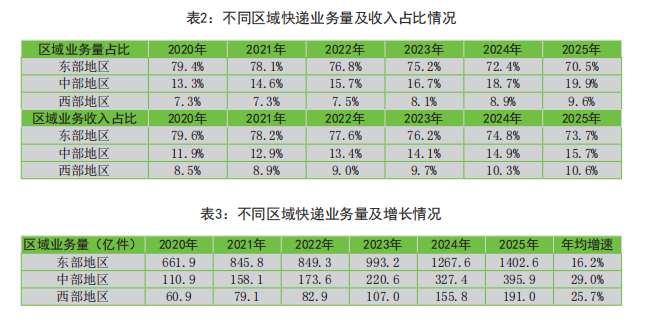
- •Central China’s share of national express-delivery volume rose from 13.3% in 2020 to 19.9% in 2025, reaching 20.8% in the first half of 2026.
- •Ezhou Huahu Airport handled 1.1457 million tonnes of cargo in 2025 and ranked 26th globally, with 32.4% year-on-year growth.
- •Wuhan and Ezhou are expected to coordinate passenger and cargo airports, while Zhengzhou will emphasize air-rail-road multimodal logistics.
- •The strategy links logistics hubs with manufacturing, cross-border trade, supply chains, and regional industrial clustering.
Deep Insight
AI-generated analysis for this event — not the original article.
Enhanced Key Takeaways
- •The central-China hub cluster is part of a broader '1+4+N' national logistics network strategy, where the '1' represents the Beijing-Tianjin-Hebei region, and the '4' refers to the Yangtze River Delta, Pearl River Delta, Chengdu-Chongqing, and the newly formalized Central China clusters.
- •Ezhou Huahu Airport serves as the primary Asian hub for SF Express, utilizing a 'hub-and-spoke' model that significantly reduces transit times for domestic express deliveries by bypassing traditional hub congestion in coastal cities.
- •The integration of Zhengzhou into this cluster leverages the 'Air Silk Road' initiative, which has established critical cargo corridors connecting Henan province directly to European markets, specifically Luxembourg.
- •The Chinese government is incentivizing the adoption of autonomous ground vehicles and AI-driven sorting systems within these hubs to handle the projected 20% annual growth in cross-border e-commerce parcel volume.
- •Local municipal governments in Wuhan and Ezhou have implemented 'dual-airport' synergy policies, allowing for the sharing of customs clearance data and ground handling infrastructure to optimize the flow of high-value electronics and pharmaceutical goods.
Technical Deep Dive
- Ezhou Huahu Airport utilizes a dual-runway configuration designed for high-frequency cargo operations, featuring a fully automated sorting center capable of processing over 500,000 parcels per hour.
- The multimodal logistics framework employs a unified digital logistics platform (Logistics Information Exchange) that integrates real-time GPS tracking from road transport, rail manifest data, and flight telemetry to provide end-to-end visibility.
- Zhengzhou's air-rail-road system utilizes a 'bonded zone' architecture that allows for seamless transshipment between international air cargo and the China-Europe Railway Express without requiring secondary customs inspections.
Future ImplicationsAI analysis grounded in cited sources
Timeline
- 2022-07Ezhou Huahu Airport officially commences cargo operations.
- 2023-04SF Express begins transferring its primary sorting operations to Ezhou Huahu Airport.
- 2024-11Ezhou Huahu Airport achieves 1 million tonnes of annual cargo throughput capacity.
- 2026-01China's postal-sector plan formally designates the Wuhan-Ezhou-Zhengzhou-Changsha cluster as a national priority.
Weekly AI Recap
Read this week's curated digest of top AI events →
AI-curated news aggregator. All content rights belong to original publishers.
Original source: 虎嗅 ↗
This is a summary, not the original. Read the source, or get the weekly briefing.
The weekly digest
One email a week. Unsubscribe anytime.