China’s Compute Enters the Token Value Test
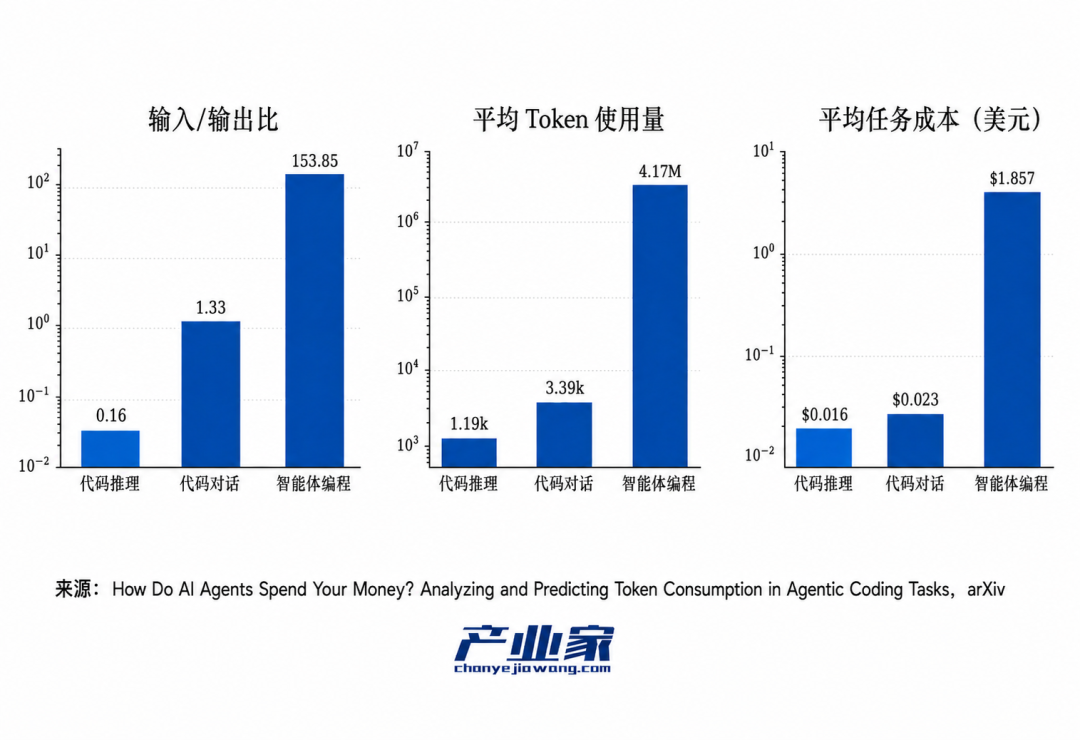
💡The next AI infrastructure race may be won by cheaper Tokens, not by owning the most GPUs.
⚡ 30-Second TL;DR
What Changed
The industry is shifting from hardware accumulation to measurable Token output.
Why It Matters
This shift could pressure AI companies to justify infrastructure spending through utilization, inference economics, and measurable business outcomes. It may also favor operators with efficient models, optimized serving stacks, and strong workload scheduling.
What To Do Next
Instrument your inference stack to track cost per Token, GPU utilization, throughput, and latency by model and workload before expanding GPU capacity.
Key Points
- •The industry is shifting from hardware accumulation to measurable Token output.
- •Lower-cost Token production is becoming a strategic priority.
- •Compute efficiency and economic returns may matter more than raw accelerator counts.
🧠 Deep Insight
AI-generated analysis for this event.
🔑 Enhanced Key Takeaways
- •Chinese AI firms are increasingly adopting 'Token-per-Watt' and 'Token-per-Yuan' metrics to evaluate the operational efficiency of domestic GPU clusters compared to imported alternatives.
- •The shift is driven by U.S. export controls on high-end AI chips, forcing Chinese data centers to optimize software-hardware co-design to extract maximum performance from lower-tier or legacy silicon.
- •Major cloud providers in China are transitioning from selling raw compute capacity to 'Token-as-a-Service' (TaaS) pricing models, directly linking customer costs to model inference output.
- •State-backed initiatives are now prioritizing 'Compute-to-GDP' conversion ratios, aiming to measure how effectively AI compute resources contribute to industrial productivity rather than just model training volume.
- •The industry is seeing a surge in specialized inference-optimized architectures, such as custom ASICs and FPGA-based accelerators, specifically designed to reduce the latency and energy cost of token generation.
🛠️ Technical Deep Dive
- Implementation of FP8 and INT8 quantization techniques has become standard in Chinese domestic clusters to compensate for lower memory bandwidth in non-H100/H200 hardware.
- Adoption of vLLM and PagedAttention-based optimization frameworks is widespread to maximize throughput in memory-constrained environments.
- Development of heterogeneous computing clusters that mix domestic NPUs (Neural Processing Units) with legacy GPUs using unified orchestration layers like K8s-based scheduling.
- Utilization of model distillation and pruning to reduce the parameter count of LLMs, thereby lowering the compute-per-token requirement for deployment.
🔮 Future ImplicationsAI analysis grounded in cited sources
⏳ Timeline
Weekly AI Recap
Read this week's curated digest of top AI events →
👉Related Updates



AI-curated news aggregator. All content rights belong to original publishers.
Original source: 钛媒体 ↗