China's AI Compute Independence Push
💡China's first full国产 AI training breakthrough defies Nvidia bans—huge for global compute wars.
⚡ 30-Second TL;DR
What Changed
DeepSeek V4 prioritizes国产 chips for pre-training to fine-tuning, ditching Nvidia.
Why It Matters
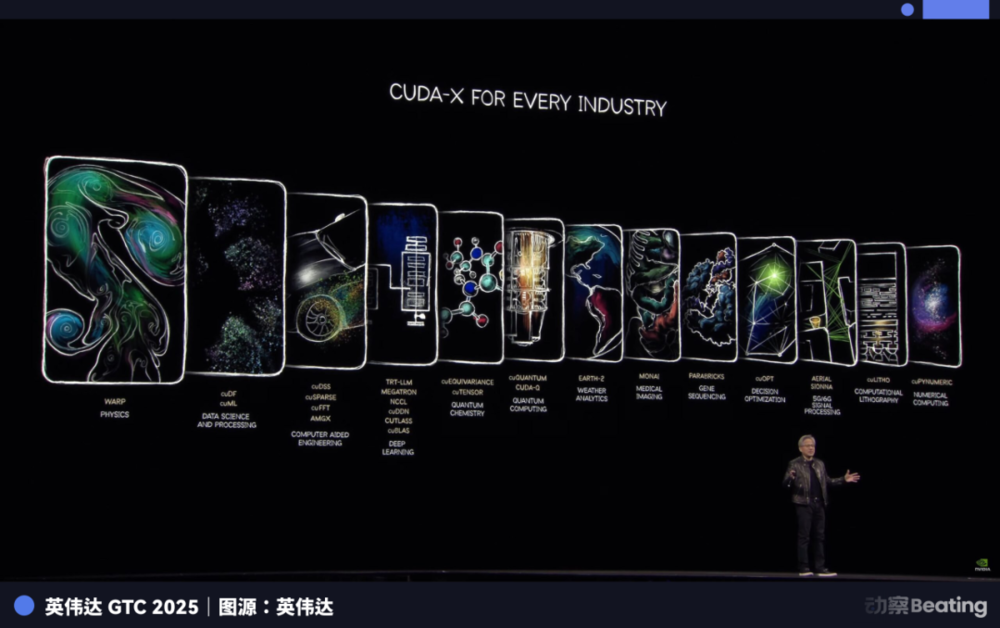
Accelerates China's AI sovereignty amid US export bans, boosting cost-competitive models that dominate API calls. Challenges Nvidia's CUDA monopoly with alternative ecosystems.
What To Do Next
Benchmark DeepSeek V3 API for Agent tasks—it's 25-75x cheaper than GPT-4o/Claude.
Key Points
- •DeepSeek V4 prioritizes国产 chips for pre-training to fine-tuning, ditching Nvidia.
- •MoE models like DeepSeek V3 activate only 5.5% parameters, slashing training costs to $5.6M vs GPT-4's $78M.
- •国产 clusters with Loongson 3C6000 and Taichu T100 now handle SOTA image models and billion-param training.
🧠 Deep Insight
Background and context from public sources — not the original article. 5 sources cited.
🔑 Enhanced Key Takeaways
- •DeepSeek V4 incorporates Engram conditional memory architecture for efficient retrieval from contexts exceeding one million tokens[3].
- •The model integrates Token-Level Sparse MLA with FP8 for KV cache and bfloat16 for matrix multiplication, alongside Value Vector Position Awareness (VVPA) to preserve positional details in long contexts[1].
- •DeepSeek granted early access to Huawei and Cambricon for optimization, withholding from U.S. chipmakers like Nvidia and AMD to strengthen domestic hardware ties[1][2].
- •V4 release is timed around mid-February 2026, coinciding with Lunar New Year for heightened visibility before China's parliamentary sessions[2][3][4].
📊 Competitor Analysis▸ Show
| Feature | DeepSeek V4 | Claude (Anthropic) | GPT Series (OpenAI) |
|---|---|---|---|
| Primary Strength | Long-context coding (outperforms in internal benchmarks, SWE-bench target)[3][4] | Coding leadership (80.9% SWE-bench solve rate for Opus 4.5)[4] | General coding, long-context[3] |
| Architecture | MoE with Engram memory, sparse MLA, VVPA[1][3] | Dense (proprietary)[3] | Dense/MoE hybrid (proprietary)[3] |
| Context Length | >1M tokens with efficient retrieval[3] | High (proprietary)[3] | High (proprietary)[3] |
| Open Source | Yes (open-weight)[3][4] | No | No |
| Optimization | Domestic chips (Huawei, Cambricon)[1][2] | Nvidia/AMD | Nvidia/AMD |
🛠️ Technical Deep Dive
- •Engram conditional memory technology enables efficient retrieval from contexts over one million tokens, published January 13, 2026[3].
- •Token-Level Sparse MLA uses separate pathways for sparse and dense decoding, with FP8 for KV cache storage and bfloat16 for matrix multiplication to support extreme long-context scenarios[1].
- •Value Vector Position Awareness (VVPA) mechanism preserves fine-grained positional information in compressed representations during long sequences[1].
- •MoE architecture activates a subset of parameters per prompt for energy efficiency, building on V3's 671B total parameters[4].
🔮 Future ImplicationsAI analysis grounded in cited sources
⏳ Timeline
📎 Sources (5)
Factual claims are grounded in the sources below. Forward-looking analysis is AI-generated interpretation.
Weekly AI Recap
Read this week's curated digest of top AI events →
👉Related Updates
AI-curated news aggregator. All content rights belong to original publishers.
Original source: 虎嗅 ↗
This is a summary, not the original. Read the source, or get the weekly briefing.
Weekly AI briefing
One email a week. Unsubscribe anytime.