China's $1B Power Grid Robot Army
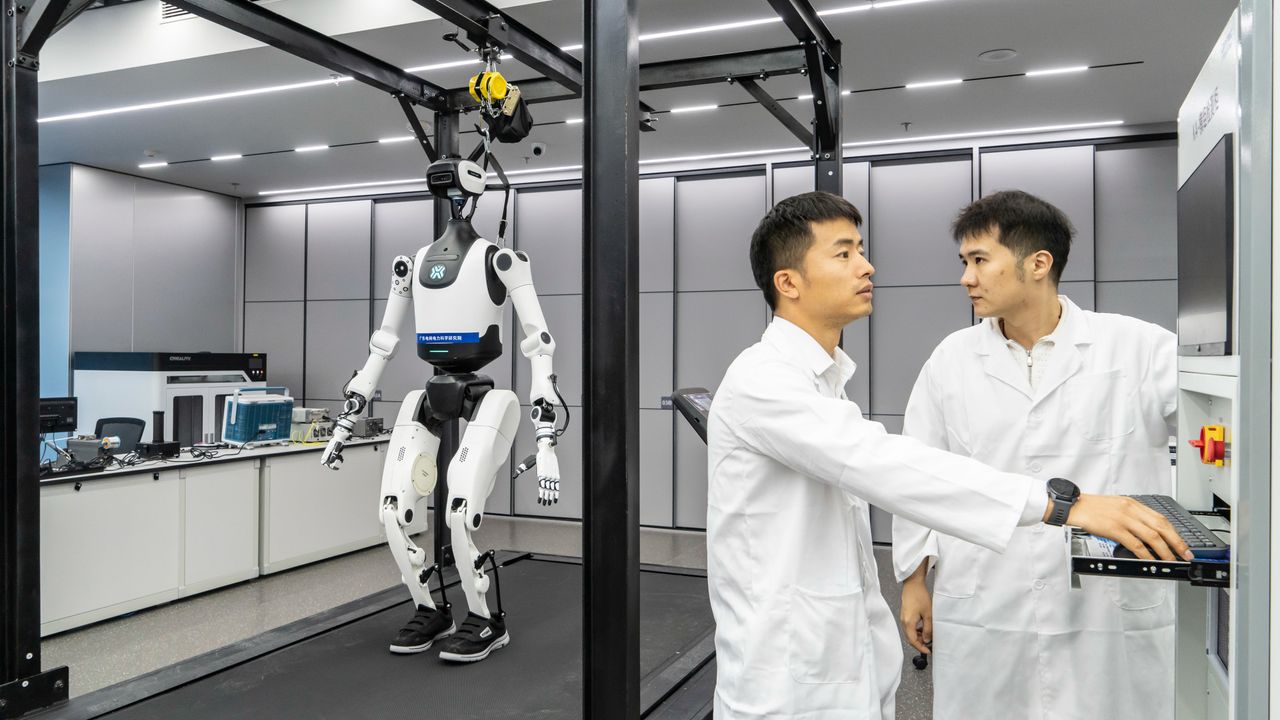
💡$1B China investment in 8500 embodied AI robots for power grid: infra robotics boom ahead
⚡ 30-Second TL;DR
What Changed
$1 billion state investment in 8,500 robo-helpers
Why It Matters
China's investment signals aggressive adoption of embodied AI in critical infrastructure, potentially setting global standards and creating supply chain opportunities. AI practitioners may see rising demand for robust robotics software in industrial settings. It pressures competitors like the US to accelerate similar tech integration.
What To Do Next
Evaluate Unitree robot dogs for embodied AI prototypes in grid simulation environments.
Key Points
- •$1 billion state investment in 8,500 robo-helpers
- •Humanoid robots and robot dogs for power grid operations
- •AI-driven automation to handle grid management tasks
- •US power grid struggles highlighted in comparison
🧠 Deep Insight
AI-generated analysis for this event — not the original article.
🔑 Enhanced Key Takeaways
- •The initiative is spearheaded by the State Grid Corporation of China (SGCC) as part of a broader 'Robot + Application' action plan aimed at addressing labor shortages in hazardous high-voltage environments.
- •The deployment utilizes a heterogeneous fleet, with humanoid robots primarily tasked with complex manual inspections and switchgear operations, while quadrupedal 'robot dogs' are optimized for navigating rugged terrain and subterranean cable tunnels.
- •This project integrates edge computing and 5G-Advanced (5.5G) networks to enable real-time data processing and low-latency remote control, reducing the need for human technicians to enter high-risk zones.
🛠️ Technical Deep Dive
- •Architecture: Employs a multi-modal AI foundation model capable of interpreting visual, thermal, and acoustic data to detect grid anomalies such as partial discharge or overheating components.
- •Navigation: Quadrupedal units utilize SLAM (Simultaneous Localization and Mapping) combined with LiDAR and depth cameras for autonomous pathfinding in GPS-denied environments like underground utility galleries.
- •Manipulation: Humanoid units feature high-torque actuators and force-feedback sensors in end-effectors, allowing for the operation of legacy manual switches and valves designed for human hands.
- •Connectivity: Integration with private 5G-A networks ensures sub-10ms latency for teleoperation and high-bandwidth transmission of high-definition inspection footage.
🔮 Future ImplicationsAI analysis grounded in cited sources
⏳ Timeline
Weekly AI Recap
Read this week's curated digest of top AI events →
👉Related Updates
AI-curated news aggregator. All content rights belong to original publishers.
Original source: TechRadar AI ↗
This is a summary, not the original. Read the source, or get the weekly briefing.
The weekly digest
One email a week. Unsubscribe anytime.