China Tech Giants' AI Gains from Spring Festival Blitz
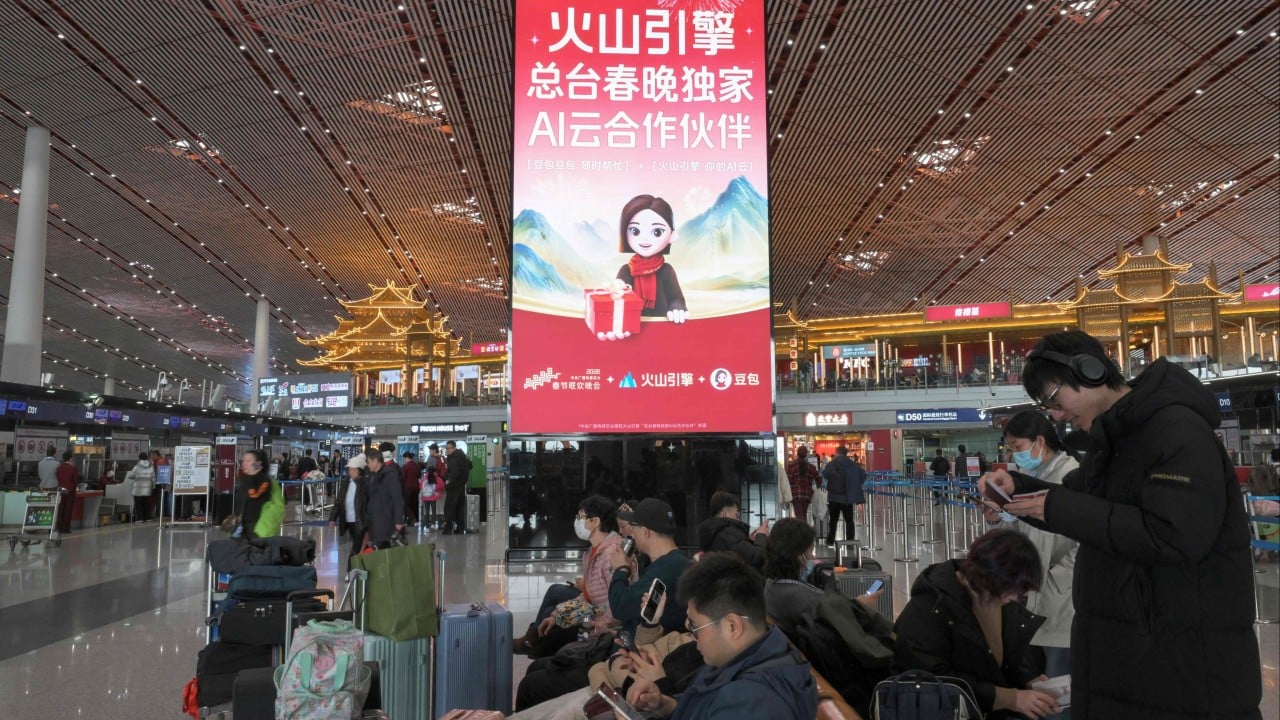
💡China giants like Alibaba/Tencent gained hugely from Chunwan AI marketing—key tactics for viral growth.
⚡ 30-Second TL;DR
What Changed
Alibaba, ByteDance, Tencent release preliminary figures showing huge AI gains
Why It Matters
Highlights massive user engagement potential for AI via Chinese holiday marketing, signaling strategy shift toward festive promotions for rapid adoption. Could inspire global AI firms to leverage cultural events for growth.
What To Do Next
Benchmark Tencent Yuanbao's red envelope metrics against your AI app's user acquisition campaigns.
Key Points
- •Alibaba, ByteDance, Tencent release preliminary figures showing huge AI gains
- •Intense multi-billion-yuan marketing blitz around Spring Festival Gala
- •Focus on new flagship AI products amid red packet giveaways and ads
🧠 Deep Insight
Background and context from public sources — not the original article. 5 sources cited.
🔑 Enhanced Key Takeaways
- •Alibaba's Qwen 3.5 launched February 16, 2026, with multimodal capabilities across 200 languages and 60% cost reduction versus Qwen 2.5, driving 120+ million consumer orders in six days through agentic commerce initiatives[4][2]
- •Chinese AI firms released multiple flagship models ahead of DeepSeek's anticipated V4 launch, including ByteDance's Doubao 2.0 and Zhipu's GLM-5, intensifying competition one year after DeepSeek's market disruption[2][4]
- •Spring Festival marketing campaigns escalated to multi-billion-yuan scale, with Alibaba alone spending 3 billion yuan ($400 million) on coupon giveaways to promote AI-driven shopping agents[2]
- •Embodied AI robots became prominent at Spring Festival Gala 2026, with JD robot search volume increasing 300% month-on-month and orders surging 150% following the event[3]
- •Chinese AI startups accelerated IPO timelines, with Zhipu raising HKD 4.35 billion (€465 million) on Hong Kong Stock Exchange in January 2026 and competitors like Magic Atom, Leju Intelligence, and Deep Robotics pursuing listings in 2026[3][4]
📊 Competitor Analysis▸ Show
| Company | Model | Launch Date | Key Features | Market Position |
|---|---|---|---|---|
| Alibaba | Qwen 3.5 | Feb 16, 2026 | Multimodal (text/image/video), 200 languages, 5x faster agent deployment, 60% cheaper than Qwen 2.5 | Leading e-commerce integration, 120M+ orders in 6 days |
| ByteDance | Doubao 2.0 | Feb 2026 | Enhanced capabilities vs. predecessor | Competing in general LLM space |
| ByteDance | SeeDance 2.0 | Feb 2026 | Image-to-video, text-to-video generation | Facing MPA criticism |
| Zhipu | GLM-5 | Feb 2026 | Open-source, enhanced coding, long-running agent tasks | Capacity constraints, global usage spike |
| DeepSeek | V3 (current) | End 2024 | Became #1 free app on US App Store | Market leader, V4 anticipated soon |
🛠️ Technical Deep Dive
• Qwen 3.5: Multimodal architecture supporting text, image, and video understanding across 200 languages; agentic commerce framework enabling autonomous shopping task execution; 60% cost reduction in deployment versus Qwen 2.5[4] • GLM-5: Open-source model with enhanced coding capabilities and long-running agent task execution; infrastructure-constrained due to demand spike exceeding chip cluster capacity[2] • Agentic AI Focus: Industry-wide shift from chatbot frameworks to autonomous agents capable of executing complex workflows across multiple e-commerce platforms with minimal human intervention[2] • SeeDance 2.0: Immersive audio-video generation from text and image inputs; subject to regulatory scrutiny from Motion Picture Association[4]
🔮 Future ImplicationsAI analysis grounded in cited sources
The Spring Festival 2026 marketing blitz signals a structural shift in Chinese AI competition from model capability races toward commercial deployment and user acquisition at scale. Alibaba's 120+ million orders demonstrate agentic AI's viability for e-commerce, establishing a new benchmark for AI monetization. The synchronized IPO acceleration among embodied AI startups (Magic Atom, Leju Intelligence, Deep Robotics) indicates capital markets view 2026 as a critical inflection point for AI commercialization. DeepSeek's anticipated V4 launch will likely trigger another competitive wave, but the emphasis on agents, multimodal capabilities, and cost efficiency suggests the competitive landscape is fragmenting beyond single-model dominance. Regulatory scrutiny (MPA criticism of SeeDance 2.0) may constrain certain applications, while infrastructure bottlenecks (Zhipu's chip cluster constraints) could become a competitive differentiator favoring companies with established hardware partnerships.
⏳ Timeline
📎 Sources (5)
Factual claims are grounded in the sources below. Forward-looking analysis is AI-generated interpretation.
Weekly AI Recap
Read this week's curated digest of top AI events →
👉Related Updates
AI-curated news aggregator. All content rights belong to original publishers.
Original source: SCMP Technology ↗
This is a summary, not the original. Read the source, or get the weekly briefing.
Weekly AI briefing
One email a week. Unsubscribe anytime.