China Pushes Driverless Tech at Beijing Auto Show
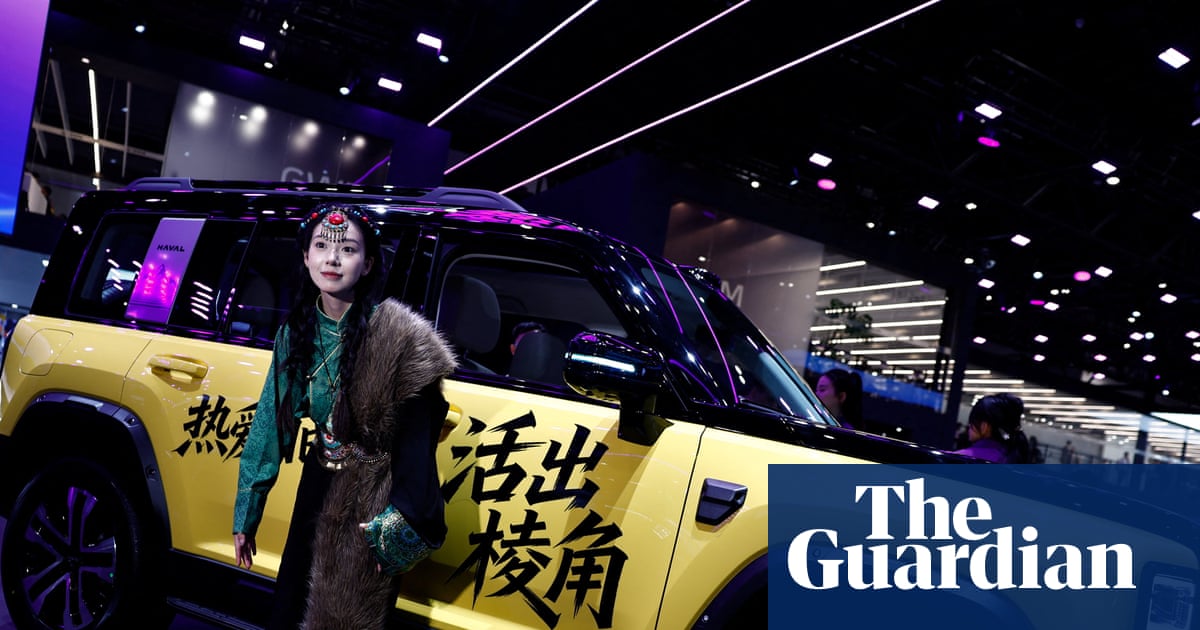
💡China's AV showcase at mega car show signals major embodied AI industry shift
⚡ 30-Second TL;DR
What Changed
Beijing car show features hundreds of manufacturers and 1,000+ vehicles focused on driverless tech
Why It Matters
China's aggressive AV push could accelerate global competition, drawing AI talent and investment to Asia. This may pressure Western firms like Tesla to innovate faster in embodied AI.
What To Do Next
Benchmark your computer vision models against Beijing Auto Show AV demo videos on YouTube.
Key Points
- •Beijing car show features hundreds of manufacturers and 1,000+ vehicles focused on driverless tech
- •Chinese firms dominate EV market but pivot to AI autonomous driving amid sales slowdown
- •Enthusiasts flock to demos highlighting hands-free driving capabilities
- •Global expansion targeted via AI mobility innovations
🧠 Deep Insight
AI-generated analysis for this event — not the original article.
🔑 Enhanced Key Takeaways
- •The 2026 Beijing Auto Show marks a strategic shift toward 'End-to-End' neural network architectures in autonomous driving, moving away from modular, rule-based software stacks.
- •Chinese regulators have accelerated the issuance of L3/L4 autonomous driving pilot permits in major cities like Beijing and Shanghai to facilitate real-world data collection for domestic AI models.
- •Leading Chinese OEMs are increasingly integrating proprietary large language models (LLMs) directly into vehicle cockpits to enable natural language control of complex driving maneuvers and cabin environment settings.
📊 Competitor Analysis▸ Show
| Feature | Chinese OEMs (e.g., BYD, XPeng, NIO) | Tesla (FSD) | Waymo |
|---|---|---|---|
| Architecture | End-to-End Neural Networks | End-to-End Neural Networks | Hybrid (Rule-based + ML) |
| Market Strategy | Rapid iteration, aggressive pricing | Global standardization | Robotaxi-first |
| Data Advantage | Massive domestic fleet scale | Global fleet telemetry | High-fidelity sensor data |
🛠️ Technical Deep Dive
- Shift to Transformer-based perception models that process raw sensor data (camera, LiDAR, radar) into a unified latent space for path planning.
- Implementation of 'World Models' for predictive simulation, allowing vehicles to simulate millions of edge-case scenarios before deployment.
- Adoption of high-performance localized compute platforms (e.g., NVIDIA Orin-X or domestic equivalents like Horizon Robotics Journey 6) to handle increased TOPS requirements for real-time inference.
🔮 Future ImplicationsAI analysis grounded in cited sources
⏳ Timeline
Weekly AI Recap
Read this week's curated digest of top AI events →
👉Related Updates

AI-curated news aggregator. All content rights belong to original publishers.
Original source: The Guardian Technology ↗
This is a summary, not the original. Read the source, or get the weekly briefing.
The weekly digest
One email a week. Unsubscribe anytime.