China Mobile launches SMS-based remote control for AI agents
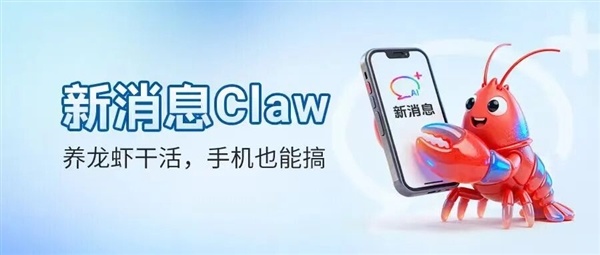
💡A novel way to bridge SMS and local AI agents for remote control without extra apps.
⚡ 30-Second TL;DR
What Changed
Enables SMS-based remote control for PC-based AI agents
Why It Matters
This lowers the barrier for managing autonomous agents on the go, potentially increasing the adoption of local AI agents among non-technical users.
What To Do Next
If you are building local AI agents, consider integrating an SMS-based command interface to improve accessibility for your users.
Key Points
- •Enables SMS-based remote control for PC-based AI agents
- •Eliminates the need for dedicated mobile applications
- •Addresses notification latency and accessibility issues
- •Targets the ecosystem of open-source 'Claw' (Lobster) AI agents
🧠 Deep Insight
AI-generated analysis for this event — not the original article.
🔑 Enhanced Key Takeaways
- •The 'New Message Claw' service leverages China Mobile's 5G Messaging (RCS) infrastructure to bridge the gap between traditional SMS protocols and modern AI agent APIs.
- •The system utilizes a lightweight middleware layer that translates SMS intent into JSON-formatted commands compatible with the Open-Source 'Claw' (Lobster) agent framework.
- •China Mobile has integrated this service with its proprietary 'Jiutian' AI model to handle natural language processing for SMS commands, reducing the need for rigid syntax.
- •The service includes a security layer that requires SMS-based two-factor authentication (2FA) before allowing remote execution of commands on the user's PC.
- •This initiative is part of China Mobile's broader 'AI+ Action' plan, aimed at integrating large models into consumer-facing telecommunications services by 2027.
📊 Competitor Analysis▸ Show
| Feature | China Mobile (New Message Claw) | Traditional App-Based AI Agents | Cloud-Based Automation (e.g., IFTTT) |
|---|---|---|---|
| Connectivity | SMS/RCS (No Data Required) | Requires Data/Wi-Fi | Requires Data/Wi-Fi |
| Latency | Low (Carrier-Grade) | Variable | Variable |
| Installation | None (System Level) | App Installation Required | App/Integration Required |
| Pricing | Carrier SMS Rates | Subscription/Freemium | Subscription/Freemium |
🛠️ Technical Deep Dive
- Architecture: Employs a carrier-side gateway that intercepts SMS and routes them through an API bridge to the local PC agent client.
- Protocol: Utilizes RCS (Rich Communication Services) Universal Profile 2.4 to handle structured data payloads within the SMS stream.
- Agent Integration: Compatible with the Lobster (Claw) open-source framework via a local Python-based daemon that listens for incoming socket connections from the carrier gateway.
- Security: Implements end-to-end encryption for the command payload, with the PC-side agent verifying the sender's identity against a pre-registered mobile number.
🔮 Future ImplicationsAI analysis grounded in cited sources
⏳ Timeline
Weekly AI Recap
Read this week's curated digest of top AI events →
👉Related Updates
AI-curated news aggregator. All content rights belong to original publishers.
Original source: cnBeta (Full RSS) ↗
This is a summary, not the original. Read the source, or get the weekly briefing.
The weekly digest
One email a week. Unsubscribe anytime.