China Mandates AI Compute-Power Synergy Infra
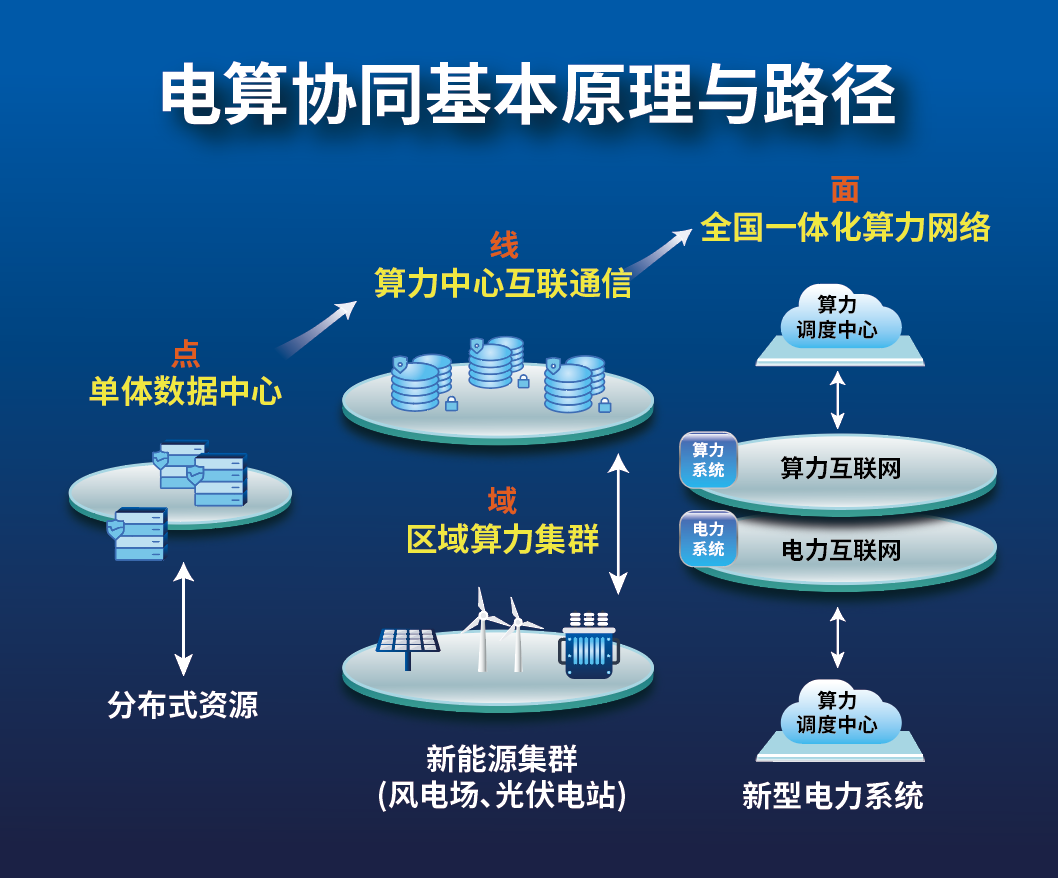
💡China's policy ties AI compute to green power—vital for scaling data centers
⚡ 30-Second TL;DR
What Changed
First gov report inclusion of '算电协同' as AI new infra engineering.
Why It Matters
Accelerates China's AI data center expansion with reliable green power, reducing energy bottlenecks for large-scale models and boosting global AI competitiveness.
What To Do Next
Evaluate deploying AI clusters in China's '东数西算' hubs for subsidized green power access.
Key Points
- •First gov report inclusion of '算电协同' as AI new infra engineering.
- •Key tech: microgrids, virtual power plants, multi-objective optimization algorithms.
- •High-density liquid cooling drops PUE to 1.1; waste heat for urban heating.
- •Leaders: Three Gorges Energy for green power, China Unicom for joint scheduling.
🧠 Deep Insight
Background and context from public sources — not the original article. 6 sources cited.
🔑 Enhanced Key Takeaways
- •China's electricity capacity is projected to reach approximately 400 gigawatts of spare power by 2030, more than three times the total electricity demand data centers worldwide need, providing substantial infrastructure headroom for AI scaling[1].
- •China activated the world's largest distributed AI computing pool (Future Network Test Facility) on December 3, 2025, spanning 1,243 miles with 98% efficiency parity to single data centers, demonstrating practical implementation of compute-electricity synergy at continental scale[2].
- •China's data center electricity demand is expected to more than double to approximately 277 TWh by 2030, yet this growth is unlikely to constrain China due to its historically rapid energy expansion pace of nearly 6% annually and over 50% clean energy sourcing[3].
🛠️ Technical Deep Dive
Description
Compute-electricity synergy infrastructure technical specifications based on available search data:
Specifications
- •Distributed AI computing architecture: 1,243-mile network achieving 98% efficiency of centralized single data center performance[2]
- •Power efficiency metrics: High-density liquid cooling systems reduce Power Usage Effectiveness (PUE) to 1.1 (article-provided specification)
- •Energy sources: China's grid expansion includes multiple power sources with ongoing infrastructure investments and reduced regulatory friction for new connections[2]
- •Infrastructure deployment speed: Chinese data center construction timelines significantly faster than US (3-year US construction vs. weekend-scale Chinese construction capability per NVIDIA CEO Jensen Huang)[2]
- •Grid capacity: China possesses approximately twice the energy capacity of the United States as a nation[2]
- •Clean energy integration: Over 50% of China's electricity growth comes from wind, solar, and hydropower sources[3]
🔮 Future ImplicationsAI analysis grounded in cited sources
⏳ Timeline
📎 Sources (6)
Factual claims are grounded in the sources below. Forward-looking analysis is AI-generated interpretation.
- businessinsider.com — Elon Musk China AI Compute Exceed Electricity Power 2026 1
- introl.com — China Fntf Distributed AI Computing 1243 Miles January 2026
- brookings.edu — How Will the United States and China Power the AI Race
- theaiconsultingnetwork.com — China AI Five Year Plan Global AI Race Cre Investors 2026
- news.cgtn.com — Index
- en.macromicro.me — Outlook 2026 Series Iv the AI Power Endgame the Infrastructure Race From Chips to the Grid
Weekly AI Recap
Read this week's curated digest of top AI events →
👉Related Updates



AI-curated news aggregator. All content rights belong to original publishers.
Original source: 虎嗅 ↗
This is a summary, not the original. Read the source, or get the weekly briefing.
Weekly AI briefing
One email a week. Unsubscribe anytime.