China EV Penetration Tops 60%, but Profits Collapse
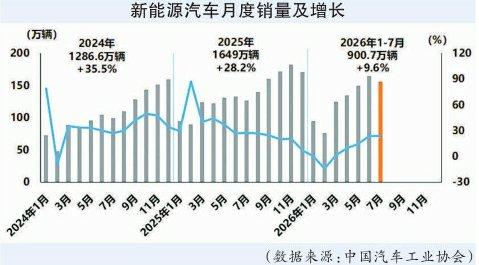
💡EV adoption crossed 60%, but shrinking margins show why intelligent-driving teams must optimize economics, not just feat
⚡ 30-Second TL;DR
What Changed
July new-energy vehicle sales reached 1.561 million units, accounting for 60.4% of China’s new-car sales.
Why It Matters
For AI-enabled vehicle companies, higher EV penetration does not guarantee a larger addressable market or better margins. Intelligent-driving teams will increasingly need to prove measurable cost savings, software monetization, and deployment quality instead of relying solely on feature expansion.
What To Do Next
Benchmark your intelligent-driving stack on inference cost per vehicle, software gross margin, and real-world disengagement rates before adding another feature.
Key Points
- •July new-energy vehicle sales reached 1.561 million units, accounting for 60.4% of China’s new-car sales.
- •Six automakers disclosed in the article, including GAC, Seres, BAIC BluePark, and JAC, faced expected losses or sharply lower profits.
- •Great Wall and Changan were still expected to be profitable, but their first-half net profits were projected to fall by more than 50%.
- •Geely reported a 46% increase in core profit despite only about 1% sales growth, highlighting a shift toward profitability and efficiency.
🧠 Deep Insight
AI-generated analysis for this event.
🔑 Enhanced Key Takeaways
- •The Chinese government has begun signaling a shift from broad EV subsidies to 'industry consolidation' policies, pressuring smaller, loss-making manufacturers to merge or exit the market.
- •Battery costs, which previously drove EV price wars, have stabilized, shifting the current profit squeeze toward high R&D expenditures in 'End-to-End' autonomous driving stacks.
- •Export volumes of Chinese EVs have faced increased scrutiny and new tariff barriers in the EU and North America, forcing companies to pivot toward Southeast Asian and Middle Eastern markets to maintain margins.
- •The '60% penetration' milestone is heavily skewed by the micro-EV and plug-in hybrid (PHEV) segments, which operate on significantly thinner margins than pure battery electric vehicles (BEVs).
- •Major Chinese insurers have begun raising premiums for EVs due to higher repair costs and complex sensor-laden chassis designs, creating an additional 'hidden' cost for consumers that impacts brand loyalty.
📊 Competitor Analysis▸ Show
| Feature | BYD (Market Leader) | Geely (Efficiency Focus) | Nio (Premium/Tech) |
|---|---|---|---|
| Strategy | Vertical Integration | Multi-brand Platform Sharing | Battery Swapping/Services |
| Profitability | High (Scale-driven) | Improving (Cost-control) | Low (High R&D/CapEx) |
| Tech Focus | Blade Battery/PHEV | SEA Architecture | NIO Pilot/NOMI AI |
🛠️ Technical Deep Dive
- Shift toward 800V high-voltage architectures to reduce charging times and copper usage, lowering vehicle weight and material costs.
- Integration of centralized E/E (Electrical/Electronic) architecture to replace distributed ECUs, reducing wiring harness complexity and assembly time.
- Adoption of 'Cell-to-Chassis' (CTC) and 'Cell-to-Body' (CTB) battery integration technologies to improve structural rigidity and energy density.
- Implementation of Transformer-based perception models for intelligent driving, moving away from HD-map dependency to reduce mapping maintenance costs.
🔮 Future ImplicationsAI analysis grounded in cited sources
⏳ Timeline
Weekly AI Recap
Read this week's curated digest of top AI events →
👉Related Updates


AI-curated news aggregator. All content rights belong to original publishers.
Original source: 虎嗅 ↗