China debuts WaveFly 5X ground-effect flying watercraft
💡Explore how ground-effect aviation is being modernized with autonomous control systems for future mobility.
⚡ 30-Second TL;DR
What Changed
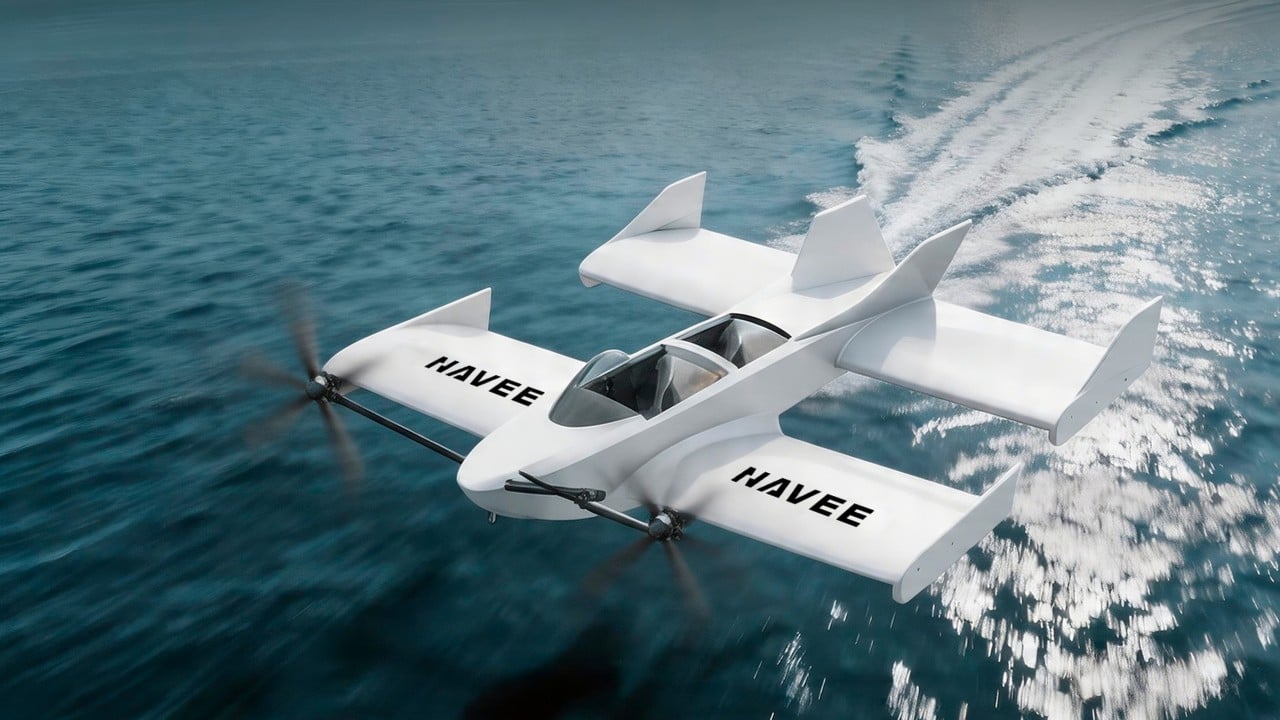
Navee showcased the WaveFly 5X on Lake Taihu in Suzhou.
Why It Matters
This launch signals a potential shift in autonomous maritime logistics and high-speed passenger transport, where AI-driven flight control systems are critical for maintaining stability in ground-effect flight.
What To Do Next
Research the integration of real-time sensor fusion and flight control algorithms for autonomous vehicles operating in low-altitude, high-speed maritime environments.
Key Points
- •Navee showcased the WaveFly 5X on Lake Taihu in Suzhou.
- •The craft uses ground-effect technology to achieve high-speed travel just above the water surface.
- •The project aims to commercialize Soviet-era experimental vehicle concepts for passenger transit.
🧠 Deep Insight
Background and context from public sources — not the original article. 16 sources cited.
🔑 Enhanced Key Takeaways
- •Navee, originally a micromobility company specializing in e-scooters and e-bikes, is strategically expanding its portfolio to encompass an 'integrated land-water-sky mobility ecosystem,' with the WaveFly 5X representing its entry into water-based ground-effect vehicles.
- •The WaveFly 5X was publicly showcased at major international technology events, including CES 2026 and a Silicon Valley launch event in early 2026, indicating a global market strategy for the craft.
- •The electric WaveFly 5X is designed for short-distance leisure travel, boasting a maximum speed of 53 mph (85 km/h), a cruising speed of 40 mph, a flight endurance of 70 minutes, and a range of up to 50 miles (80 km), with a modular swappable battery system.
- •Ground-effect vehicles (GEVs), also known as Wing-In-Ground (WIG) effect vehicles or ekranoplans, operate by utilizing the aerodynamic interaction between their wings and the water surface, creating a cushion of air that significantly reduces drag.
- •China has a long history of GEV development, dating back over 60 years to its first GEV, the '961,' built in 1965 by the China Ship Scientific Research Center, with recent advancements including a third-generation GEV featuring a full carbon fiber structure capable of carrying 12 people at 240 km/h.
🛠️ Technical Deep Dive
- Type: Electric ground-effect vehicle (GEV) / Wing-in-Ground (WIG) effect craft
- Operation: Skims just above the water surface using ground-effect technology; can also cruise on the water.
- Propulsion: Rear-mounted propulsion
- Speed:
- Max speed: 53 mph (85 km/h)
- Cruising speed: 40 mph
- Endurance:
- Max flight time: 70 minutes
- Range: Up to 50 miles (80 km)
- Capacity:
- Payload: 140 kg (309 pounds)
- Seating: Configurable for one or two seats
- Dimensions (approximate):
- Length: 5 meters
- Width: 3.8 meters
- Battery: Modular swappable battery system
- Design: Features wing-style structures and is described as a futuristic boat/hovercraft hybrid.
- Application: Primarily designed for short-distance leisure travel and water entertainment.
🔮 Future ImplicationsAI analysis grounded in cited sources
⏳ Timeline
📎 Sources (16)
Factual claims are grounded in the sources below. Forward-looking analysis is AI-generated interpretation.
Weekly AI Recap
Read this week's curated digest of top AI events →
👉Related Updates

AI-curated news aggregator. All content rights belong to original publishers.
Original source: SCMP Technology ↗
This is a summary, not the original. Read the source, or get the weekly briefing.
The weekly digest
One email a week. Unsubscribe anytime.