China Begins Restructuring Underperforming Development Zones
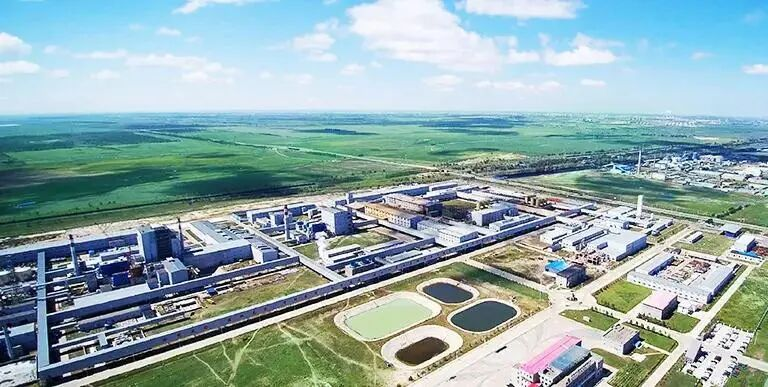
Industrial-zone consolidation could reshape where China’s next AI computing clusters receive land, power, and policy sup
30-Second TL;DR
What Changed
Development zones in Guangdong, Henan, Inner Mongolia, Liaoning, and Heilongjiang lost national-level status.
Why It Matters
The restructuring could concentrate public funding, land, energy, water, and emissions capacity into fewer industrial clusters. For AI infrastructure investors and operators, this may make selected regions more attractive while reducing the policy value of low-density or poorly performing parks.
What To Do Next
Before selecting a Chinese site for GPU or AI infrastructure, verify its development-zone status, upgrade eligibility, energy quota, water access, and environmental-priority ranking.
Key Points
- •Development zones in Guangdong, Henan, Inner Mongolia, Liaoning, and Heilongjiang lost national-level status.
- •The revised evaluation system shifts emphasis from aggregate economic scale toward quality, industrial density, openness, and functional performance.
- •The five affected provinces cannot recommend provincial development zones for national-level promotion for two years.
- •Inner Mongolia plans to stop creating new zones except for major government priorities and to eliminate zones with persistently weak output and project pipelines.
- •The region will allocate 100 billion yuan over three years to larger, higher-potential, and more specialized development zones, prioritizing their resource access.
Deep Insight
AI-generated analysis for this event — not the original article.
Enhanced Key Takeaways
- •The evaluation process is governed by the 'Measures for the Comprehensive Evaluation of National Economic and Technological Development Zones,' which mandates a dynamic exit mechanism to prevent 'zombie' zones.
- •This restructuring is part of a broader national strategy to optimize land use efficiency, as many development zones previously suffered from low land-output ratios and excessive reliance on preferential tax policies.
- •The Ministry of Commerce (MOFCOM) leads the evaluation, focusing on 'innovation-driven development' metrics, including R&D expenditure intensity and the number of high-tech enterprises hosted within the zones.
- •Inner Mongolia's 100 billion yuan investment strategy specifically targets the 'East-to-West Computing Resource Transfer' project, aiming to integrate local energy advantages with national AI infrastructure needs.
- •The removal of national-level status strips these zones of specific central government fiscal support, land quota priorities, and administrative autonomy, effectively forcing them to compete as local-level entities.
Future ImplicationsAI analysis grounded in cited sources
Timeline
- 2019-03State Council issues guidelines to promote the high-quality development of national-level development zones.
- 2021-12Ministry of Commerce releases updated comprehensive evaluation measures to strengthen the exit mechanism.
- 2024-06Inner Mongolia announces the 'Three-Year Action Plan' to optimize industrial park layouts and resource allocation.
- 2026-07Ministry of Commerce officially announces the removal of five national-level development zones following the latest evaluation cycle.
Weekly AI Recap
Read this week's curated digest of top AI events →
AI-curated news aggregator. All content rights belong to original publishers.
Original source: 虎嗅 ↗
This is a summary, not the original. Read the source, or get the weekly briefing.
The weekly digest
One email a week. Unsubscribe anytime.