China Auto Blitz: VLA, 896-Line LiDAR
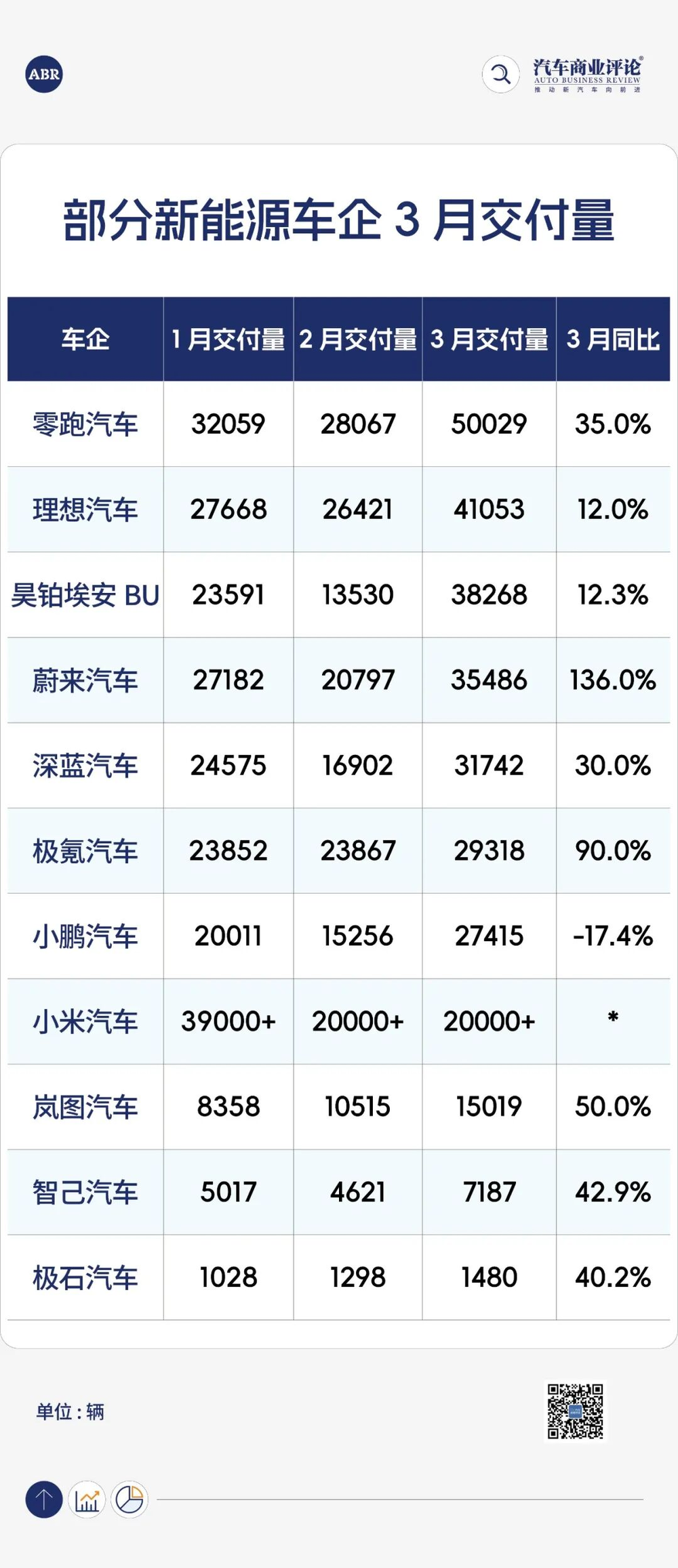
💡China drops VLA driving AI + record LiDAR—new auto embodied AI benchmarks
⚡ 30-Second TL;DR
What Changed
80+ events in March 2026; 7 cars launched same day like QQ3 EV, bZ7
Why It Matters
Raises auto AI benchmarks; intensifies global competition for embodied AI in driving/chassis. Chinese firms lead in AD tech iteration.
What To Do Next
Test Xiaopeng VLA benchmarks against your VLA models for autonomous driving improvements.
Key Points
- •80+ events in March 2026; 7 cars launched same day like QQ3 EV, bZ7
- •Xiaopeng 2nd VLA: P-gear all-scenario AD (highway, narrow roads, parking)
- •Huawei 896-line LiDAR (vs prior 520); BYD MW flash: 1s=2km, 5min=400km
- •Survival anxiety: 17 chairmen, product cycles shrink to avoid 'death valley'
🧠 Deep Insight
AI-generated analysis for this event — not the original article.
🔑 Enhanced Key Takeaways
- •The Xiaopeng 2nd-gen VLA (Vision-Language-Action) model utilizes an end-to-end neural network architecture that integrates perception and decision-making into a single transformer-based model, significantly reducing latency compared to traditional modular AD stacks.
- •Huawei's 896-line LiDAR achieves a detection range exceeding 300 meters for low-reflectivity objects, utilizing a new 1550nm fiber laser source to improve performance in adverse weather conditions like heavy rain and fog.
- •BYD's 1500kW flash charging system employs a proprietary liquid-cooled silicon carbide (SiC) power module architecture, enabling ultra-high voltage charging while maintaining thermal stability within the battery pack.
📊 Competitor Analysis▸ Show
| Feature | Xiaopeng VLA (2nd Gen) | Tesla FSD (v13+) | Huawei ADS 4.0 |
|---|---|---|---|
| Architecture | End-to-End VLA | End-to-End Neural Net | Hybrid/End-to-End |
| Sensor Suite | Vision-Centric + LiDAR | Vision-Only | LiDAR + Vision |
| Market Focus | China All-Scenario | Global | China Urban/Highway |
🛠️ Technical Deep Dive
- Xiaopeng VLA: Employs a multi-modal transformer architecture that tokenizes visual inputs and navigation commands to output direct control signals (steering, throttle, brake) at 50Hz frequency.
- Huawei 896-line LiDAR: Utilizes a high-density scanning pattern with a 0.05° x 0.05° angular resolution, enabling precise 3D point cloud reconstruction for small obstacle detection at high speeds.
- BYD 1500kW Charging: Implements a 900V+ high-voltage platform architecture with advanced thermal management systems to mitigate dendrite formation during rapid ion migration.
🔮 Future ImplicationsAI analysis grounded in cited sources
⏳ Timeline
Weekly AI Recap
Read this week's curated digest of top AI events →
👉Related Updates



AI-curated news aggregator. All content rights belong to original publishers.
Original source: 虎嗅 ↗
This is a summary, not the original. Read the source, or get the weekly briefing.
The weekly digest
One email a week. Unsubscribe anytime.