ChatGPT voice mode gains real-time pace control
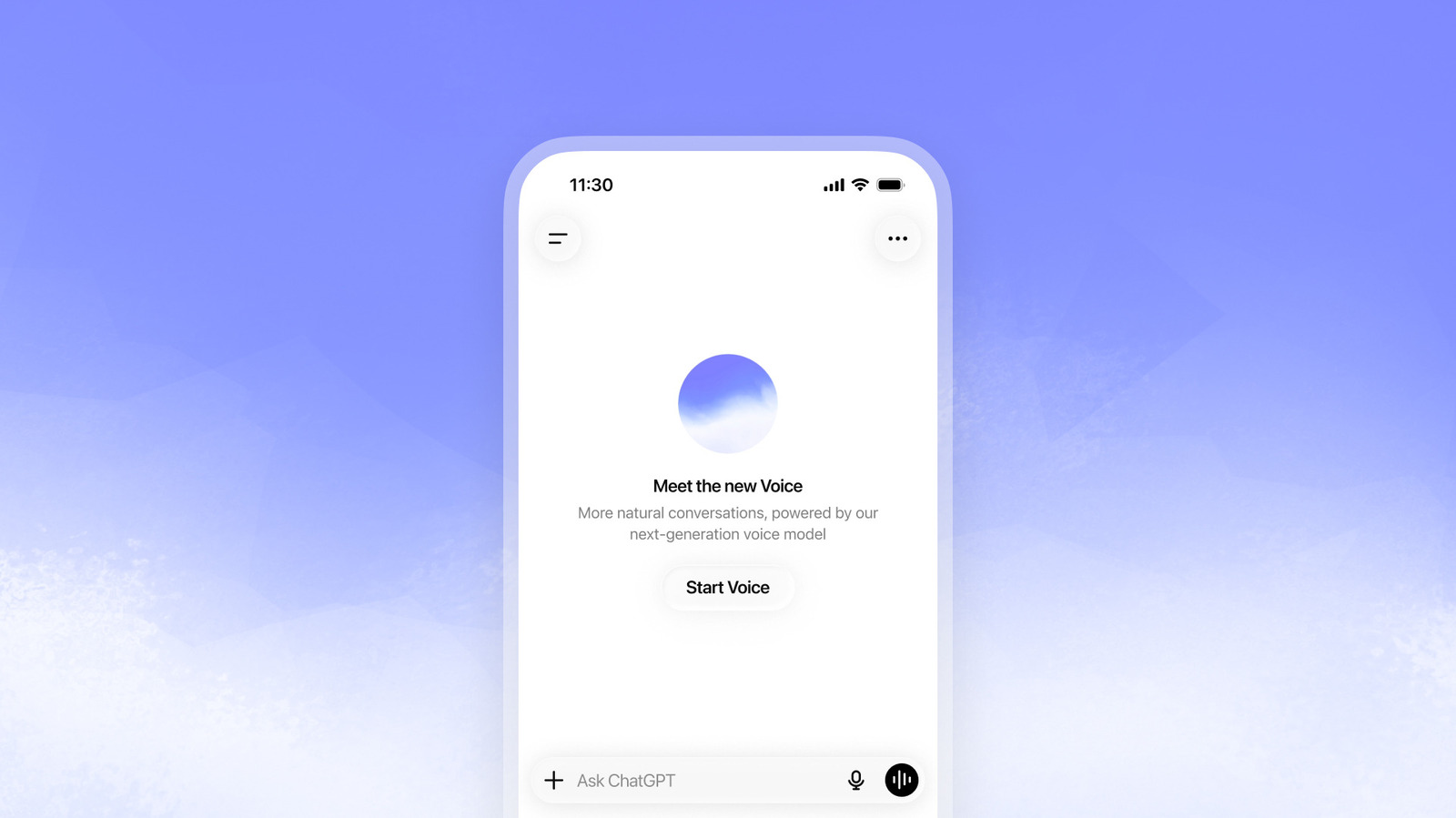
💡Learn how OpenAI is solving latency and control issues in real-time conversational AI agents.
⚡ 30-Second TL;DR
What Changed
New voice mode supports real-time pace adjustment
Why It Matters
Enhanced conversational control makes AI voice assistants more natural and accessible, reducing friction in complex interactions.
What To Do Next
Test the interruptibility of your own voice agents to ensure they handle user feedback loops with low latency.
Key Points
- •New voice mode supports real-time pace adjustment
- •Model provides active acknowledgment during conversation
- •Improved conversational control for better user experience
🧠 Deep Insight
AI-generated analysis for this event — not the original article.
🔑 Enhanced Key Takeaways
- •The pace control feature utilizes a new low-latency audio processing layer that allows for dynamic adjustment of the text-to-speech (TTS) inference engine without requiring a full model restart.
- •This update is part of OpenAI's broader 'Conversational Fluidity' initiative, which aims to reduce the average latency of voice interactions to under 200 milliseconds.
- •The system now employs a secondary 'prosody-monitoring' model that analyzes user speech patterns to detect when a user is struggling to follow the AI's output speed.
- •Pace control is currently being rolled out to ChatGPT Plus and Team subscribers, with Enterprise availability expected to follow in the coming weeks.
- •The update includes a new 'Interruptibility' toggle, allowing users to set how aggressively the model should pause or stop speaking when it detects user input.
📊 Competitor Analysis▸ Show
| Feature | ChatGPT (Voice Mode) | Google Gemini Live | Anthropic Claude (Voice) |
|---|---|---|---|
| Pace Control | Real-time dynamic adjustment | Limited (Preset speeds) | Not available |
| Latency | ~200ms | ~300ms | N/A |
| Pricing | Plus/Team/Enterprise | Gemini Advanced | N/A |
| Interruptibility | High (Adaptive) | Medium | N/A |
🛠️ Technical Deep Dive
- The feature leverages a streaming audio architecture that decouples the TTS synthesis from the LLM generation token stream.
- Employs a buffer-based approach where the audio output rate is modulated by a control signal sent from the client-side interface to the inference server.
- Uses a lightweight prosody-adjustment layer that modifies the pitch and duration of phonemes in real-time to maintain natural-sounding speech even at slower or faster rates.
- Integrates with the existing multimodal model's hidden states to ensure that pace changes do not degrade the semantic coherence of the generated response.
🔮 Future ImplicationsAI analysis grounded in cited sources
⏳ Timeline
📰 Event Coverage
Weekly AI Recap
Read this week's curated digest of top AI events →
👉Related Updates


AI-curated news aggregator. All content rights belong to original publishers.
Original source: Engadget ↗
This is a summary, not the original. Read the source, or get the weekly briefing.
The weekly digest
One email a week. Unsubscribe anytime.