ChatGPT Voice Turns Chatbots into Assistants
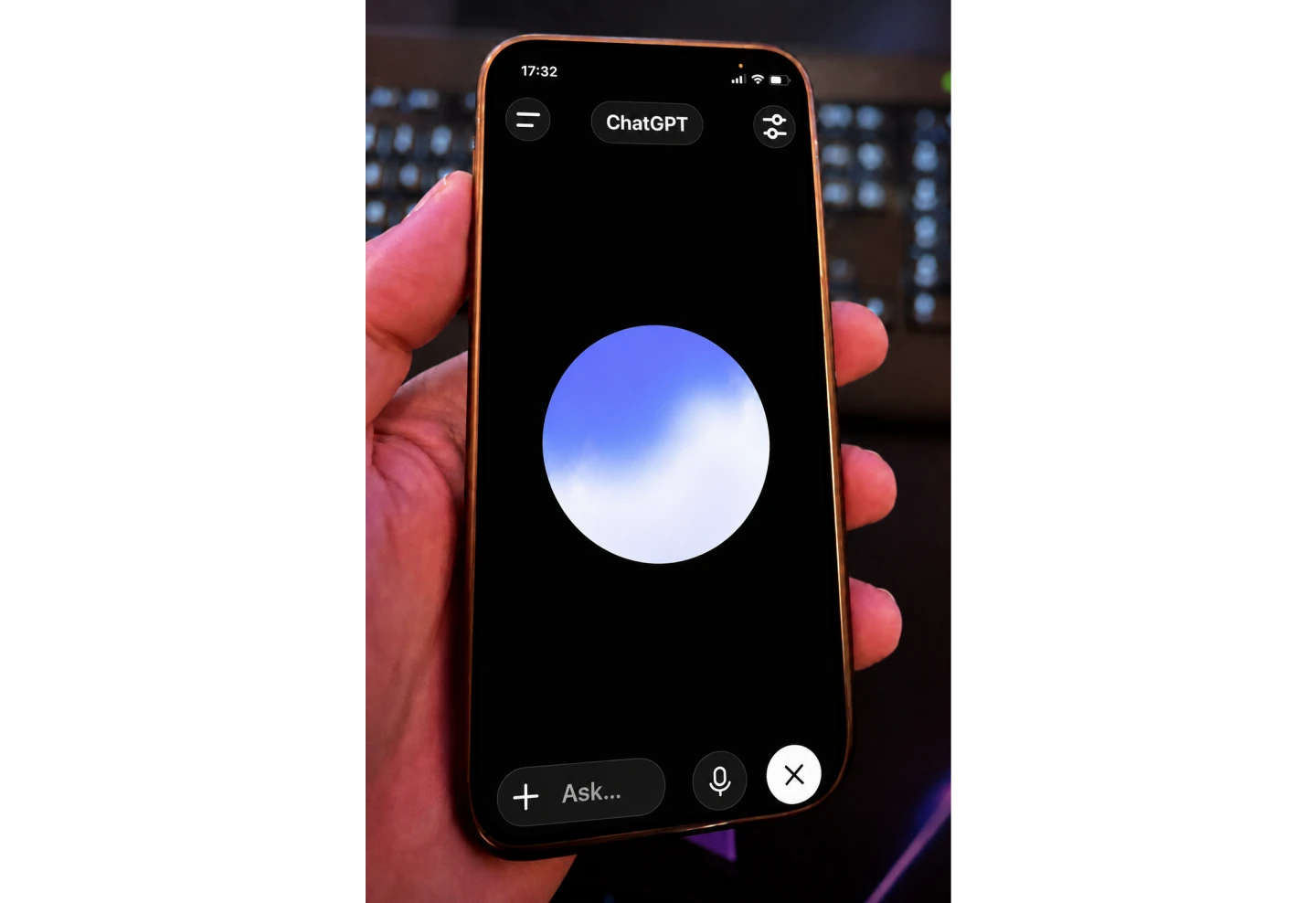
See how ChatGPT Voice is evolving from conversation into practical desktop assistance.
30-Second TL;DR
What Changed
ChatGPT Voice enables highly fluid, natural-sounding conversations.
Why It Matters
More natural voice interaction could make AI assistants useful in hands-free and workflow-oriented scenarios. If desktop task execution becomes reliable, developers may need to rethink interfaces around conversational agents rather than traditional menus.
What To Do Next
Prototype a hands-free workflow with ChatGPT Voice and document which multi-step desktop tasks still require human intervention.
Key Points
- •ChatGPT Voice enables highly fluid, natural-sounding conversations.
- •The experience moves ChatGPT beyond text-based chatbot interactions.
- •Testing indicates potential for handling complex desktop tasks as an assistant.
Deep Insight
AI-generated analysis for this event — not the original article.
Enhanced Key Takeaways
- •OpenAI's Advanced Voice Mode utilizes a multimodal architecture that processes audio directly to capture emotional nuances like laughter, singing, and varying speech rates without converting to text first.
- •The integration of 'Computer Use' capabilities allows ChatGPT to interact with desktop operating systems by observing screen pixels and executing mouse clicks or keyboard inputs.
- •Latency in voice interactions has been reduced to near-human levels, typically averaging 232 milliseconds, significantly improving the fluidity of real-time dialogue.
- •OpenAI has implemented strict safety guardrails, including voice-specific filters to prevent the generation of copyrighted content or unauthorized impersonation of public figures.
- •The transition to voice-first interfaces is part of a broader strategy to shift AI from a passive information retrieval tool to an autonomous agent capable of executing multi-step workflows across third-party applications.
Competitor Analysis
- ChatGPT (Advanced Voice)
- Native Multimodal Audio
- Google Gemini Live
- Native Multimodal Audio
- Anthropic Claude (Computer Use)
- Text/Vision/Desktop Control
- ChatGPT (Advanced Voice)
- High (Integrated)
- Google Gemini Live
- Moderate (Mobile-focused)
- Anthropic Claude (Computer Use)
- High (Specialized)
- ChatGPT (Advanced Voice)
- Ultra-Low (~232ms)
- Google Gemini Live
- Low
- Anthropic Claude (Computer Use)
- N/A (Non-Voice focus)
- ChatGPT (Advanced Voice)
- Plus/Team/Enterprise
- Google Gemini Live
- Gemini Advanced
- Anthropic Claude (Computer Use)
- API/Pro Tier
| Feature | ChatGPT (Advanced Voice) | Google Gemini Live | Anthropic Claude (Computer Use) |
|---|---|---|---|
| Primary Modality | Native Multimodal Audio | Native Multimodal Audio | Text/Vision/Desktop Control |
| Desktop Agency | High (Integrated) | Moderate (Mobile-focused) | High (Specialized) |
| Latency | Ultra-Low (~232ms) | Low | N/A (Non-Voice focus) |
| Pricing | Plus/Team/Enterprise | Gemini Advanced | API/Pro Tier |
Technical Deep Dive
- Architecture: Utilizes an end-to-end multimodal model that bypasses traditional speech-to-text (STT) and text-to-speech (TTS) pipelines to preserve paralinguistic cues.
- Desktop Interaction: Employs a vision-based agentic framework that captures screen snapshots at high frequency to identify UI elements and map them to coordinate-based actions.
- Latency Optimization: Leverages a streaming inference engine that begins audio synthesis before the full response token sequence is generated.
- Context Window: Supports long-term memory integration, allowing the voice assistant to recall user preferences and past desktop task configurations across sessions.
Future ImplicationsAI analysis grounded in cited sources
Timeline
- 2023-09OpenAI introduces initial voice capabilities for ChatGPT, allowing spoken conversations.
- 2024-05Announcement of GPT-4o, featuring native multimodal capabilities and significantly reduced voice latency.
- 2024-09OpenAI begins rolling out Advanced Voice Mode to Plus users with improved emotional expression.
- 2025-02Integration of expanded agentic capabilities allowing ChatGPT to perform complex desktop operations.
Weekly AI Recap
Read this week's curated digest of top AI events →
Related Updates

AI-curated news aggregator. All content rights belong to original publishers.
Original source: cnBeta (Full RSS) ↗
This is a summary, not the original. Read the source, or get the weekly briefing.
The weekly digest
One email a week. Unsubscribe anytime.