Charging Station Energy Storage: High Cost, Low ROI
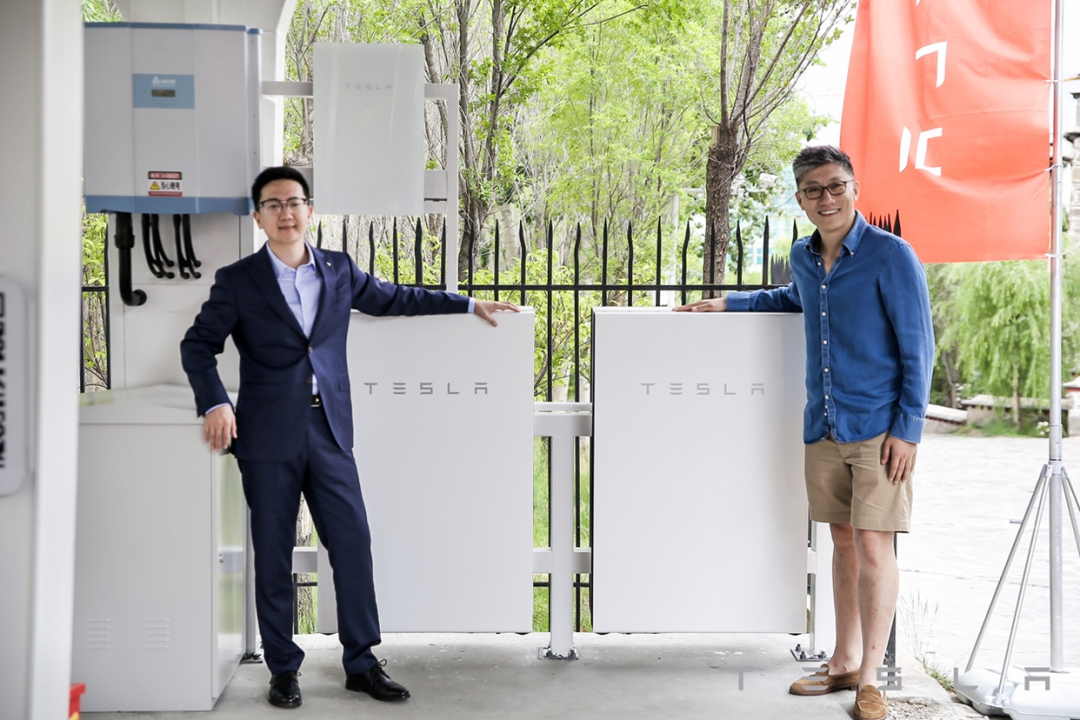
💡Understand why the 'charging + storage' business model is failing despite policy incentives.
⚡ 30-Second TL;DR
What Changed
Charging stations face low utilization rates, making large-scale energy storage investments hard to justify.
Why It Matters
The failure of the ESS business model in charging stations suggests a pivot toward smarter, software-driven grid management rather than hardware-heavy storage solutions.
What To Do Next
If building energy management software for EV infrastructure, focus on dynamic load balancing algorithms rather than assuming static battery storage availability.
Key Points
- •Charging stations face low utilization rates, making large-scale energy storage investments hard to justify.
- •Electricity market reforms have replaced fixed peak-valley pricing with volatile spot market prices, undermining ESS arbitrage strategies.
- •High CAPEX and long payback periods make ESS unattractive for independent charging station operators.
- •Industry consolidation is shifting ownership from private operators to state-owned enterprises with longer investment horizons.
🧠 Deep Insight
Web-grounded analysis with 15 cited sources.
🔑 Enhanced Key Takeaways
- •Stationary battery prices, particularly for Lithium-ion (Li-ion) batteries, experienced a significant drop, with some reports indicating a 45% decrease in sale prices in 2025, which could potentially reduce the payback period for energy storage systems (ESS) from 6-7 years to 3-4 years.
- •The Chinese government is actively implementing policies and setting ambitious targets to expand EV charging infrastructure, aiming for a network of 28 million chargers nationwide by the end of 2027, and has shifted subsidies from direct EV purchases to supporting charging facilities.
- •Energy storage systems at EV charging stations can generate additional revenue streams beyond peak shaving by providing ancillary services, such as frequency regulation, to the grid and by facilitating the integration of renewable energy sources.
- •The adoption of AI-driven energy management systems is becoming crucial for optimizing ESS profitability by predicting charging demand, intelligently managing charge-discharge cycles, and integrating with dynamic grid pricing.
- •Modular and factory-built battery energy storage systems (BESS) are emerging as a solution to reduce installation complexity and costs, shorten construction cycles, and allow for flexible capacity expansion at charging sites.
🛠️ Technical Deep Dive
- Dominant Battery Technology: Lithium-ion (Li-ion) batteries are the most prevalent for ESS in EV charging due to their high energy density, efficiency, and scalability.
- Common Li-ion Chemistries: Lithium Iron Phosphate (LFP) is favored for its safety and longevity, while Nickel Manganese Cobalt (NMC) offers higher energy density.
- Key Battery Characteristics (Li-ion):
- Energy Density: Typically ranges from 150-250 Wh/kg.
- Cycle Life: LFP batteries can achieve 2,000-5,000 cycles, while NMC batteries typically offer 1,000-2,000 cycles.
- Round-trip Efficiency: Generally between 85-95%.
- System Components:
- Battery Cells and Modules: The core units that store electrical energy.
- Power Conversion System (PCS): An inverter that enables bidirectional energy flow, converting DC from batteries to AC for the grid or EV charging, and AC from the grid/renewables to DC for battery charging.
- Battery Management System (BMS): Essential for monitoring and controlling battery parameters to ensure safety, optimize performance, and extend lifespan.
- Thermal Management System: Maintains optimal operating temperatures for the batteries, crucial for performance and preventing degradation.
- Deployment: ESS can be deployed either behind-the-meter (on-site to serve local loads) or in front-of-the-meter (to provide services directly to the grid).
- Future Battery Technologies: Solid-state batteries are anticipated by 2027-2030, promising double the energy density and faster charging. Sodium-ion batteries are also expected by 2030, offering a cheaper and more abundant alternative for stationary ESS.
🔮 Future ImplicationsAI analysis grounded in cited sources
⏳ Timeline
📎 Sources (15)
Factual claims are grounded in the sources below. Forward-looking analysis is AI-generated interpretation.
- Google Search Source
- Google Search Source
- Google Search Source
- Google Search Source
- Google Search Source
- Google Search Source
- Google Search Source
- Google Search Source
- Google Search Source
- Google Search Source
- Google Search Source
- Google Search Source
- Google Search Source
- Google Search Source
- Google Search Source
Weekly AI Recap
Read this week's curated digest of top AI events →
👉Related Updates


AI-curated news aggregator. All content rights belong to original publishers.
Original source: 虎嗅 ↗