Challenges in rebuilding Blue Origin's launch infrastructure
💡Understand the operational bottlenecks in private spaceflight infrastructure and their impact on launch timelines.
⚡ 30-Second TL;DR
What Changed
Assessing the timeline for complex aerospace infrastructure recovery
Why It Matters
The delay in infrastructure recovery could impact the cadence of future space missions and competitive positioning in the commercial launch market.
What To Do Next
Monitor Blue Origin's official launch schedule updates to adjust your aerospace supply chain or research planning accordingly.
Key Points
- •Assessing the timeline for complex aerospace infrastructure recovery
- •Insights from SpaceX veterans regarding launch pad operational challenges
- •Analysis of the current morale and technical hurdles at Blue Origin
🧠 Deep Insight
Background and context from public sources — not the original article. 21 sources cited.
🔑 Enhanced Key Takeaways
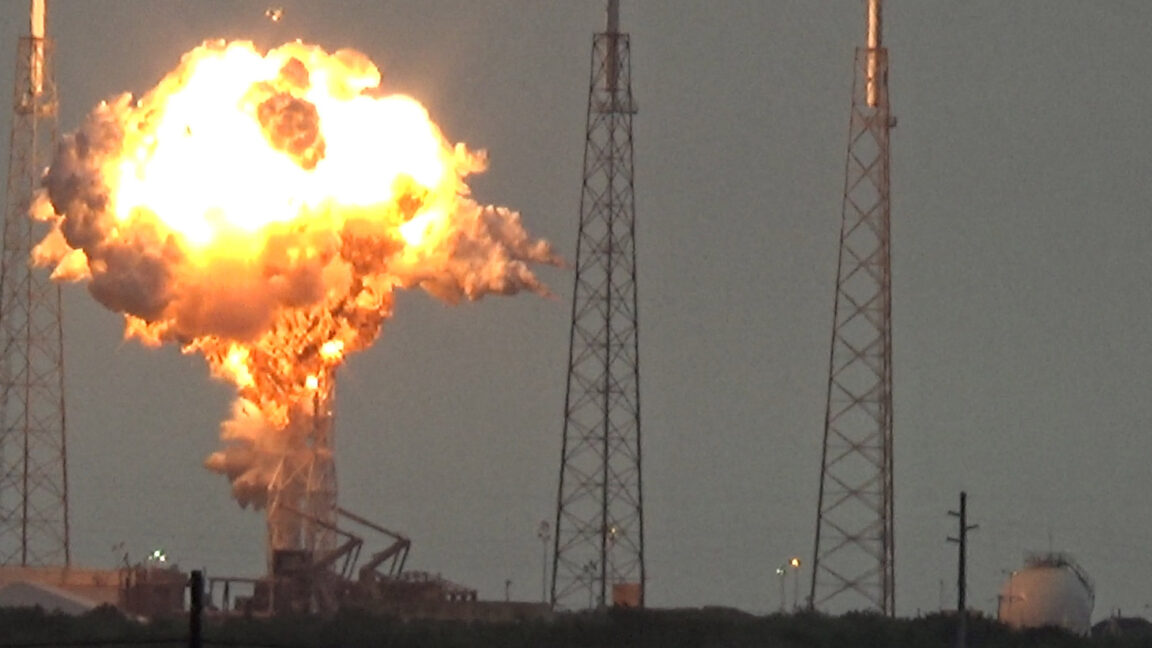
- •The catastrophic explosion on May 28, 2026, at Launch Complex 36 (LC-36) during a New Glenn static fire test resulted in the destruction of the rocket and its transporter-erector system, alongside significant damage to the main support gantry and a lightning tower.
- •Blue Origin invested over $1 billion to completely rebuild LC-36 at Cape Canaveral Space Force Station, completing the project in 2021, marking it as the first newly rebuilt launch complex since the 1960s.
- •Despite the extensive damage, Blue Origin CEO Dave Limp reported that critical long-lead items such as propellant tanks (oxygen, liquid hydrogen, and liquefied natural gas) and the water tower remained in good condition, and the main support gantry is repairable in place.
- •NASA Administrator Jared Isaacman offered a more conservative outlook, suggesting that repairs to LC-36 could take 'serious time,' potentially extending until 2028, which contrasts with Blue Origin's stated goal of resuming New Glenn flights by the end of 2026.
- •Blue Origin's current reliance on LC-36 as its sole operational launchpad for New Glenn creates a significant single point of failure, effectively grounding its entire New Glenn manifest following the incident.
📊 Competitor Analysis▸ Show
A Markdown table comparing this with competitors (Feature/Pricing/Benchmarks). Return null if not applicable (e.g. op-ed, interview, single-product announcement with no clear competitors).
🛠️ Technical Deep Dive
- Launch Complex 36 (LC-36) Infrastructure: The complex, rebuilt from the ground up, includes a vehicle access tower, a lightning protection tower (both over 600 feet tall), and a 350-foot-tall water tower capable of holding 750,000 gallons for deluge systems.
- Integration Facility: A large hangar-like structure, 540 feet long, 225 feet wide, and 135 feet to its roof peak, designed to process up to three New Glenn rockets simultaneously.
- New Glenn Vehicle Specifications: The rocket stands 98 meters (320 feet) tall with a 7-meter diameter. Its first stage is powered by seven BE-4 engines (using liquid oxygen/liquefied natural gas) and is designed for reusability (minimum 25 flights), landing vertically on an offshore platform. The second stage uses two BE-3U engines (liquid hydrogen/liquid oxygen).
- Ground Systems: Extensive underground infrastructure at LC-36 supports medium and low voltage power, telecom distribution, grounding, site and building lighting, fire alarm, access control, CCTV, hazardous vapor detection, and lightning protection.
- Transporter-Erector System: This heavy mechanical assembly, which was destroyed in the explosion, is crucial for transporting, elevating, and mating the New Glenn vehicle to the launch pad.
🔮 Future ImplicationsAI analysis grounded in cited sources
⏳ Timeline
📎 Sources (21)
Factual claims are grounded in the sources below. Forward-looking analysis is AI-generated interpretation.
Weekly AI Recap
Read this week's curated digest of top AI events →
👉Related Updates
AI-curated news aggregator. All content rights belong to original publishers.
Original source: Ars Technica ↗
This is a summary, not the original. Read the source, or get the weekly briefing.
The weekly digest
One email a week. Unsubscribe anytime.