💰钛媒体•Stalecollected in 13m
Cerebras Tears into Nvidia Compute Moat
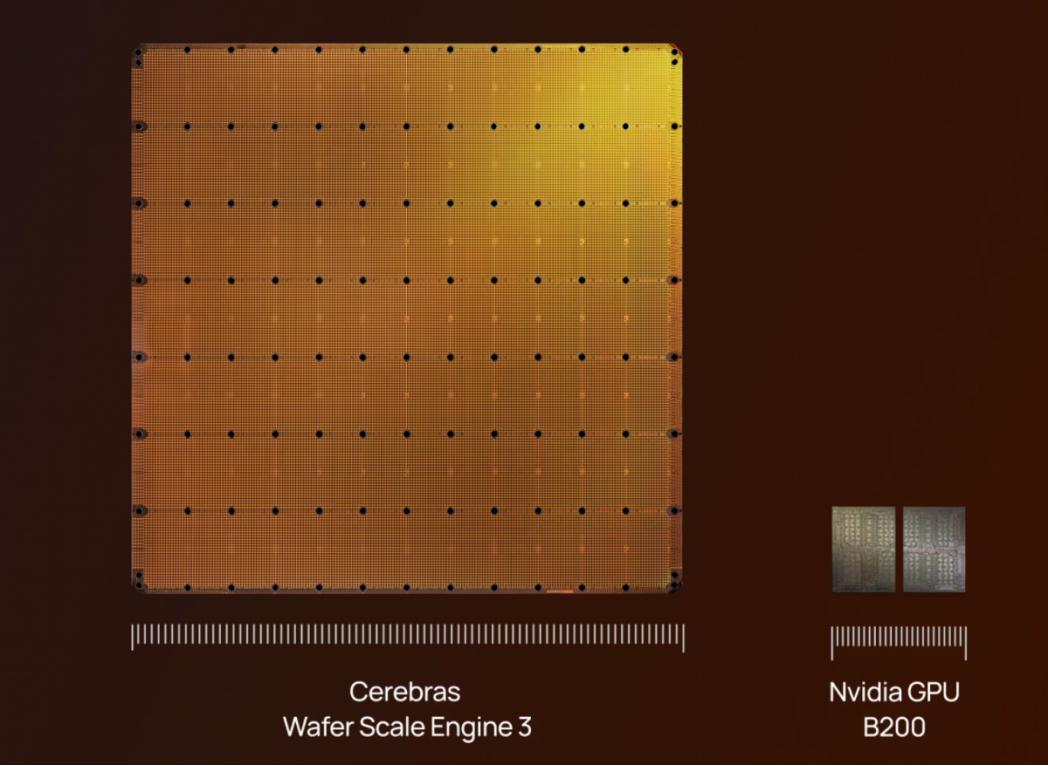
💡Cerebras eyes Nvidia's AI GPU throne with cost-slashing compute tech.
⚡ 30-Second TL;DR
What Changed
Nvidia's compute 'besieged city' exposed
Why It Matters
Potential shift in AI infrastructure towards cheaper alternatives to GPUs. Could lower barriers for large-scale AI training.
What To Do Next
Benchmark Cerebras CS-3 against Nvidia H100 for your next training run.
Who should care:Enterprise & Security Teams
Key Points
- •Nvidia's compute 'besieged city' exposed
- •GPU hype as AI compromise
- •Cerebras targets compute cost reduction
🧠 Deep Insight
AI-generated analysis for this event — not the original article.
🔑 Enhanced Key Takeaways
- •Cerebras leverages its Wafer-Scale Engine (WSE) architecture to eliminate the interconnect bottlenecks inherent in traditional GPU clusters, allowing for massive model parallelism on a single chip.
- •The company has shifted its business model toward 'Cerebras Inference,' offering high-throughput, low-latency API services that directly undercut the cost-per-token metrics of Nvidia-powered cloud providers.
- •Industry analysts note that while Cerebras excels in training and inference efficiency for specific dense models, it faces significant challenges in software ecosystem maturity compared to Nvidia's CUDA-entrenched developer base.
📊 Competitor Analysis▸ Show
| Feature | Cerebras (WSE-3) | Nvidia (Blackwell B200) | Groq (LPU) |
|---|---|---|---|
| Architecture | Wafer-Scale (Single Chip) | GPU (Multi-Chip Cluster) | LPU (Tensor Streaming) |
| Primary Strength | Memory Bandwidth/Interconnect | Software Ecosystem/Versatility | Inference Latency |
| Pricing Model | API-based / System Lease | Hardware Sale / Cloud Instance | API-based |
| Benchmark Focus | Large-scale Training/Inference | General Purpose AI/HPC | Real-time Inference |
🛠️ Technical Deep Dive
- WSE-3 Architecture: Features 4 trillion transistors and 900,000 AI-optimized cores on a single 300mm wafer.
- Memory Bandwidth: Delivers 21 PB/s of memory bandwidth, significantly higher than traditional HBM-based GPU architectures.
- Interconnect: Eliminates the need for complex networking fabrics (like InfiniBand) required to scale across thousands of discrete GPUs.
- Software Stack: Utilizes the Cerebras Software Development Kit (SDK) which abstracts the wafer-scale hardware, allowing users to map models via standard frameworks like PyTorch.
🔮 Future ImplicationsAI analysis grounded in cited sources
Cerebras will capture significant market share in the enterprise inference-as-a-service market by 2027.
The ability to offer lower cost-per-token for high-demand LLMs provides a clear economic incentive for enterprises to migrate away from general-purpose GPU clouds.
Nvidia will accelerate the integration of proprietary interconnect technologies to mitigate the performance gap.
To counter the architectural advantages of wafer-scale computing, Nvidia must further reduce latency in its NVLink and InfiniBand scaling solutions.
⏳ Timeline
2019-08
Cerebras unveils the WSE-1, the world's largest chip at the time.
2021-04
Launch of WSE-2, doubling the transistor count to 2.6 trillion.
2024-03
Introduction of WSE-3, delivering 900,000 cores for AI training.
2024-09
Cerebras files for IPO, signaling a shift toward aggressive commercial expansion.
📰
Weekly AI Recap
Read this week's curated digest of top AI events →
👉Related Updates

AI-curated news aggregator. All content rights belong to original publishers.
Original source: 钛媒体 ↗
This is a summary, not the original. Read the source, or get the weekly briefing.
Weekly AI briefing
One email a week. Unsubscribe anytime.