Celeste Ecoflyers unveils inflatable wing drone for long endurance
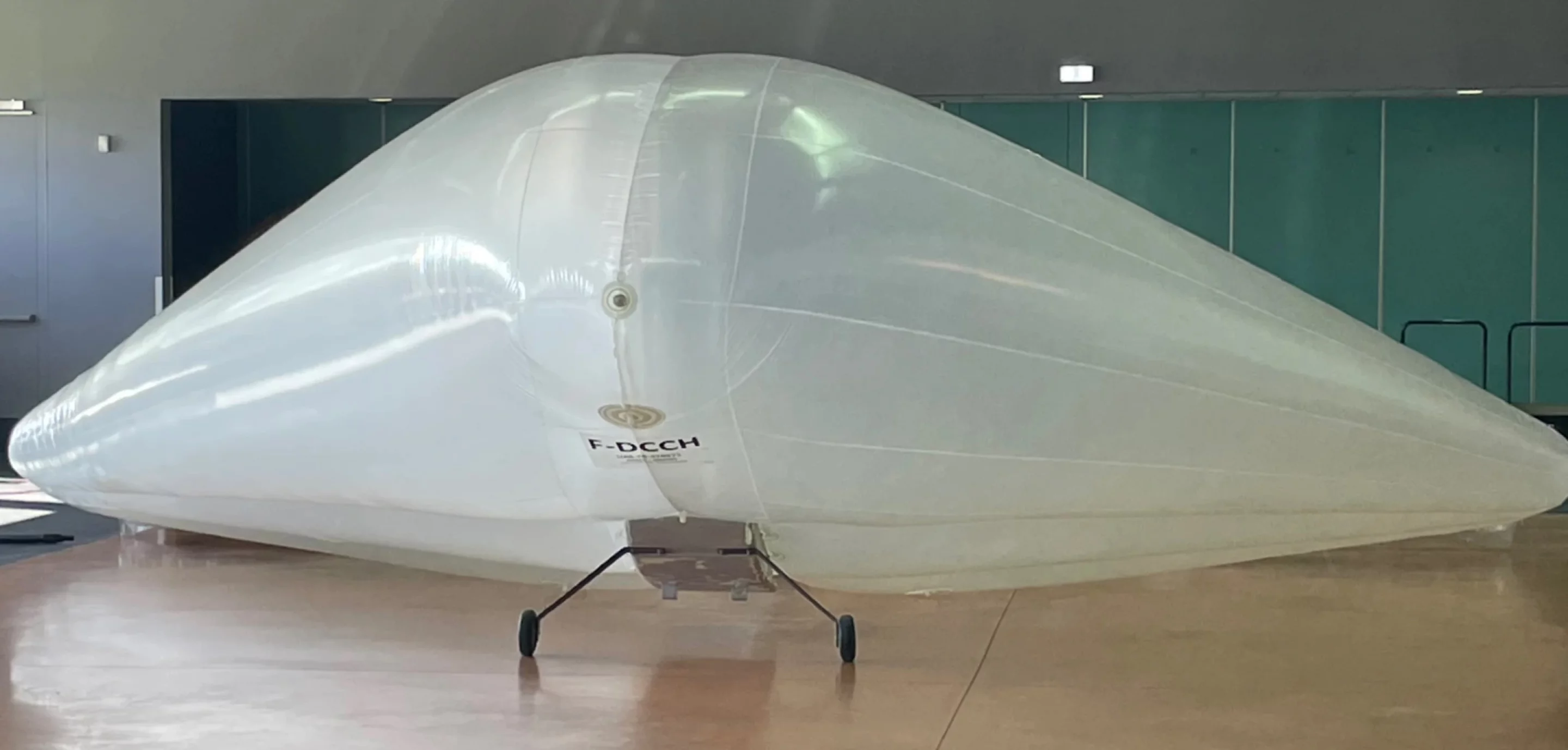
💡Innovative drone hardware design that could lower deployment costs for autonomous aerial data collection.
⚡ 30-Second TL;DR
What Changed
dAS10 features an innovative inflatable wing structure
Why It Matters
The use of inflatable, lightweight structures could revolutionize deployment logistics for autonomous aerial surveillance and data collection.
What To Do Next
Explore soft robotics and inflatable materials if you are building edge-deployed autonomous drones requiring high portability.
Key Points
- •dAS10 features an innovative inflatable wing structure
- •Design optimized for long-endurance flight missions
- •Unique form factor inspired by soft robotics concepts
🧠 Deep Insight
AI-generated analysis for this event — not the original article.
🔑 Enhanced Key Takeaways
- •The dAS10 utilizes a proprietary 'Inflatable Wing' technology that allows the aircraft to be packed into a compact container, significantly reducing logistics and deployment footprints.
- •Celeste Ecoflyers claims the inflatable structure provides inherent shock absorption, making the drone more resilient during rough landings or accidental collisions compared to rigid carbon-fiber frames.
- •The drone is specifically targeted at environmental monitoring and maritime surveillance, leveraging the low-noise signature of its soft-wing design.
- •The company has integrated a modular payload bay that supports various sensors, including multispectral cameras and atmospheric samplers, despite the soft-structure constraints.
- •The inflatable wing is constructed from high-strength, airtight technical fabrics that maintain aerodynamic rigidity through precise internal pressure regulation.
📊 Competitor Analysis▸ Show
| Feature | Celeste Ecoflyers dAS10 | Conventional Fixed-Wing UAVs | Soft-Robotic Drones |
|---|---|---|---|
| Portability | High (Inflatable) | Low (Rigid) | High |
| Durability | High (Impact Absorbent) | Low (Brittle) | High |
| Deployment Time | Moderate (Inflation req.) | Fast (Ready to fly) | Moderate |
| Endurance | Long (Optimized) | Variable | Low to Moderate |
🛠️ Technical Deep Dive
- Wing Architecture: Uses a multi-chamber inflatable bladder system to maintain airfoil shape under flight loads.
- Pressure Management: Features an onboard micro-pump system that actively monitors and adjusts internal wing pressure to compensate for altitude and temperature changes.
- Material Composition: Constructed from TPU-coated aramid fibers for high tensile strength and puncture resistance.
- Propulsion: Electric pusher-prop configuration mounted on a rigid central fuselage pod to minimize vibration transfer to the inflatable wings.
- Flight Control: Utilizes specialized flight control laws designed to account for the slight aeroelastic deformation of the inflatable surfaces.
🔮 Future ImplicationsAI analysis grounded in cited sources
⏳ Timeline
Weekly AI Recap
Read this week's curated digest of top AI events →
👉Related Updates
AI-curated news aggregator. All content rights belong to original publishers.
Original source: cnBeta (Full RSS) ↗
This is a summary, not the original. Read the source, or get the weekly briefing.
The weekly digest
One email a week. Unsubscribe anytime.