🔍Google AI Blog•Freshcollected in 30m
Celebrating 25 years of visual search innovation
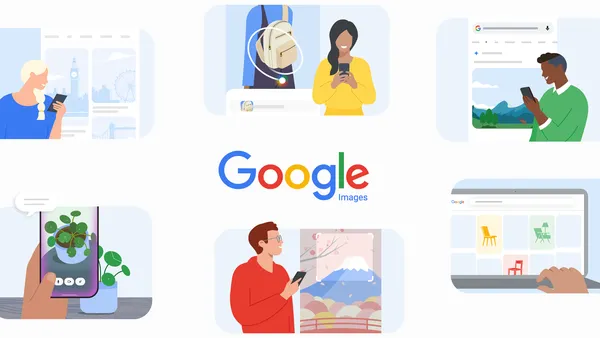
💡Understand the evolution of visual search to better leverage Google's computer vision capabilities in your projects.
⚡ 30-Second TL;DR
What Changed
Commemorating 25 years of visual search development at Google
Why It Matters
The milestone underscores Google's long-term commitment to multimodal search, signaling continued investment in computer vision and AI-driven image understanding.
What To Do Next
Review Google's latest documentation on Vision API to see how you can integrate advanced image analysis into your own applications.
Who should care:Developers & AI Engineers
Key Points
- •Commemorating 25 years of visual search development at Google
- •Reflecting on the evolution of image indexing and retrieval algorithms
- •Exploring future directions for visual content creation and discovery
🧠 Deep Insight
AI-generated analysis for this event.
🔑 Enhanced Key Takeaways
- •The origin of Google Images is famously attributed to the massive surge in traffic caused by Jennifer Lopez's green Versace dress at the 2000 Grammy Awards, which highlighted the need for a dedicated image search engine.
- •Google's visual search architecture has transitioned from metadata-based indexing to deep learning-based multimodal understanding, utilizing models like Gemini to interpret context within images.
- •The integration of Google Lens has shifted the platform from a passive retrieval tool to an active, real-time visual analysis engine capable of identifying objects, translating text, and solving complex problems.
- •Google has implemented advanced safety and provenance features, such as 'About this image' and C2PA metadata support, to combat misinformation and deepfakes in visual search results.
- •The platform now leverages generative AI to provide 'Circle to Search' capabilities, allowing users to initiate visual queries from any screen state without switching applications.
📊 Competitor Analysis▸ Show
| Feature | Google Images / Lens | Pinterest Lens | Bing Visual Search |
|---|---|---|---|
| Core Focus | General Web/Real-world Discovery | Shopping & Lifestyle Inspiration | Web & Shopping Integration |
| Model Base | Gemini / Multimodal LLMs | Proprietary Computer Vision | OpenAI GPT-4o / Vision |
| Ecosystem | Deep Android/Chrome Integration | Standalone App/Browser | Microsoft Edge/Bing App |
| Benchmarks | Industry-leading entity recognition | High accuracy for fashion/home | Strong e-commerce/retail focus |
🛠️ Technical Deep Dive
- Transitioned from traditional CNNs (Convolutional Neural Networks) to Vision Transformers (ViTs) for improved spatial awareness and feature extraction.
- Utilizes Multimodal Large Language Models (MLLMs) to perform cross-modal reasoning, allowing the system to understand the relationship between text queries and visual pixels.
- Employs Knowledge Graph integration to map visual entities to structured data, enabling the 'About this image' feature to verify image history and source.
- Implements on-device processing for Google Lens to reduce latency and enhance user privacy for real-time camera-based queries.
- Uses sophisticated embedding spaces to perform similarity search, enabling 'visually similar' recommendations based on vector representations of image content.
🔮 Future ImplicationsAI analysis grounded in cited sources
Visual search will become the primary interface for augmented reality (AR) navigation.
The integration of real-time visual understanding with spatial computing will allow users to query their physical environment directly through wearable devices.
Automated image provenance will become a standard requirement for search indexing.
As generative AI makes synthetic imagery ubiquitous, search engines will prioritize content with cryptographically verifiable metadata to maintain user trust.
⏳ Timeline
2001-07
Google Image Search launches with 250 million indexed images.
2011-06
Google introduces reverse image search, allowing users to search by uploading an image.
2017-10
Google Lens is launched, bringing real-time visual analysis to mobile cameras.
2023-02
Google introduces 'Multisearch' to combine text and image queries simultaneously.
2024-01
Google launches 'Circle to Search' on Android, enabling visual search from any screen.
2026-07
Google Images celebrates its 25th anniversary.
📰
Weekly AI Recap
Read this week's curated digest of top AI events →
👉Related Updates

AI-curated news aggregator. All content rights belong to original publishers.
Original source: Google AI Blog ↗