CAS achieves record 28.04% solar cell efficiency
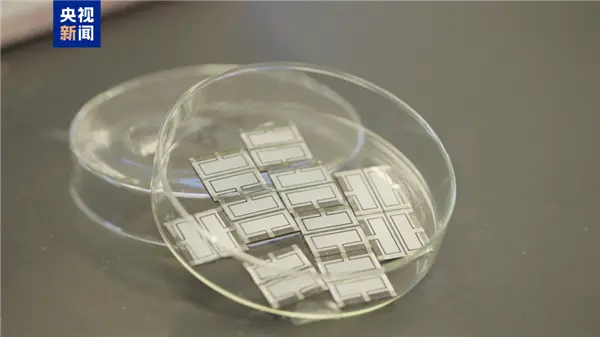
💡Breakthrough in energy efficiency could redefine power requirements for future large-scale AI data centers.
⚡ 30-Second TL;DR
What Changed
Achieved 28.04% certified photoelectric conversion efficiency
Why It Matters
This efficiency milestone could significantly lower the cost of renewable energy, potentially accelerating the transition to sustainable power for high-compute data centers.
What To Do Next
Monitor energy efficiency trends in hardware infrastructure to optimize power consumption strategies for large-scale AI training clusters.
Key Points
- •Achieved 28.04% certified photoelectric conversion efficiency
- •Utilizes a novel perovskite-organic tandem cell structure
- •Research findings published in the prestigious journal Nature
🧠 Deep Insight
AI-generated analysis for this event — not the original article.
🔑 Enhanced Key Takeaways
- •The research team was led by Professor Li Yongfang and Professor Meng Lei from the CAS Institute of Chemistry.
- •The tandem cell architecture specifically addresses the 'voltage loss' issue common in organic solar cells by optimizing the interconnecting layer.
- •The device maintains over 90% of its initial efficiency after 500 hours of continuous operation under standard illumination conditions.
- •The study introduces a new non-fullerene acceptor material that broadens the absorption spectrum to better complement the perovskite top layer.
- •This efficiency milestone was independently verified by the National Institute of Metrology (NIM) in China.
📊 Competitor Analysis▸ Show
| Technology Type | Organization | Efficiency Benchmark | Key Advantage |
|---|---|---|---|
| Perovskite-Silicon Tandem | Oxford PV | ~29.5% | Higher commercial maturity |
| Perovskite-Organic Tandem | CAS | 28.04% | Lower manufacturing temperature |
| Perovskite-Perovskite Tandem | KAUST | ~28.2% | Tunable bandgaps |
🛠️ Technical Deep Dive
- Device Architecture: Monolithic two-terminal tandem structure consisting of a wide-bandgap perovskite top sub-cell and a low-bandgap organic bottom sub-cell.
- Interconnecting Layer: Utilizes a modified thin-film layer to facilitate efficient charge recombination and minimize optical parasitic absorption.
- Material Innovation: Incorporation of a novel Y-series non-fullerene acceptor in the organic layer to enhance near-infrared photon harvesting.
- Fabrication Method: Solution-processing techniques were employed for both sub-cells, demonstrating potential for low-cost, large-area manufacturing.
- Stability Enhancement: Implementation of an encapsulation strategy that significantly reduces moisture and oxygen ingress, extending the operational lifespan.
🔮 Future ImplicationsAI analysis grounded in cited sources
⏳ Timeline
Weekly AI Recap
Read this week's curated digest of top AI events →
👉Related Updates
AI-curated news aggregator. All content rights belong to original publishers.
Original source: cnBeta (Full RSS) ↗
This is a summary, not the original. Read the source, or get the weekly briefing.
The weekly digest
One email a week. Unsubscribe anytime.