Car Firms Pivot to Humanoid Robots
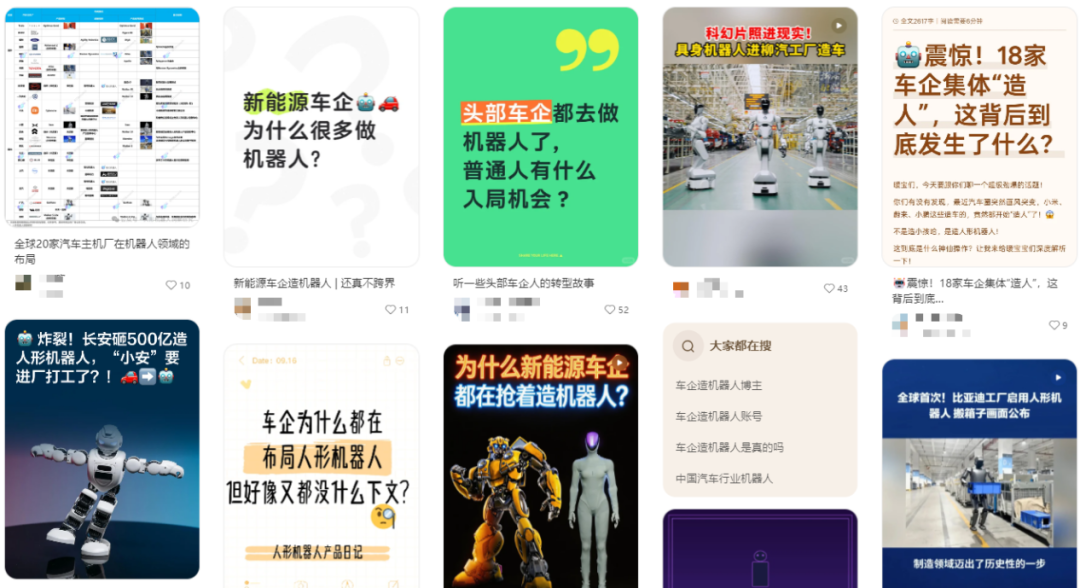
💡Auto giants flee EV wars by building humanoid robots—key for embodied AI strategy
⚡ 30-Second TL;DR
What Changed
Car companies facing profit erosion from EV price wars and involution
Why It Matters
Accelerates embodied AI adoption in autos, opening robotics software markets for AI devs amid China’s robot push.
What To Do Next
Prototype ROS2-based control stacks for humanoid robots targeting auto OEM integrations.
Key Points
- •Car companies facing profit erosion from EV price wars and involution
- •Collective shift to 'making people' i.e., humanoid robot development
- •Robots positioned as high-stakes bet for long-term industry survival
🧠 Deep Insight
Background and context from public sources — not the original article. 5 sources cited.
🔑 Enhanced Key Takeaways
- •Xpeng targets mass production of advanced humanoid robots by end of 2026, positioning itself as China's first company to achieve large-scale humanoid robot manufacturing with car-grade quality standards[2]
- •Chinese humanoid robot makers have achieved over 50% domestic localization rate for core components like controllers and batteries, with technological breakthroughs in critical areas such as harmonic reducers and ball screws enabling competitive cost advantages[4]
- •Multiple Chinese automakers including Changan Auto, BYD, Xiaomi, and GAC are simultaneously entering humanoid robotics, with GAC already deploying robots in commercial scenarios like subway stations for passenger guidance and security assistance[1][3]
- •The humanoid robot expansion represents a 'spillover effect' from China's automotive supply chain dominance, leveraging existing EV manufacturing expertise and global export momentum to scale robotics production[4]
- •Chinese humanoid robot makers are moving beyond viral demonstrations to commercial deployment across multiple industries, while overseas competitors like Apptronik, Figure AI, and Agility Robotics remain in pilot testing phases with volumes in tens or hundreds[4]
📊 Competitor Analysis▸ Show
| Aspect | Chinese Automakers (Xpeng, Changan, GAC, BYD) | Overseas Competitors (Apptronik, Figure AI, Agility Robotics) |
|---|---|---|
| Production Status | Mass production targeted by end of 2026 | Pilot testing phase |
| Volume Scale | Thousands planned | Tens to hundreds units |
| Core Component Localization | >50% domestic sourcing achieved | Not specified |
| Commercial Deployment | Active (subway stations, industrial scenarios) | Limited pilot implementations |
| Supply Chain Integration | Leveraging existing EV manufacturing | Independent development |
| Timeline Advantage | 12+ months ahead in mass production readiness | 2+ years behind in production capability |
🛠️ Technical Deep Dive
- Xpeng IRON Robot Architecture: Powered by physical world AI model and three Turing AI chips enabling human-like thinking and interaction[2]
- Battery Technology: Car-grade quality standards applied to battery systems; full solid-state battery mass production targeted for 2026[2]
- Mechanical Systems: Car-grade standards extended to joints, perception systems, and domain controllers[2]
- Core Component Ecosystem: Ball screws (Shuanglin, Xinjian Transmission, Wuzhou Spring producing 63+ robot-use variants), harmonic reducers (Leader Harmonic Drive in bulk shipments to major Chinese robot makers), servo motors, and encoders achieving steady localization rate improvements[4]
- Software Integration: SDK development underway for global developer ecosystem to enable third-party innovation[2]
🔮 Future ImplicationsAI analysis grounded in cited sources
⏳ Timeline
📎 Sources (5)
Factual claims are grounded in the sources below. Forward-looking analysis is AI-generated interpretation.
Weekly AI Recap
Read this week's curated digest of top AI events →
👉Related Updates

AI-curated news aggregator. All content rights belong to original publishers.
Original source: 钛媒体 ↗
This is a summary, not the original. Read the source, or get the weekly briefing.
Weekly AI briefing
One email a week. Unsubscribe anytime.