Can Foreign Investors Rediscover China Tech?
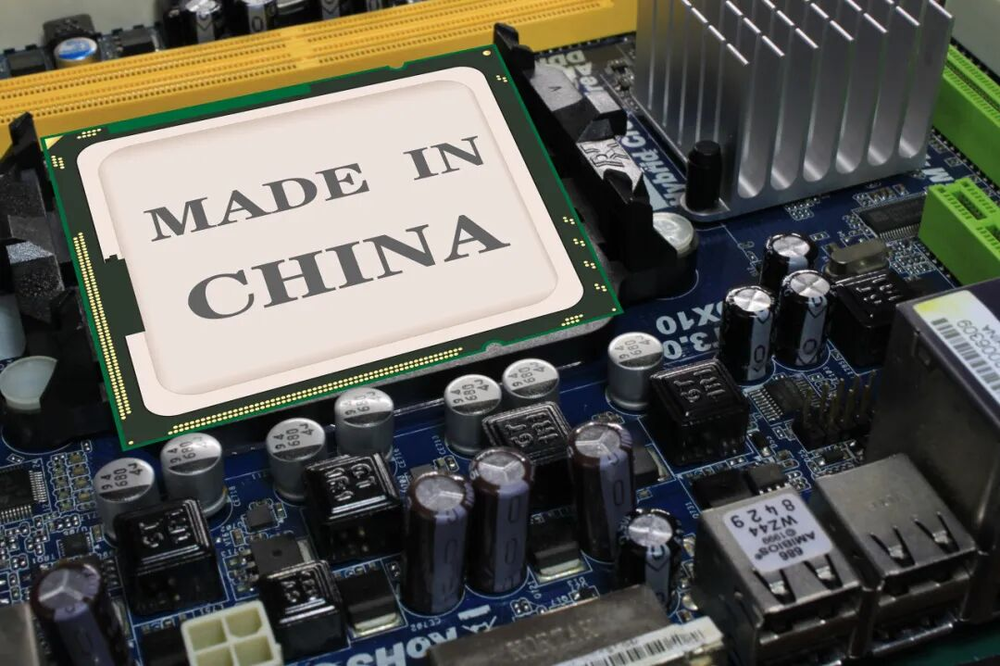
💡China’s AI exposure is rising, but foreign funds still hold surprisingly little—here’s what may change that.
⚡ 30-Second TL;DR
What Changed
China accounts for an estimated 10% of global AI-related market capitalization and 16% of AI-related revenue, but global mutual funds held only about 1.2% of their technology exposure in Chinese AI stocks as of January 2026.
Why It Matters
If foreign capital increasingly treats Chinese AI and semiconductor companies as strategic competitors rather than emerging-market substitutes, access to capital and global visibility could improve. However, geopolitical restrictions and governance or profitability concerns may continue to limit sustained institutional inflows.
What To Do Next
Create a watchlist comparing CNQQ and CQQQ holdings, then map their AI-chip, cloud, and software exposure against your company’s long-term market and partnership strategy.
Key Points
- •China accounts for an estimated 10% of global AI-related market capitalization and 16% of AI-related revenue, but global mutual funds held only about 1.2% of their technology exposure in Chinese AI stocks as of January 2026.
- •Foreign perceptions have evolved from viewing China as a low-cost manufacturer to recognizing Chinese firms as potential competitors in a US–China bipolar technology landscape.
- •CNQQ covers information technology, industrial manufacturing, healthcare, and other hard-tech growth sectors, while CQQQ offers broader exposure across internet, hardware, communications, and new energy.
- •Large long-term investors remain cautious because of geopolitical risk, domestic competition, information-access costs, and rapid sector rotation in Chinese markets.
- •The article identifies long-term institutional capital, flexible private wealth, and hedge funds as three major foreign-investor groups with different objectives.
🧠 Deep Insight
AI-generated analysis for this event.
🔑 Enhanced Key Takeaways
- •The Chinese government's 'New Quality Productive Forces' policy, introduced in 2024, has significantly accelerated state-backed venture capital flows into deep-tech sectors like quantum computing and 6G, which are now becoming primary targets for foreign hedge funds seeking alpha.
- •Recent regulatory shifts in 2026 have streamlined the 'Qualified Foreign Institutional Investor' (QFII) process, specifically reducing the mandatory lock-up periods for capital invested in designated 'strategic technology' funds.
- •DeepSeek's recent open-source model releases have forced a shift in global AI benchmarking, with Chinese LLMs now demonstrating parity with Western counterparts in specific coding and mathematical reasoning tasks, reducing the 'innovation gap' discount previously applied by foreign analysts.
- •The 'China Plus One' supply chain strategy has paradoxically increased foreign interest in Chinese industrial automation firms, as these companies are now exporting their manufacturing technology to Southeast Asia and Mexico to bypass trade barriers.
- •Data from mid-2026 indicates a surge in 'synthetic' exposure, where foreign investors are increasingly utilizing total return swaps (TRS) on Chinese tech indices to gain exposure while mitigating the direct custody risks associated with holding A-shares.
📊 Competitor Analysis▸ Show
| Feature | CNQQ (Invesco China Tech) | CQQQ (Invesco China Technology) | KWEB (KraneShares CSI China Internet) |
|---|---|---|---|
| Primary Focus | Hard-tech & Industrial | Broad Tech & Hardware | Internet & Software |
| Expense Ratio | 0.60% | 0.70% | 0.69% |
| Benchmark | MSCI China Information Tech | FactSet China Tech Index | CSI Overseas China Internet |
| Key Sector Tilt | Semiconductor/Manufacturing | Consumer Electronics/Hardware | E-commerce/Social Media |
🛠️ Technical Deep Dive
- DeepSeek-V3/R1 Architecture: Utilizes a Mixture-of-Experts (MoE) framework with multi-head latent attention (MLA) to drastically reduce KV cache memory usage during inference.
- Hardware Optimization: Chinese firms are increasingly adopting 'Chiplet' architectures to circumvent advanced lithography restrictions, allowing for the integration of multiple smaller dies to achieve performance levels comparable to monolithic high-end GPUs.
- New Energy Integration: Implementation of AI-driven grid management systems that utilize real-time load balancing to optimize the efficiency of distributed solar and wind assets in China's western provinces.
🔮 Future ImplicationsAI analysis grounded in cited sources
⏳ Timeline
Weekly AI Recap
Read this week's curated digest of top AI events →
👉Related Updates


AI-curated news aggregator. All content rights belong to original publishers.
Original source: 虎嗅 ↗