Can Chinese Silicon Replace Nvidia for AI Training?
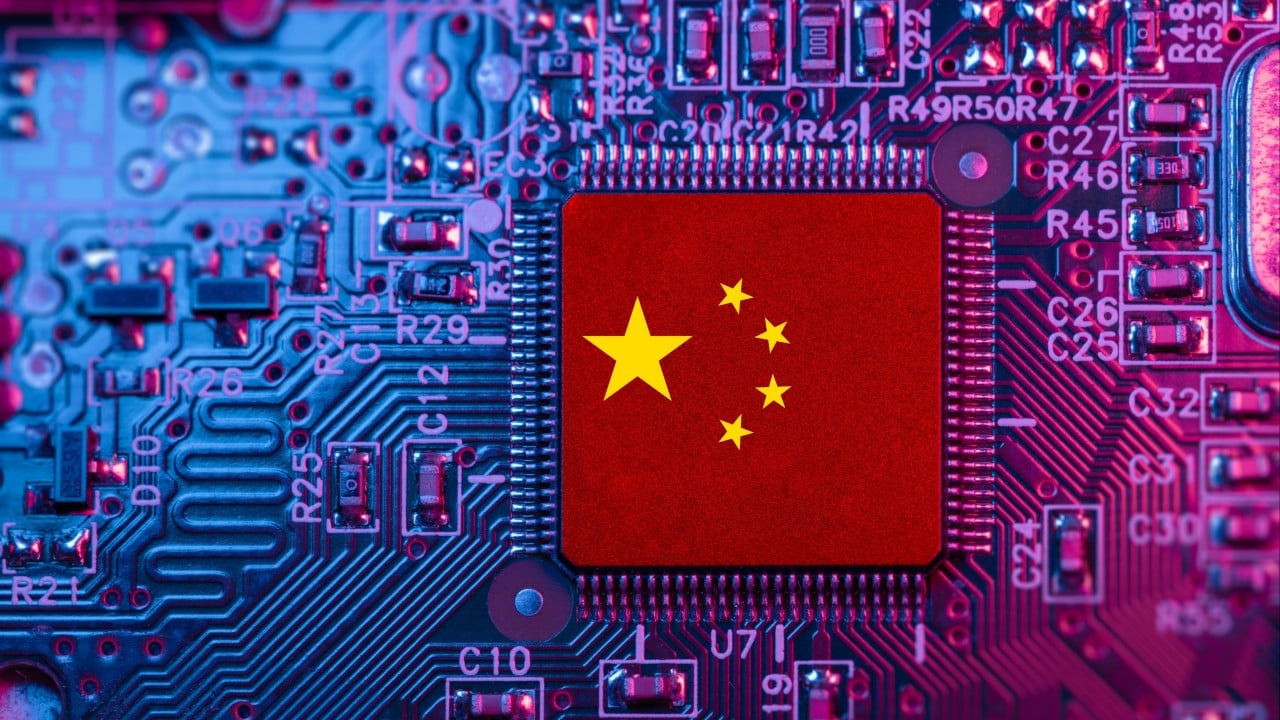
💡Understand the hardware bottleneck facing Chinese AI and its implications for global supply chain and model development.
⚡ 30-Second TL;DR
What Changed
Chinese AI models are highly competitive in performance but lack domestic hardware for pre-training.
Why It Matters
The reliance on foreign silicon for pre-training poses a strategic risk for Chinese AI firms. Future breakthroughs in domestic hardware are essential for achieving true technological sovereignty.
What To Do Next
Evaluate the current performance benchmarks of local Chinese AI accelerators against your specific inference workloads to optimize hardware costs.
Key Points
- •Chinese AI models are highly competitive in performance but lack domestic hardware for pre-training.
- •Domestic chips are currently widely adopted for model inference tasks.
- •Pre-training remains the most computationally demanding stage, creating a bottleneck for local silicon.
🧠 Deep Insight
Background and context from public sources — not the original article. 32 sources cited.
🔑 Enhanced Key Takeaways
- •Chinese companies like Baidu (Kunlun chips) and Huawei (Ascend chips) are actively developing their own AI accelerators, with Baidu's Kunlun P800 chips powering a 30,000-chip cluster capable of training foundation models with hundreds of billions of parameters.
- •Despite significant domestic advancements, Chinese AI data center chips are still estimated by industry executives to lag behind leading international competitors by 5 to 10 years in areas such as efficiency, yields, and memory subsystems.
- •US export controls, initially implemented in October 2022 and subsequently expanded, have severely restricted China's access to high-end AI chips like Nvidia's A100 and H100, accelerating China's push for technological self-sufficiency.
- •Chinese firms are employing various strategies to circumvent hardware limitations, including optimizing software and algorithms to function effectively with less advanced domestic chips, as demonstrated by DeepSeek's ability to train high-performing models with lower-tier hardware.
- •SMIC, China's largest foundry, is making progress in advanced process technology (e.g., 7nm and N+3 process aiming for 5nm-class performance) using older Deep Ultraviolet (DUV) lithography, though this approach is challenged by poor yields and high production costs.
📊 Competitor Analysis▸ Show
| Feature/Chip | Huawei Ascend 910/910B/910C | Baidu Kunlun P800 | Biren BR100/BR104 | Moore Threads Huashan/S5000 | Nvidia A100/H100 (Reference) |
|---|---|---|---|---|---|
| Peak FP16 TFLOPS | 910: 256-320, 910B: 336-400 (est.), 910C: ~60% of H100 inference | P800: ~345 | BR100: ~2000, BR104: Outperformed A100 on some benchmarks | S5000: Comparable to foreign GPUs, Huashan: 50% compute density increase over prior designs | A100: 312, H100: 1979 (FP16 Tensor) |
| Memory | 910: 32GB HBM2, 1200GB/s | Proprietary, optimized for large models | BR100: High-bandwidth memory | Huashan: 8 stacks HBM, bandwidth rivaling/exceeding Blackwell B200 | A100: 40/80GB HBM2, H100: 80GB HBM3 |
| Process Node | 910B/C: SMIC 7nm (N+2) | Kunlun II: 7nm | BR100: 7nm | S5000: Pinghu architecture (4th gen), Huashan: Huagang architecture (5th gen) | A100: TSMC 7nm, H100: TSMC 4N |
| Scaling | Atlas 950 SuperCluster: 520,000+ Ascend 950DT chips, 524 EFLOPS (FP8) | >90% efficiency in >5000 unit clusters | Increased training capacity with software optimization | Huashan: Scales beyond 100,000 GPUs | DGX SuperPOD, NVLink, NVSwitch |
| Software Ecosystem | MindSpore, CANN | PaddlePaddle | Integrated with Infini AI cloud platform | MUSA (China's answer to CUDA) | CUDA |
| Power (TDP) | 910: <310W | Optimized for energy efficiency | BR104: 300W | Huashan: 10x energy efficiency improvement | A100: 400W, H100: 700W |
🛠️ Technical Deep Dive
- Huawei Ascend 910/910B/910C: The Ascend 910 contains 32 DaVinci cores, each with 4,096 units capable of FP16 MAC or INT8 MAC operations at 1.0 GHz, yielding a peak performance of 256 Tflop/s (FP16) or 512 TOPS (INT8). It features 84MB of on-chip SRAM and connects to four HBM2 channels delivering 1,228GB/s bandwidth to 32GB of memory. The architecture uses task-specific processing units primarily for neural networks and leverages lower precision for faster training iterations.
- Baidu Kunlun P800: These chips feature a proprietary architecture with distinct communication and computation units designed for efficient parallel processing. They support advanced strategies like data, tensor, and pipeline parallelism, and incorporate communication-computation fusion and other optimizations to reduce latency by up to 40%. The Kunlun P800 chips are tightly coupled with Baidu's PaddlePaddle framework.
- Biren BR100: This GPGPU features 77 billion transistors and is designed to be competitive with international benchmarks for AI training and inference. The BR104, a variant, demonstrated lower power consumption (300W TDP) compared to Nvidia's A100 and H100.
- Moore Threads Huashan (based on Huagang architecture): This AI accelerator utilizes a chiplet-based design with two compute dies and eight stacks of high-bandwidth memory. It incorporates a new generation instruction set and a redesigned asynchronous programming model. The accompanying MUSA software stack is positioned as a domestic alternative to CUDA.
🔮 Future ImplicationsAI analysis grounded in cited sources
⏳ Timeline
📎 Sources (32)
Factual claims are grounded in the sources below. Forward-looking analysis is AI-generated interpretation.
- tomshardware.com
- goml.io
- grokipedia.com
- techradar.com
- tomshardware.com
- builtin.com
- forbesindia.com
- economictimes.com
- trtworld.com
- wikipedia.org
- laweconcenter.org
- theodoreroosevelt.org
- biketcba.org
- vtvnetwork.org
- enkiai.com
- businesskorea.co.kr
- investing.com
- techinsights.com
- georgetown.edu
- tomshardware.com
- grokipedia.com
- techinsights.com
- scmp.com
- youtube.com
- globaltimes.cn
- researchgate.net
- emergentmind.com
- substack.com
- techinasia.com
- scmp.com
- bittnet.ro
- reddit.com
Weekly AI Recap
Read this week's curated digest of top AI events →
👉Related Updates

AI-curated news aggregator. All content rights belong to original publishers.
Original source: SCMP Technology ↗
This is a summary, not the original. Read the source, or get the weekly briefing.
Weekly AI briefing
One email a week. Unsubscribe anytime.