Can AI Restart Knowledge Management?
💡Why KM failed & how AI fixes tacit knowledge gaps for enterprise edge.
⚡ 30-Second TL;DR
What Changed
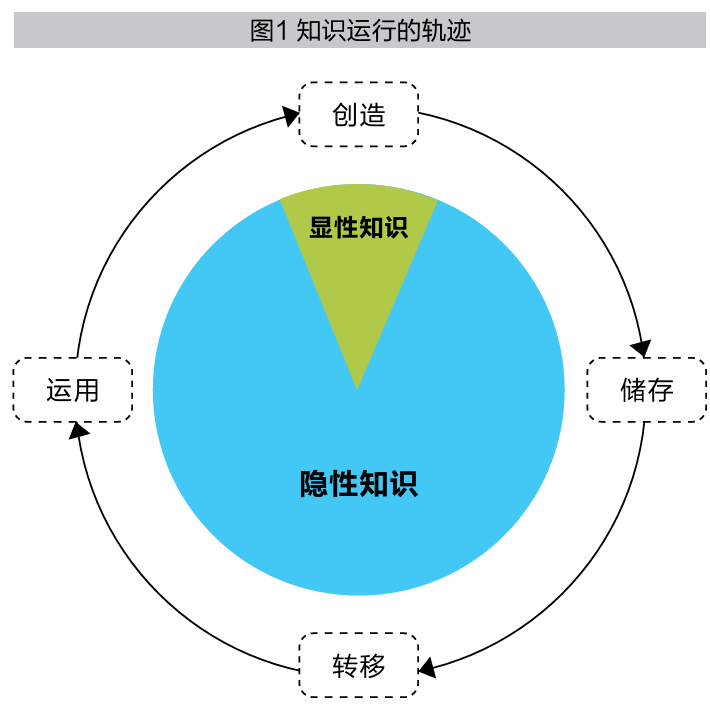
Knowledge divides into explicit (codifiable) and tacit (personal skills, intuitions).
Why It Matters
Enterprises may reintegrate KM with AI to unlock tacit knowledge value, enhancing competitiveness amid tech shifts like EVs and high scientist salaries.
What To Do Next
Pilot AI knowledge graphs to map and externalize tacit expertise in your team.
Key Points
- •Knowledge divides into explicit (codifiable) and tacit (personal skills, intuitions).
- •Past KM failed by prioritizing systems over people, ignoring tacit knowledge.
- •Informational era isolated KM from operations, reducing practicality.
- •Humans essential across all knowledge processes: creation to application.
- •AI could enable better tacit knowledge handling in enterprises.
🧠 Deep Insight
AI-generated analysis for this event — not the original article.
🔑 Enhanced Key Takeaways
- •Modern Knowledge Management (KM) is shifting from static document repositories to 'Knowledge Graphs' that utilize Large Language Models (LLMs) to map relationships between unstructured data and organizational workflows.
- •The integration of Retrieval-Augmented Generation (RAG) is specifically addressing the 'tacit knowledge' gap by allowing AI to query internal, non-codified communication channels like Slack, Teams, and meeting transcripts to provide context-aware answers.
- •Enterprises are moving away from centralized KM departments toward 'Knowledge Operations' (KOps), which treats knowledge as a continuous data pipeline rather than a static library, requiring real-time updates via automated AI agents.
🔮 Future ImplicationsAI analysis grounded in cited sources
Weekly AI Recap
Read this week's curated digest of top AI events →
👉Related Updates


AI-curated news aggregator. All content rights belong to original publishers.
Original source: 虎嗅 ↗
This is a summary, not the original. Read the source, or get the weekly briefing.
The weekly digest
One email a week. Unsubscribe anytime.