Can AI and Hardware Transform Health Management?
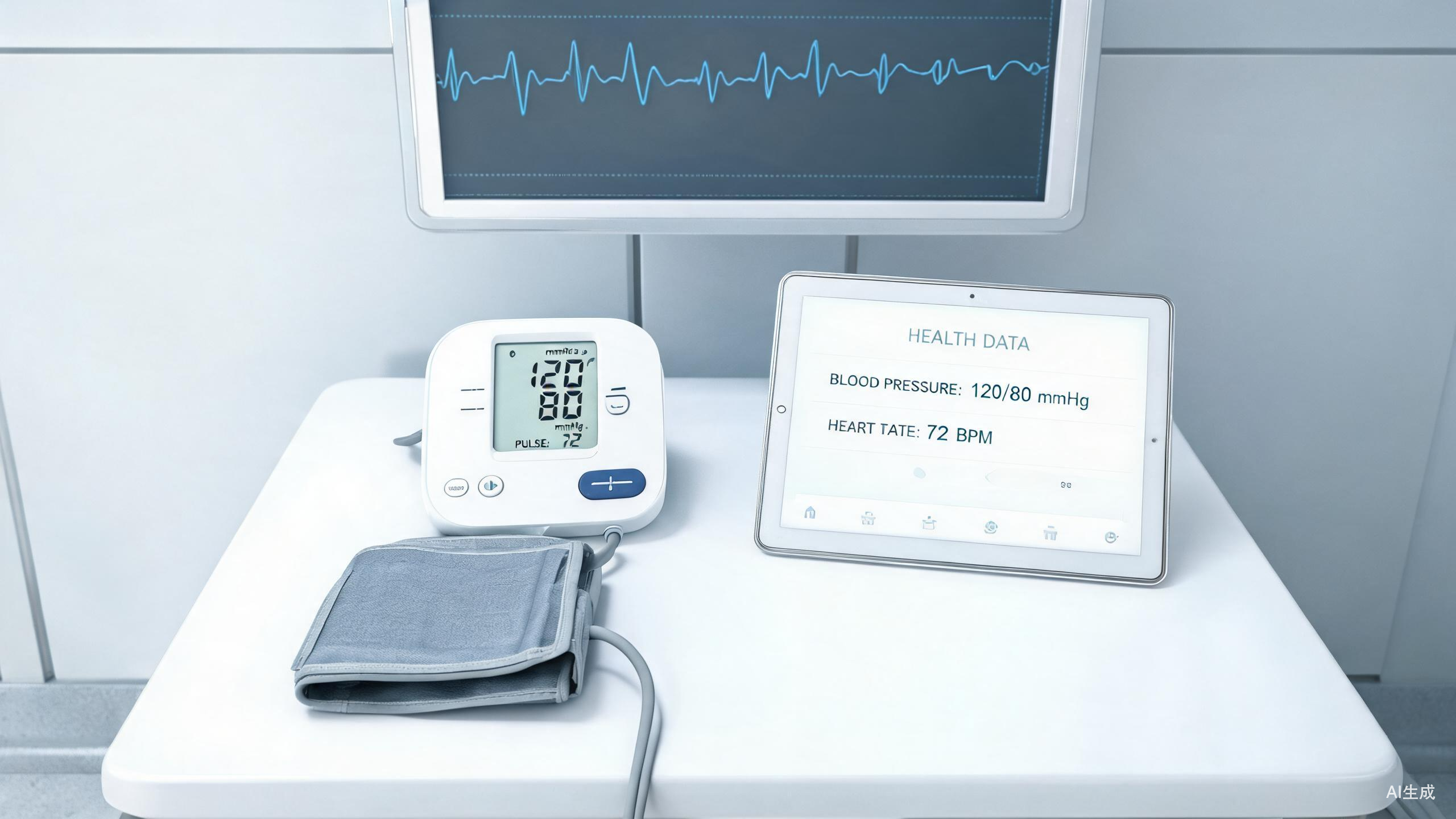
💡The real health-AI challenge is not the sensor—it is proving outcomes, securing reimbursement, and making every stakehol
⚡ 30-Second TL;DR
What Changed
A connected blood-pressure device turned patients’ homes into remotely monitored care environments.
Why It Matters
For AI builders, the article highlights that healthcare AI adoption depends as much on workflow integration, reimbursement, and measurable outcomes as on model performance. It suggests opportunities for platforms that combine sensor data, clinical decision support, remote care, and stakeholder revenue sharing.
What To Do Next
Prototype a remote-monitoring workflow that sends connected blood-pressure readings to a clinical dashboard, triggers threshold alerts, and requires clinician approval before any treatment recommendation is issued.
Key Points
- •A connected blood-pressure device turned patients’ homes into remotely monitored care environments.
- •A cited 2025 randomized trial with 1,006 patients reported an additional 2.7 mmHg reduction in systolic blood pressure and a 69.65% control rate for remote monitoring.
- •Scaling requires stronger clinical evidence, patient-paid value, broader reimbursement, and incentives for doctors, hospitals, and device providers.
- •A platform that integrates multiple devices and care scenarios may convert low-frequency hardware into a higher-frequency health-management service.
Weekly AI Recap
Read this week's curated digest of top AI events →
👉Related Updates


AI-curated news aggregator. All content rights belong to original publishers.
Original source: 虎嗅 ↗
This is a summary, not the original. Read the source, or get the weekly briefing.
Weekly AI briefing
One email a week. Unsubscribe anytime.