CAICT Launches Token Cloud Service Quality Evaluation Plan
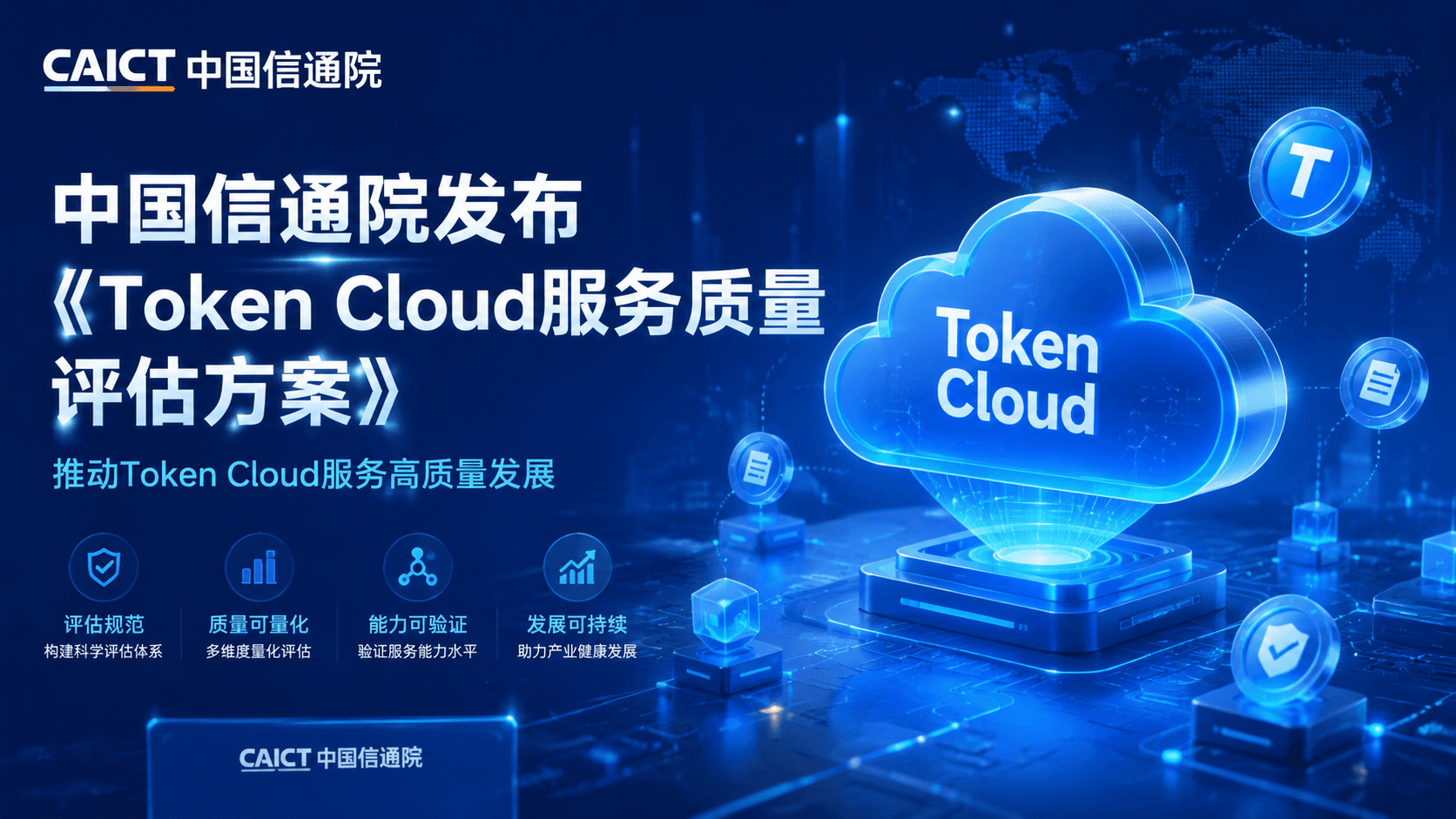
💡Understand the new quality standards for token-based cloud services set by China's leading tech institutions.
⚡ 30-Second TL;DR
What Changed
CAICT establishes standardized quality metrics for token-based cloud services.
Why It Matters
This evaluation plan sets a benchmark for cloud providers, likely leading to more predictable performance and standardized service level agreements (SLAs) for AI developers using these platforms.
What To Do Next
Monitor the upcoming CAICT evaluation criteria to ensure your cloud infrastructure architecture aligns with these new industry quality standards.
Key Points
- •CAICT establishes standardized quality metrics for token-based cloud services.
- •Partnership includes major Chinese cloud providers like Alibaba Cloud and Huawei Cloud.
- •Aims to enhance service reliability and performance for AI-driven cloud infrastructure.
🧠 Deep Insight
Background and context from public sources — not the original article. 22 sources cited.
🔑 Enhanced Key Takeaways
- •The initiative was officially launched at a seminar on June 10, 2026, themed "Trusted Token Cloud Services," bringing together stakeholders from industry, academia, research, and application sectors.
- •Beyond Alibaba Cloud, Huawei Cloud, and Tianyi Cloud, more than ten other leading technology enterprises are involved, including JD Cloud, Lenovo, StepFun, Kingsoft Office, and Qingcheng Jizhi.
- •The evaluation plan will establish industry standards for measuring and certifying the quality of token-based cloud services, covering key metrics such as latency, throughput, reliability, and cost efficiency.
- •The launch includes the release of multiple research outputs addressing token cloud technology architecture, security requirements, and interoperability guidelines.
- •CAICT, operating under China's Ministry of Industry and Information Technology (MIIT), provides significant regulatory weight and technical credibility to this evaluation process, aiming to accelerate the maturation of China's AI infrastructure layer.
🛠️ Technical Deep Dive
- Token-based cloud services are identified as a critical layer in the AI infrastructure stack, essential for reliable, high-throughput token processing required by large language models (LLMs) handling complex queries.
- Tokenization, in general, is a data security technique that replaces sensitive information (e.g., payment card numbers, personal identifiers) with non-sensitive, irreversible tokens, thereby reducing data exposure and aiding compliance with regulations like PCI DSS.
- Cloud providers like Alibaba Cloud and Huawei Cloud offer Blockchain as a Service (BaaS) platforms that support various blockchain frameworks, including Hyperledger Fabric and Ant Blockchain.
- Huawei Cloud's Blockchain Service (BCS) provides enterprise-grade features such as high availability, scalability, multi-layer encryption, user permission management, zero-knowledge password proofs, and support for scenarios like data transactions, identity authentication, and supply chain tracing.
- Alibaba Cloud's BaaS integrates Internet of Things (IoT) and anti-counterfeiting technologies to offer solutions for product traceability and transparent, real-time settlement.
- The CAICT evaluation plan, developed in collaboration with Tsinghua University, will establish specific quality evaluation metrics and online benchmark testing capabilities for token-based cloud services.
- The initiative also addresses token cloud technology architecture, security requirements, and interoperability guidelines through released research outputs.
🔮 Future ImplicationsAI analysis grounded in cited sources
⏳ Timeline
📎 Sources (22)
Factual claims are grounded in the sources below. Forward-looking analysis is AI-generated interpretation.
Weekly AI Recap
Read this week's curated digest of top AI events →
👉Related Updates


AI-curated news aggregator. All content rights belong to original publishers.
Original source: Pandaily ↗
This is a summary, not the original. Read the source, or get the weekly briefing.
The weekly digest
One email a week. Unsubscribe anytime.