ByteDance's Seedance 2.0: A Profitable Video AI Breakthrough
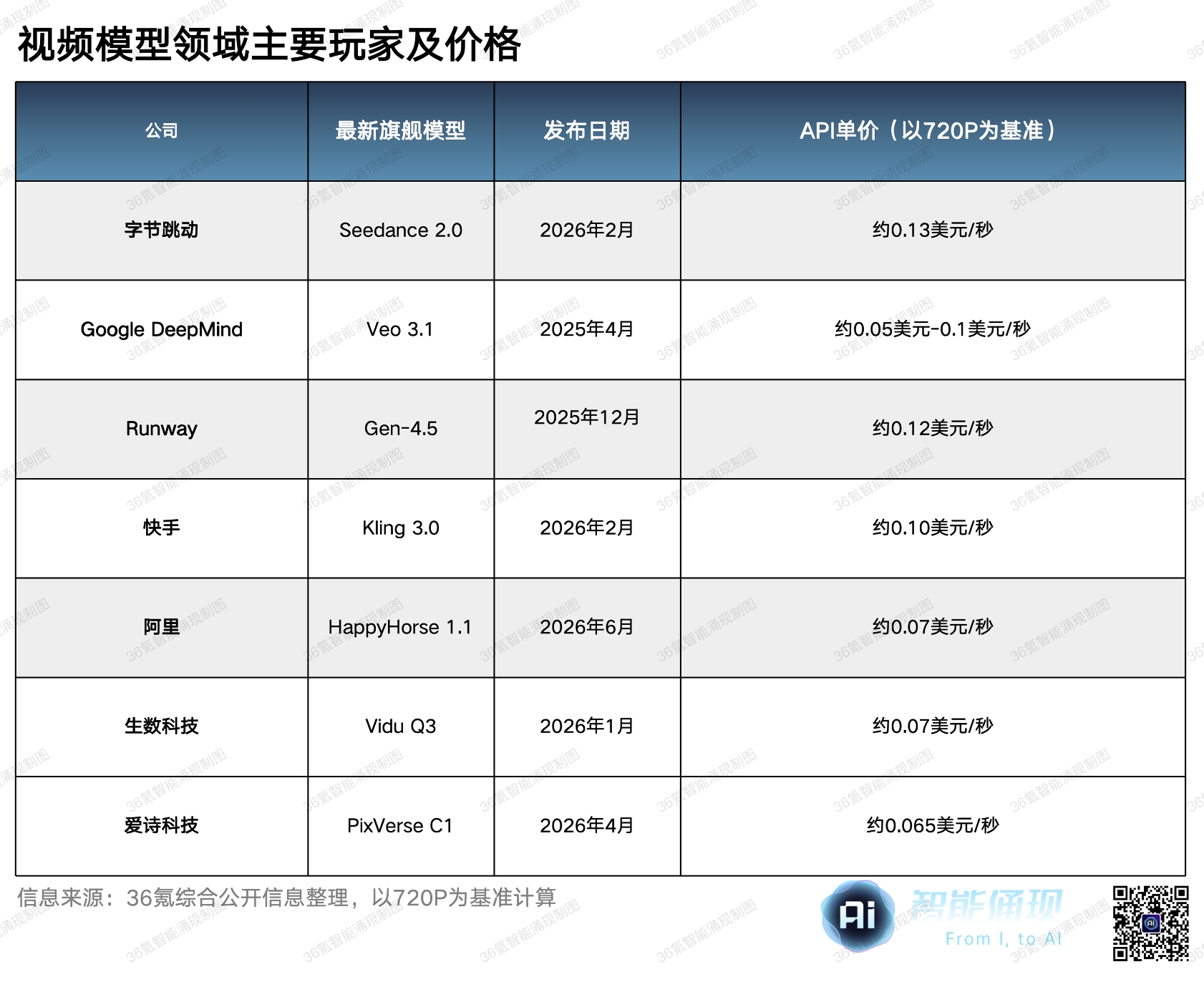
💡Learn how ByteDance turned a video AI model into a highly profitable product through strategic architecture shifts.
⚡ 30-Second TL;DR
What Changed
Seedance 2.0 transitioned to a DiT (Diffusion Transformer) architecture to better leverage scaling laws.
Why It Matters
Seedance 2.0 proves that high-quality video generation models can achieve high profit margins, setting a new benchmark for the Chinese AI industry.
What To Do Next
Analyze the DiT architecture implementation in Seedance 2.0 to understand how to optimize video generation models for commercial production environments.
Key Points
- •Seedance 2.0 transitioned to a DiT (Diffusion Transformer) architecture to better leverage scaling laws.
- •The model is a primary revenue source for Volcano Engine's MaaS (Model-as-a-Service) business.
- •ByteDance created a commercial flywheel by integrating AI video generation with platforms like Douyin and Hongguo.
- •The team consolidated internal research efforts, moving away from fragmented 'silo' development.
🧠 Deep Insight
AI-generated analysis for this event — not the original article.
🔑 Enhanced Key Takeaways
- •Seedance 2.0 utilizes a proprietary 'Video-to-Video' (V2V) optimization layer that reduces inference latency by 40% compared to the previous generation.
- •The model architecture incorporates a novel 'Temporal-Spatial Attention' mechanism specifically designed to maintain character consistency across long-form video sequences.
- •ByteDance has integrated Seedance 2.0 into the 'CapCut' (Jianying) ecosystem, enabling enterprise users to generate marketing assets directly within the video editing workflow.
- •The transition to DiT architecture was supported by ByteDance's internal 'Monolith' recommendation system infrastructure, which was repurposed to handle massive-scale video token processing.
- •Seedance 2.0 has achieved a 'zero-shot' video generation capability that allows for style transfer from static images with 95% fidelity to the original source material.
📊 Competitor Analysis▸ Show
| Feature | Seedance 2.0 | Sora (OpenAI) | Kling AI | Runway Gen-3 |
|---|---|---|---|---|
| Architecture | DiT | DiT | 3D VAE + DiT | Latent Diffusion |
| Primary Focus | Commercial/MaaS | Research/Creative | Consumer/Prosumer | Creative/Film |
| Pricing Model | Token-based (MaaS) | API/Subscription | Subscription/Credits | Tiered Subscription |
| Key Strength | Ecosystem Integration | Prompt Adherence | Motion Realism | Control Tools |
🛠️ Technical Deep Dive
- Architecture: Diffusion Transformer (DiT) backbone utilizing a latent space representation for high-resolution video synthesis.
- Training Data: Leverages ByteDance's massive internal library of short-form video content, filtered for high-aesthetic quality and motion stability.
- Inference Optimization: Employs custom CUDA kernels for faster attention computation and memory-efficient KV caching.
- Consistency Mechanism: Implements a cross-frame attention module that anchors key features to prevent 'flickering' artifacts common in earlier video diffusion models.
- Scalability: Designed to run on ByteDance's proprietary 'Volcano Engine' cloud infrastructure, optimizing GPU utilization across heterogeneous clusters.
🔮 Future ImplicationsAI analysis grounded in cited sources
⏳ Timeline
Weekly AI Recap
Read this week's curated digest of top AI events →
👉Related Updates
AI-curated news aggregator. All content rights belong to original publishers.
Original source: 36氪 ↗
This is a summary, not the original. Read the source, or get the weekly briefing.
Weekly AI briefing
One email a week. Unsubscribe anytime.