ByteDance’s Feishu Strategy Takes Shape
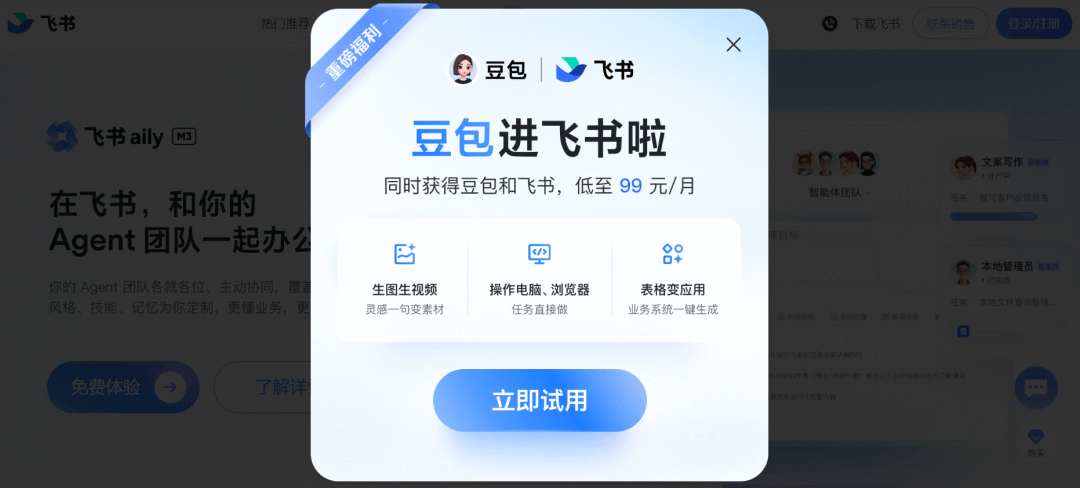
See how ByteDance’s long-planned Feishu strategy could reshape enterprise collaboration and AI adoption.
30-Second TL;DR
What Changed
Feishu’s latest transformation is presented as the result of earlier ByteDance planning.
Why It Matters
A planned restructuring could strengthen Feishu’s ability to coordinate enterprise collaboration products and ByteDance’s broader technology strategy. For AI builders, it is a reminder that platform positioning and organizational design can shape enterprise-product adoption alongside technical capabilities.
What To Do Next
If your AI product targets enterprises, map Feishu workflows and test whether a lightweight Feishu integration could improve deployment and collaboration adoption.
Key Points
- •Feishu’s latest transformation is presented as the result of earlier ByteDance planning.
- •The article describes the move as a prepared strategic merger.
- •The development highlights how ByteDance aligns product and organizational strategy over time.
Deep Insight
AI-generated analysis for this event — not the original article.
Enhanced Key Takeaways
- •Feishu (known as Lark internationally) has shifted its primary focus toward AI-native enterprise solutions, integrating ByteDance's proprietary 'Doubao' large language model capabilities directly into its workflow suite.
- •The strategic merger mentioned refers to the consolidation of Feishu's internal business units with ByteDance's broader enterprise service divisions to reduce operational redundancy and improve profitability.
- •ByteDance has significantly reduced Feishu's aggressive expansion subsidies in non-core markets, pivoting toward a 'high-quality growth' model that prioritizes large enterprise clients over small-to-medium business acquisition.
- •The organizational restructuring involved a reduction in headcount within Feishu's sales and marketing teams, reflecting a move away from the 'growth-at-all-costs' strategy that characterized its initial launch phase.
- •Feishu's product roadmap now emphasizes 'AI Agents' as a core differentiator, allowing enterprises to build custom automated workflows that leverage ByteDance's underlying AI infrastructure.
Competitor Analysis
- Feishu (Lark)
- AI-Native Collaboration
- DingTalk (Alibaba)
- Enterprise Digitalization
- WeCom (Tencent)
- Social/CRM Integration
- Feishu (Lark)
- Deep (Doubao LLM)
- DingTalk (Alibaba)
- Moderate (Tongyi Qianwen)
- WeCom (Tencent)
- Limited (Hunyuan)
- Feishu (Lark)
- Freemium/Tiered SaaS
- DingTalk (Alibaba)
- Freemium/Custom
- WeCom (Tencent)
- Freemium/API-based
- Feishu (Lark)
- High-end/Tech-forward
- DingTalk (Alibaba)
- Mass Market/Industrial
- WeCom (Tencent)
- Ecosystem/Communication
| Feature | Feishu (Lark) | DingTalk (Alibaba) | WeCom (Tencent) |
|---|---|---|---|
| Core Focus | AI-Native Collaboration | Enterprise Digitalization | Social/CRM Integration |
| AI Integration | Deep (Doubao LLM) | Moderate (Tongyi Qianwen) | Limited (Hunyuan) |
| Pricing Model | Freemium/Tiered SaaS | Freemium/Custom | Freemium/API-based |
| Market Position | High-end/Tech-forward | Mass Market/Industrial | Ecosystem/Communication |
Technical Deep Dive
- Architecture: Built on a microservices-based cloud-native framework designed to handle high-concurrency real-time collaboration.
- AI Integration: Utilizes ByteDance's Doubao LLM via API-first architecture, enabling 'Feishu Intelligent Assistant' to summarize meetings, draft documents, and automate task management.
- Data Infrastructure: Employs a unified data lake approach that allows cross-module information retrieval between documents, calendars, and chat logs.
- Security: Implements end-to-end encryption for messaging and granular permission controls compliant with international data privacy standards (GDPR/ISO).
Future ImplicationsAI analysis grounded in cited sources
Timeline
- 2019-04Feishu is officially launched in China after internal use at ByteDance.
- 2020-02Lark (international version) is launched to support remote work during the pandemic.
- 2023-04Feishu announces the integration of generative AI features, 'My AI'.
- 2024-03ByteDance initiates a major organizational restructuring of Feishu to focus on efficiency.
- 2025-06Feishu completes the integration of Doubao LLM across its core product suite.
Weekly AI Recap
Read this week's curated digest of top AI events →
AI-curated news aggregator. All content rights belong to original publishers.
Original source: 钛媒体 ↗
This is a summary, not the original. Read the source, or get the weekly briefing.
The weekly digest
One email a week. Unsubscribe anytime.