BYD Unveils 2nd-Gen Blade Battery Flash Tech
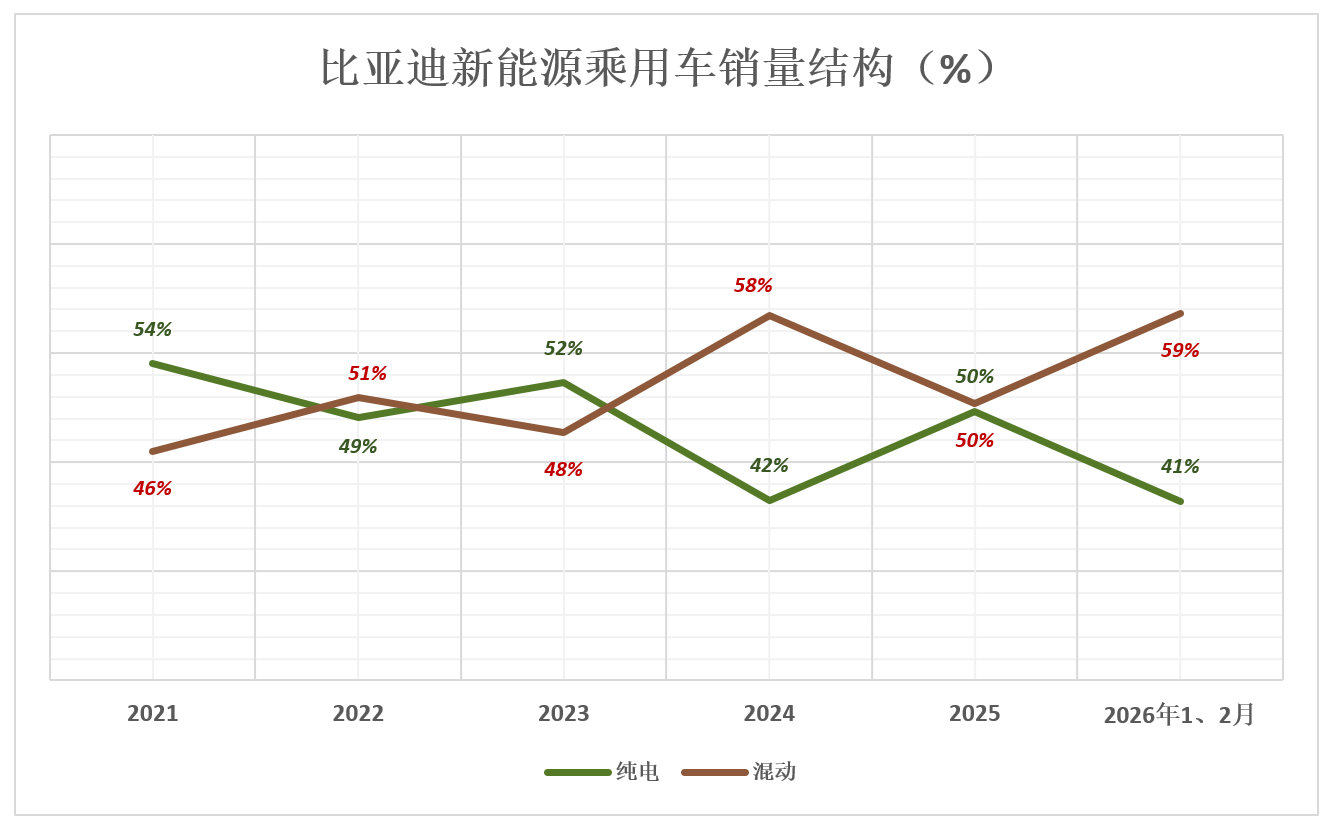
💡BYD's flash battery kills range anxiety—EV/AV devs take note on ADAS advances
⚡ 30-Second TL;DR
What Changed
2nd-gen blade battery & flash charge released Mar 5, 2026, easing range anxiety.
Why It Matters
Flash charging boosts BEV appeal vs PHEV, aiding BYD's dual-track strategy. Outpaces Tesla in margins (22% vs 16%), but early overseas scale limits profits.
What To Do Next
Benchmark BYD Tian Shen Zhi Yan ADAS APIs against Tesla FSD for your AV stack integration.
Key Points
- •2nd-gen blade battery & flash charge released Mar 5, 2026, easing range anxiety.
- •Tian Shen Zhi Yan enables universal intelligent driving and parking fallback.
- •2025 exports 104.6万辆 to 119 countries; overseas avg price 18.3万 vs domestic 12.8万.
🧠 Deep Insight
AI-generated analysis for this event — not the original article.
🔑 Enhanced Key Takeaways
- •The 2nd-gen Blade Battery utilizes a new 'cell-to-chassis' (CTC) integration architecture that increases volumetric energy density by 15% compared to the first generation, significantly reducing vehicle curb weight.
- •BYD's 1MW flash charging system employs a proprietary liquid-cooled silicon carbide (SiC) power module, enabling a 10% to 80% charge in under 8 minutes under optimal thermal conditions.
- •The Tian Shen Zhi Yan system integrates a centralized 'Xuanji' electronic and electrical architecture, allowing for real-time fusion of sensor data from LiDAR, radar, and cameras with sub-millisecond latency for the smart suspension adjustment.
📊 Competitor Analysis▸ Show
| Feature | BYD 2nd-Gen Blade/1MW | CATL Shenxing Plus | Tesla 4680 (Gen 2) |
|---|---|---|---|
| Charging Speed | 1MW Peak | 4C Charging | ~250kW Peak |
| Architecture | CTC (Cell-to-Chassis) | CTP (Cell-to-Pack) | Structural Pack |
| Primary Benefit | Safety/Integration | Energy Density | Cost/Manufacturing |
🛠️ Technical Deep Dive
- Battery Chemistry: Transitioned to a high-nickel cathode formulation with a proprietary electrolyte additive to maintain thermal stability at 1MW charging rates.
- Thermal Management: Implementation of a dual-loop refrigerant cooling system that directly contacts the battery cells to prevent localized hotspots during high-power charging.
- ADAS Architecture: The Tian Shen Zhi Yan system utilizes a multi-modal transformer-based perception model running on dual Orin-X chips, supporting end-to-end autonomous driving capabilities.
- Suspension Integration: The smart suspension system uses a 48V active hydraulic control unit capable of adjusting damping force at 1000Hz, synchronized with road-scanning cameras.
🔮 Future ImplicationsAI analysis grounded in cited sources
⏳ Timeline
Weekly AI Recap
Read this week's curated digest of top AI events →
👉Related Updates




AI-curated news aggregator. All content rights belong to original publishers.
Original source: 虎嗅 ↗
This is a summary, not the original. Read the source, or get the weekly briefing.
The weekly digest
One email a week. Unsubscribe anytime.