BYD develops proprietary AI chip for smart driving
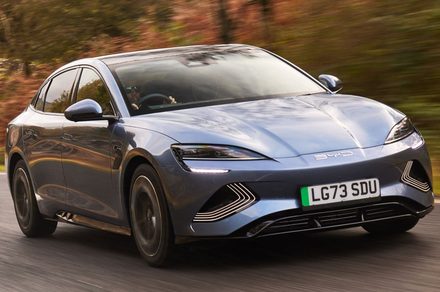
BYD's shift to custom AI chips could disrupt the automotive AI hardware supply chain.
30-Second TL;DR
What Changed
BYD is building proprietary AI chips for autonomous driving
Why It Matters
BYD's move challenges the current dominance of Western chipmakers in the automotive AI space. This could lead to a more competitive market for AI-driven vehicle hardware.
What To Do Next
Monitor BYD's open-source contributions or SDK releases if you are building automotive AI applications.
Key Points
- •BYD is building proprietary AI chips for autonomous driving
- •Strategy aims to reduce reliance on external suppliers for smart features
- •Vertical integration is expected to lower costs and speed up development cycles
Deep Insight
AI-generated analysis for this event — not the original article.
Enhanced Key Takeaways
- •BYD's internal chip development unit, often referred to as BYD Semiconductor, has been expanding its scope beyond power electronics into high-performance computing for ADAS (Advanced Driver Assistance Systems).
- •The initiative is part of a broader 'full-stack' strategy where BYD aims to control the hardware-software interface, similar to Tesla's FSD (Full Self-Driving) computer architecture.
- •BYD has historically relied on suppliers like NVIDIA (Orin-X) and Horizon Robotics; the proprietary chip development is intended to complement, rather than immediately replace, these high-end partnerships.
- •The move is driven by the need to optimize chip architecture specifically for BYD's proprietary 'Xuanji' intelligent architecture, which integrates vehicle control, smart cockpit, and autonomous driving.
- •Industry analysts suggest this move is a hedge against geopolitical supply chain risks and potential export restrictions on advanced semiconductor technology.
Competitor Analysis
- BYD (Proprietary)
- High (Vertical)
- Tesla (FSD Chip)
- Extreme (Vertical)
- NVIDIA (Drive Orin/Thor)
- Low (Horizontal)
- BYD (Proprietary)
- Cost/Efficiency
- Tesla (FSD Chip)
- Performance/Scale
- NVIDIA (Drive Orin/Thor)
- General Purpose AI
- BYD (Proprietary)
- Mass-market optimization
- Tesla (FSD Chip)
- Proprietary ecosystem
- NVIDIA (Drive Orin/Thor)
- Open platform for OEMs
| Feature | BYD (Proprietary) | Tesla (FSD Chip) | NVIDIA (Drive Orin/Thor) |
|---|---|---|---|
| Integration | High (Vertical) | Extreme (Vertical) | Low (Horizontal) |
| Primary Focus | Cost/Efficiency | Performance/Scale | General Purpose AI |
| Market Strategy | Mass-market optimization | Proprietary ecosystem | Open platform for OEMs |
Technical Deep Dive
- Architecture focuses on high-efficiency NPU (Neural Processing Unit) cores designed for low-latency inference in urban driving scenarios.
- Implementation utilizes advanced process nodes (likely 7nm or 5nm) to balance power consumption with TOPS (Tera Operations Per Second) performance.
- Integration with the Xuanji architecture allows for tighter coupling between sensor fusion data and vehicle chassis control systems.
- Design emphasizes thermal management efficiency to support BYD's diverse EV lineup without requiring complex liquid cooling systems for the compute unit.
Future ImplicationsAI analysis grounded in cited sources
Timeline
- 2020-12BYD Semiconductor completes a major restructuring to prepare for independent market operations.
- 2023-04BYD officially unveils the 'Xuanji' intelligent architecture at the Shanghai Auto Show.
- 2024-01BYD announces a significant investment in smart driving R&D, signaling a shift toward internal hardware development.
- 2025-08Reports emerge of BYD testing proprietary AI silicon in pilot vehicle fleets.
Weekly AI Recap
Read this week's curated digest of top AI events →
AI-curated news aggregator. All content rights belong to original publishers.
Original source: Digital Trends ↗
This is a summary, not the original. Read the source, or get the weekly briefing.
The weekly digest
One email a week. Unsubscribe anytime.