BYD assumes financial liability for self-driving crashes
💡Understand how liability shifts in autonomous driving are changing the competitive landscape for AI-powered vehicles.
⚡ 30-Second TL;DR
What Changed
BYD accepts liability for crashes involving its autonomous tech
Why It Matters
This policy could pressure other autonomous vehicle developers to adopt similar liability models to remain competitive. It shifts the burden of proof and risk from the consumer to the manufacturer.
What To Do Next
Review your autonomous system's safety documentation and liability clauses to align with emerging industry standards for manufacturer accountability.
Key Points
- •BYD accepts liability for crashes involving its autonomous tech
- •Represents a significant confidence boost in system safety
- •Sets a precedent for manufacturer accountability in the EV sector
🧠 Deep Insight
Background and context from public sources — not the original article. 27 sources cited.
🔑 Enhanced Key Takeaways
- •BYD's liability policy specifically applies to its "God's Eye" urban driving system (A and B versions) in China, covering all direct economic losses, including vehicle repairs, third-party property damage, and personal injury, with no payout cap for one year, provided the system is used in compliance with regulations.
- •This commitment expands upon BYD's earlier guarantee for its Level 4 smart parking feature, which was introduced in July 2025 and led to a significant increase in its usage rate from 21% to 93%.
- •BYD's "God's Eye B" smart driving package is offered as a one-time purchase for approximately 12,000 yuan (around $1,800 USD), which is substantially more affordable than Tesla's "Full Self-Driving (Supervised)" in China, priced at 64,000 yuan (about $9,400 USD), for which Tesla does not assume liability.
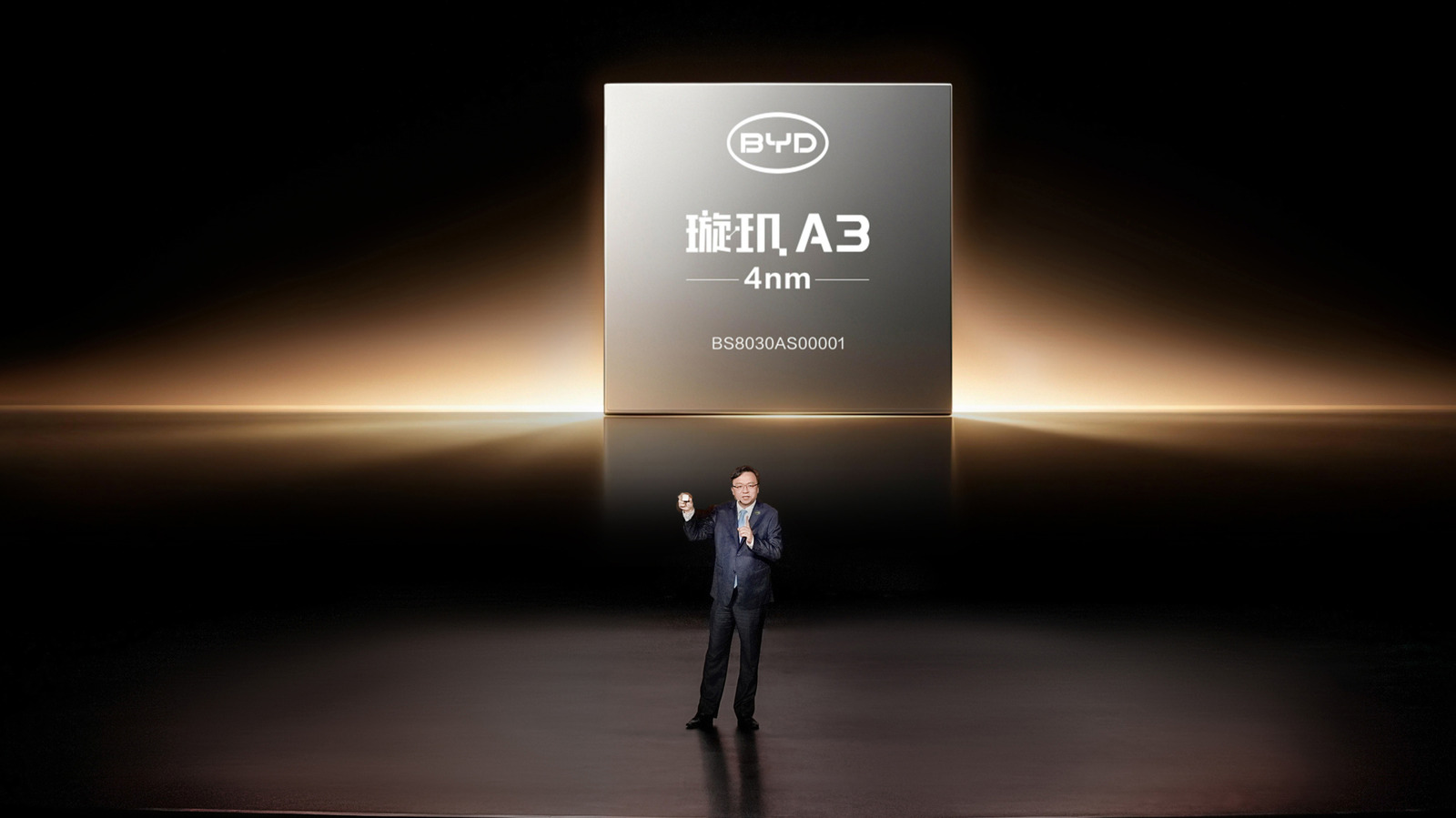
- •Concurrent with the liability announcement, BYD unveiled its self-developed 4nm smart driving chip, the Xuanji A3, which is already in mass production and designed to support Level 3 and Level 4 autonomous driving capabilities.
- •BYD plans to invest over 100 billion yuan (approximately $14.75 billion USD) in intelligent technology research and development over the next three years, signaling a major strategic focus on autonomous driving.
📊 Competitor Analysis▸ Show
Competitor Analysis: Autonomous Driving Liability and Technology
| Feature/Company | BYD (God's Eye) | Tesla (Full Self-Driving/Assisted Driving) | Mercedes-Benz (Drive Pilot) | Volvo (Autonomous Mode) |
|---|---|---|---|---|
| Liability for At-Fault Crashes | Assumes full financial liability for direct economic losses (repairs, third-party damage, personal injury) with no cap for 1 year when God's Eye A/B urban driving is active and compliant. | Driver remains 100% responsible for Level 2 FSD (Supervised). Tesla has fought liability in court. | Assumes legal liability for injuries when Level 3 Drive Pilot is active and used as designed. | Pledged to accept full liability when cars are in autonomous mode (since 2015). |
| System Level (SAE) | Primarily Level 2+ (urban navigate-on-autopilot), with hardware supporting L3/L4. | Level 2 (requires constant driver supervision). | Level 3 (conditionally automated, driver can disengage but must be ready to intervene). | Pledged for future fully autonomous cars (L4/L5). |
| Cost (China Market) | God's Eye B: 12,000 yuan (~$1,800 USD) one-off purchase. | Tesla Assisted Driving (FSD): 64,000 yuan (~$9,400 USD) one-off purchase. | Not specified for China, but generally a premium feature for high-end models. | Not specified for China, generally for future models. |
| Key Technology/Hardware | In-house 4nm Xuanji A3 chip, LiDAR, HDR cameras, dual long-wave infrared cameras, 12 cameras, 5 millimeter-wave radars, 12 ultrasonic radars (God's Eye A/B). | Vision-only approach using cameras and neural networks. | Cameras, LiDAR scanners, GPS guidance, microphones for redundancy. | Not fully detailed, but implies robust sensor suites for full autonomy. |
| Geographic Scope of Policy | China (for God's Eye urban driving). | Global, but driver remains responsible. | Germany, with plans for California and Nevada. | Global, for future autonomous vehicles. |
🛠️ Technical Deep Dive
- God's Eye System Architecture: BYD's advanced driver assistance system (ADAS) is named "God's Eye" and is offered in three tiers: A, B, and C.
- Sensor Configuration:
- God's Eye C (Entry-level): Vision-centered architecture, equipped with 12 cameras (three front-facing, five panoramic, four surround-view), five millimeter-wave radars, and 12 ultrasonic radars, without LiDAR.
- God's Eye A and B (Higher-tiers): Include LiDAR, HDR cameras, and dual long-wave infrared cameras, supporting Level 3 and Level 4 autonomous driving.
- Proprietary Chip: BYD has developed its own 4nm automotive-grade smart driving chip, the Xuanji A3, which is already in mass production.
- Computing Power: The Xuanji A3 chip is capable of supporting L3 and L4 autonomous driving. A three-chip configuration can deliver over 2,100 TOPS (Trillions of Operations Per Second) of computing power, with a 20% reduction in power consumption per unit of computing power compared to similar products.
- Software and Algorithms: The system utilizes in-house algorithms that can double computing efficiency when paired with the Xuanji A3 chip. It also integrates DeepSeek technology to enhance capabilities.
- ADAS Features: The God's Eye system supports features such as urban navigate-on-autopilot, intelligent parking, automatic highway ramp entry and exit, cruise driving, lane keeping, autonomous lane changes, obstacle avoidance, and automatic emergency braking (AEB) with planned expansion to higher speeds.
🔮 Future ImplicationsAI analysis grounded in cited sources
⏳ Timeline
📎 Sources (27)
Factual claims are grounded in the sources below. Forward-looking analysis is AI-generated interpretation.
- electrek.co
- autoblog.com
- thelec.net
- carnewschina.com
- just-auto.com
- thedriven.io
- morningstar.com
- japantimes.co.jp
- siddonslaw.com
- cdbinjurylaw.com
- reddit.com
- wikipedia.org
- egletlaw.com
- prescouter.com
- kbb.com
- forbes.com
- robertdebry.com
- pinsentmasons.com
- manufacturing.net
- robocap.com
- yolegroup.com
- byd.com
- ethenostrofflaw.com
- byduae.ae
- autospies.com
- digitimes.com
- futuretransport-news.com
Weekly AI Recap
Read this week's curated digest of top AI events →
👉Related Updates

AI-curated news aggregator. All content rights belong to original publishers.
Original source: Engadget ↗
This is a summary, not the original. Read the source, or get the weekly briefing.
The weekly digest
One email a week. Unsubscribe anytime.